Community Corner
Former Bombing Site Off Martha's Vineyard Now A Bunny Sanctuary
Wildlife officials hope the rare New England cottontail will thrive on Nomans Land Island.


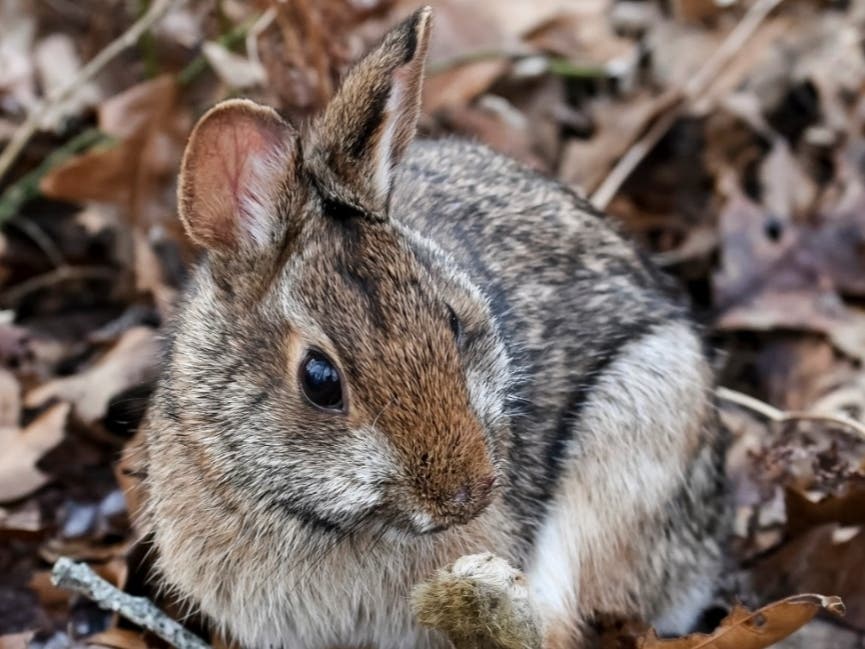
NOMANS LAND ISLAND, MA — Once a U.S. Navy bombing site, Nomans Land Island off Martha's Vineyard is now home to a rare breed of rabbit. Wildlife agencies this week released 13 New England cottontails on the island as part of an ongoing cottontail conservation and restoration effort. The island refuge is expected to host a thriving, sustainable population of New England cottontails and serve as a source of rabbits to boost mainland populations.
"A New England cottontail colony on Nomans Land Island will be like insurance for our only native rabbit," Eileen McGourty, the lead service biologist on the project, said in a statement. "The U.S. Fish and Wildlife Service is pleased to continue efforts under the cottontail conservation initiative and is grateful for the partnership that has made this project possible."
The rabbits were trapped on the mainland in later winter and fitted with tracking collars to assist biologists in monitoring their movement and survival.
Find out what's happening in Martha's Vineyardfor free with the latest updates from Patch.
Studies conducted on Nomans Land suggest that the island's self-sustaining coastal shrubbery can support 600 cottontails or more, wildlife officials said. A similar effort in 2012 established a population of New England cottontails on Patience Island in Rhode Island’s Narragansett Bay.
"Partnering with the Service and others on the rabbit capture and release project is just one of several conservation actions MassWildlife is taking to restore New England cottontails," David Scarpitti, MassWildlife upland game biologist, said in a release. "However, without the right type of habitat, there are no rabbits. Actively managing land through conducting prescribed fires, clearing or thinning trees address the rabbits’ fundamental habitat needs. These activities have and continue to be a major priority for MassWildlife and other NEC partners on state, federal and private lands in and near areas where these rabbits are located."
Find out what's happening in Martha's Vineyardfor free with the latest updates from Patch.
New England cottontails are Massachusetts's only native rabbit. The breed seeks protection in very dense thickets, sapling-like forests, shrubbery, overgrown brambles and pine-oak and heathland habitats.
Over several decades, these habitats matured into older and taller woods or were cleared for development. Subsequently, New England cottontail populations dwindled as ground-level food and shelter for rabbits became scarce. Today the New England cottontail is found only in southern Maine, southern New Hampshire, and parts of Massachusetts, Connecticut, Rhode Island, and New York east of the Hudson River — less than a fifth of its historic range.
The initiative to save the New England cottontail has been lauded as a model for collaborative public-private conservation. When cottontail populations declined, the states, the USDA-Natural Resources Conservation Service, private landowners, university researchers, the Service and other partners recognized both the urgency and the opportunity to conserve this at-risk species. The initiative developed and launched proactive conservation efforts to reverse those declines.
In 2015, the service determined the New England cottontail did not require federal protection under the Endangered Species Act, but called for continued conservation efforts.
Nomans Land Island is part of the Eastern Massachusetts National Wildlife Refuge Complex, headquartered in Sudbury. The refuge is part of a national network of lands and waters which are administered for the conservation, management, and, where appropriate, restoration of fish, wildlife, and plant resources and their habitats within the United States for the benefit of present and future generations of Americans. There are 566 national wildlife refuges across the country, protecting over 150 million acres of land for wildlife conservation.
Get more local news delivered straight to your inbox. Sign up for free Patch newsletters and alerts.