Neighbor News
How about a little fat?
Still adhering to the "Fat Free" philosophy of the 90's? It's time to start embracing a little fat in your diet!

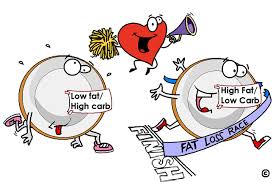
It’s no wonder people are confused about what they should be eating! Food science seems to be ever changing and the press is always reporting on some new study that contradicts the findings of some other study. Do you remember the “Low-Fat” and “Fat Free” craze of the 80’s and 90’s? Many diets and variations of package labeling were introduced in those years that focused on limiting or even eliminating fat in people’s diets. It turns out that current research is now finding that people who eat more fat (excluding trans fats) have less risk of cardiovascular and heart disease, lose more body fat and maintain a healthier weight, than people who limit fat in their diet.
Current research is now proving out that a key component of a healthy diet, in addition to avoiding processed foods and limiting sugar intake, is consuming a balance of all three macronutrients: “smart” carbohydrates (vegetables, fruits and whole grains), protein (both animal and plant based) and “healthy” fats (see examples below). Excluding or limiting any of the three major nutrient groups puts you at increased risk of long-term health issues because your body isn’t getting all of the nutrients it requires.
What was lost in the vilification of fat during the “No Fat” decades was the fact that there are different kinds of fat: “bad” fat (such as trans fats) and “good” or “healthy” fat (see list below). If you are still hanging onto the notion that fat is a bad word, start looking for ways to increase your “healthy” fat intake.
Find out what's happening in Medfieldfor free with the latest updates from Patch.
Examples of “healthy” fats include:
Avocado: Add it to a smoothie, salad or sandwich.
Find out what's happening in Medfieldfor free with the latest updates from Patch.
Wild Alaskan Salmon: Enjoy it grilled, poached or baked for dinner or lunch. Make a little extra to add to a salad the next day.
Seeds: Add ground flax seed to your pancake mix, salads or smoothies or make homemade snack bars (see recipes below) that include pumpkin or sunflower seeds.
Nuts: Another great addition to a homemade snack bar (see below) or added to your oatmeal, yogurt and salads.
Oils: Try using coconut oil when roasting or sautéing vegetables and make your own dressings using extra virgin olive oil.
Bear in mind that all fats are not created equal. Some varieties of oils can turn rancid easily and form dangerous trans-fatty acids when heated so are not good for cooking, some come from GMO crops (think Roundup pesticide ingestion) and others are derived of rapeseed oil which can cause emphysema, respiratory distress, anemia, constipation, irritability, and blindness.
Oils to avoid: Denatured oils, like hydrogenated, partially hydrogenated and non-hydrogenated oils, canola, soy, safflower, corn, cottonseed, and other vegetable oils that are not cold pressed.
If you would like to learn more, here are a few supporting articles: