Community Corner
The Meaning Behind Medfield's Town Seal
Columnist Richard DeSorgher explains how the town's seal came about.

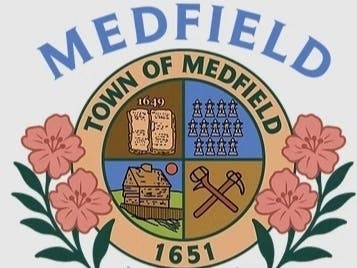
We see our town seal on our police and fire trucks, on school stationary, on the town flag and in all our town buildings. It is unique only to Medfield. How did our seal come about and what is the meaning of each part of the seal?
By vote of Town Meeting in 1896, Medfield voters accepted a committee’s report and created an official Town Seal for the Town of Medfield. The committee, formed in 1895, was made up of local officials Albert Lovell, George Chase and James Hewins. They enlisted the services of local artist John A.S. Monks.
Medfield’s seal was divided into four quarters. The first quarter of the seal contains the town’s “Compact of 1649.” This Compact or “Agreement” laid out the “rules” for those wishing to live in Medfield. Beginning with the Mayflower Compact of 1620, most New England towns wrote compacts before settling their new towns. All were expected to sign the compact if they wished to live in that community.
Find out what's happening in Medfieldfor free with the latest updates from Patch.
Medfield’s compact was the work of Ralph Wheelock, who is considered to be the “founder of Medfield.” The agreement or compact stated that one of the jobs of the new town’s settlers would be to “further spread the gospel and to cultivate the land.” It said we would “elect officials to govern the town” and that if “any disputes or differences arose between town residents, they would try to settle them in a peaceful way through methods such as arbitration.”
Finally, according to the Compact, only those who were “peaceful, honest and free from scandal” would be able to live here. The compact was signed by our first 13 settlers who came here from Dedham and settle Medfield in 1649. At first all signed the agreement but after a few years, the custom of signing fell into disuse. The last person to sign the compact was Joseph Daniel in 1662.
Find out what's happening in Medfieldfor free with the latest updates from Patch.
The second quarter of the town seal contains 13 Puritan heads. These symbolize the first 13 settlers of the town. Medfield was settled by those of Puritan stock who left England in search of religious freedom during the Great Migration in 1630. They founded Massachusetts Bay Colony, settling first in places such as Salem and Boston. From Boston, these Puritans moved out to Dedham and then from Dedham to Medfield.
The third quarter of the seal contains a garrison house, with Noon Hill in the distance. A sun is directly over Noon Hill. The garrison house was similar in appearance to those which were built in Medfield and used for protection, especially during the time of the King Philip War (1675-1676). Noon Hill is said to have been so named by the early settlers for the reason that the sun appeared to them to stand directly above its summit at noontime.
The fourth quarter contains a torch and a tomahawk, symbolizing the King Philip War and the Native-American attack on the town on Feb. 21, 1676. Half of Medfield was burnt to the ground. Thirty-two houses were left in ashes and 32 remained standing. Some 17 residents and soldiers were killed during that bloody winter morning some 335 years ago. On the seal, the tomahawk and the torch were placed in a “crossed” position in recognition of the religious element of the town’s settlers.
Along the bottom of the seal are placed rhododendrons, which symbolize the large stands of rhododendrons that grow in Medfield, especially those in Rhododendron Swamp, located behind off Spring Street. The stand there is one of the largest in the state and is owned by the Trustees of Reservation and open to the public.
The two dates on the seal; 1649, represents when the town was first founded by the 13 Dedham residents and 1651 represents when Medfield officially became the 43rd town in Massachusetts Bay Colony in order of incorporation.