Community Corner
You Don’t Know What You Got 'Til It’s Gone
It is said that if we keep seeing our historic homes demolished by wrecking balls, we as a community lose part of what makes Medfield, Medfield.


Close your eyes and the drive down North Street toward the center of town from Green Street to Frairy Street could easily be confused with the mansions of Newport, R.I. ... that is before the Edwin V. Mitchell Mansion and the Daniel D. Curtis Mansion were demolished.
Mitchell’s Mansion was replaced by a strip mall with a notorious Chinese restaurant (since replaced again by today’s ) and the Curtis Mansion replaced by the current fortress-type building that sits on the corner of Frairy and North Street today.
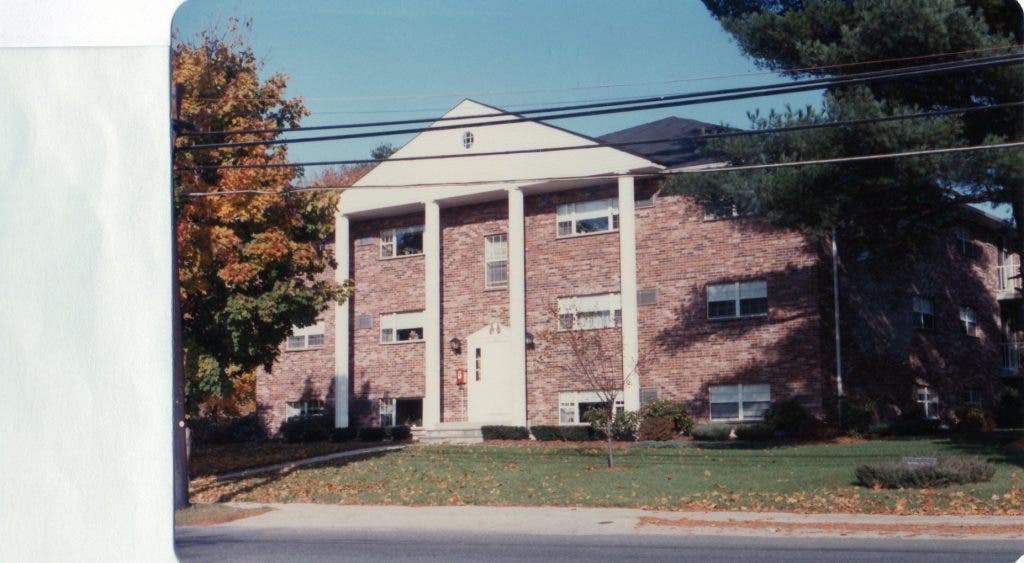
The Hannah Adams Pfaff Mansion on North Street opposite Dale Street, was demolished and replaced by the current brick apartment building. The Julius Fitts Old Corner Store on the corner of North and Main Streets was replaced by the Mobil Gas Station.
Find out what's happening in Medfieldfor free with the latest updates from Patch.
The Harwood Mansion at the intersection of Routes 109 and 27, was replaced by the current . The Richardson farmhouse and barn on 1 Main St. at the Dover town line was burned by arson and replaced by the Tubwreck Road development. The Henry M. Parker Mansion on 410-412 Main St. opposite Brook Street, was replaced by the two current homes.
The Baker Homestead-Main Street, the Stuart Barn-High Street, the Flynn Barns-Pine Street, the Windmill- Philip Street … now the Chenery-Hale Homestead and barn on 34 South St. Board by board, house by house, Medfield is losing the very historic fabric that gives the town its special character; the “what makes Medfield, Medfield factor.”
Find out what's happening in Medfieldfor free with the latest updates from Patch.
Some examples of those pieces of the historic fabric that have been lost can be seen in the photo gallery above. The photo gallery shows what we once had and lost and what it was replaced by.
Mitchell’s mansion was a town showcase. It contained 32-rooms. It had a library with a huge fireplace and mahogany paneling, a music room and enormous dining room. The second floor contained 11 bedrooms and the third floor an elaborate ball room that held 800.
The landscaped grounds included a tennis court, carriage sheds, stables and a barn. A tank was used to demolish it in the 1960's and the North Street Plaza was built on that site. In 1998, the Medfield Post office was built on that location after the North Street Plaza, whose main tenant was a Chinese restaurant, was in turn demolished.
The Mansion of Mitchell, turned luxury hotel and finally tavern, known as the , a building that was on par with the mansions of Newport, was now gone for all time.
It is said that if we keep seeing our historic homes demolished by wrecking balls, we as a community lose part of what makes Medfield, Medfield. There is no doubt that the number one reason people move to Medfield is because of the high quality of our school system. But the number two reason many say, is the historic and open space look that the town still has – a view of the historic homes that grace the town streets.
These historic houses represent the historic draw that is Medfield. Many in town see that we are losing our history and losing our past with each new demolition. The Boston Globe recently published an article on what makes communities special; what retains a town’s character as well as its property values. The answer was the uniqueness of each town, whether it is the Revolutionary history of Lexington and Concord; the mills of Lowell or the whaling of New Bedford.
Towns, the article said, must retain and emphasize the special qualities that make their community special and unique. In Medfield, that uniqueness is the history of its houses and of its landscapes. We have, for the most part, been generally lucky that so many historic minded people have bought many of these historic homes.
To their credit, they have cared for and restored these houses. But many are not in an historic district. Therefore, they are not protected. An historic district simply protects a designated area by having property that is deemed “historic” from being torn down. Historic Districts reflect the united pride and investment the residents have in their neighborhood.
There are numerous advantages to establishing a local historic district: For one, local historic districts protect the investments of owners and residents. Buyers know that the aspects that make a particular area attractive will be protected over a period of time. Real estate agents in many towns use historic district status as a marketing tool to sell properties.
Medfield has a couple of small such districts; for example the West Main Street area from Baxter Park, past the cemetery, to Bridge Street is designated the “John Metcalf Historic District.” Those homes are protected from having their neighborhood drastically changed in any negative ways.
Those living along West Main Street know their neighborhood will be kept in its historic and scenic condition. Neighborhood residents also serve on the Historic District Commission. Medfield has one of the most lenient districts. Homeowners can do just about anything they pleased with the exception of tearing down the house or drastically alternating the street-facing-side of their home. Additions, renovations, change in paintings, etc have all taken place on the homes in the John Metcalf Historic District. There are over 200 such districts in Massachusetts.
The history of a town is in the houses and the architecture and, as they’re torn down, bit by bit, the town loses its character. Each town in New England has its own story to tell. If you lose these individual houses, you also lose the history of the town.
People purchase historic properties for many reasons ... Some like the idea of owning a "piece of history” and believe that quality of construction in older structures is superior to that found in modern structures. Large rooms, high ceilings, rich materials and intricate details are often an attraction.
Established landscapes and mature plants and trees surrounding historic properties often add significant value. Properties in need of repair can often be purchased at a reduced price, enabling the purchaser to increase value through restoration and rehabilitation. Whatever the reason, it can be said that investing in historic properties and in historic districts helps preserve the history of the community for future generations to enjoy and learn. Historic districts have a unique sense of place desired by many people.
There have been numerous studies on the impact of property values in historic districts. The results of these studies are remarkably consistent: property values in local historic districts appreciate significantly faster than the market as a whole in the vast majority of cases and appreciate at rates equivalent to the market in the worst case. Simply put, local historic districts enhance property values.
The Medfield Historical Commission has placed a one-year demolition delay on the historic Chenery-Hale landmark on 34 South St. and will soon be meeting with developer Robert Borrelli to see if ways can be worked out to save the historic structure. But without protection of an historic district for South Street, in less than one year when the demolition delay expires, the developer can demolish 34 South St. and it too will be added to the list of houses you can see on the above photo album.
Sometimes you don’t know what you have until it is gone.