Politics & Government
Meet Warrant Committee Chair Ewan Innes
Inside Town Hall, the series showcasing member's of Milton's boards and committee, continues with five questions with Ewan Innes, Chair of the Milton Warrant Committee.
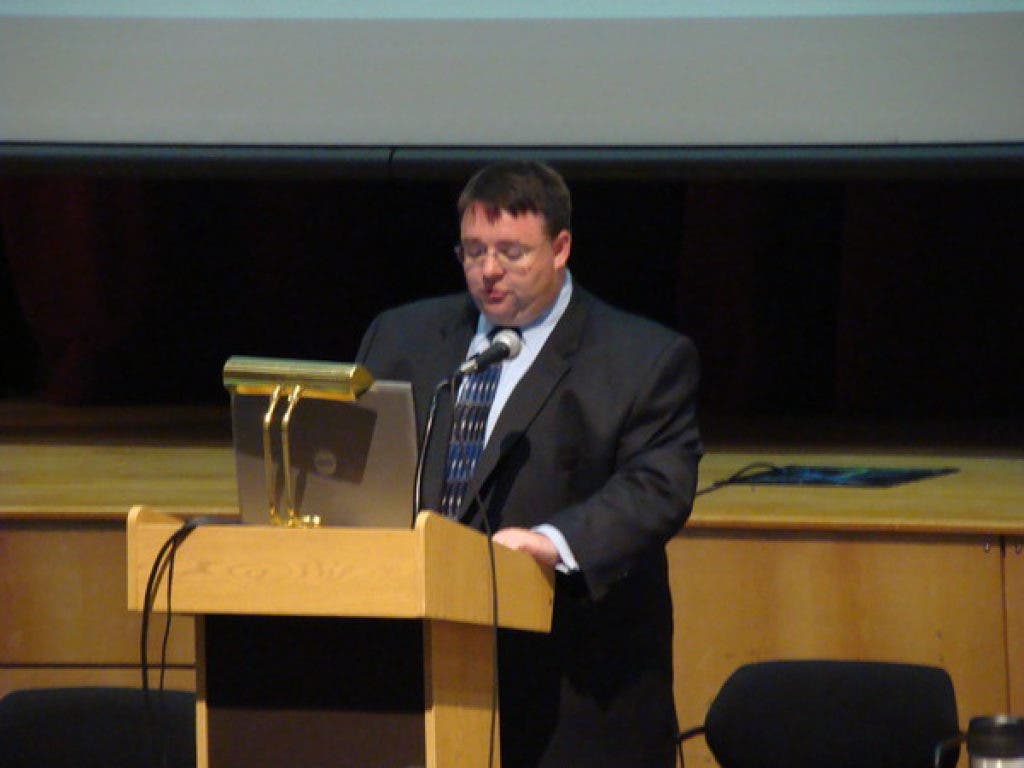
Milton’s Warrant Committee brings power to the people of Milton in every sense of the phrase. The committee is made of fifteen voting citizens, each serving one year beginning from July 15. When each town board, committee and officer files for funding annually, these requests go to the Board of Selectmen, who transmits the information to the Warrant Committee.
According to the town website, the filing is done each year on or before January 31st. From there, the committee formulates a list of recommended appropriations for each board, committee and officer. Once the list is complete, the committee presents it at the annual Town Meeting.
Catching him in a moment before his busy season comes up, Ewan Innes, Chair of the Warrant Committee, is featured this week in Inside Town Hall. Innes explains the inner working of the committee and emphasizes what efforts go into creating the town budget.
Find out what's happening in Miltonfor free with the latest updates from Patch.
How did you obtain your position on the Committee?
I was appointed to the committee by the Moderator for a first term beginning in July 2006 and have been reappointed each year since. This will be my sixth year serving on the committee, and second as the Chair.
Find out what's happening in Miltonfor free with the latest updates from Patch.
What in your professional background led you to be on the Warrant Committee?
I think it’s something of a misnomer that to be on the Warrant Committee you need to have a background in finance. The ideal member is one who can bring a breadth of experience and insight into looking at the whole picture, not just the numbers.
Professionally I have managed both million dollar budgets and smaller projects. My experience in Information Technology gives me perspective on finding new solutions to old problems. As a historian by training and inclination, I’m conscious of the role of history in how the Town functions, and the dangers of becoming hide-bound by that history.
With other committees submitting their budgets to you, how do you come up your financial recommendations for the town?
We take a collaborative approach. Beginning in August, I review the State budget projections for each month and, based on experience, determine the likely impact on our local aid funding. The committee will then discuss the preliminary revenue picture in late September and provide a recommendation to departments as to the likely funding available and whether we will be looking at level dollar budgets (i.e. the same dollar amount in the next year as they had in the previous one) or level service (a budget that provides the same level of service in the next year as they had in the previous one). A level dollar budget is an effective budget cut as the department must absorb all increases in costs.
Departments submit preliminary budgets to us on December 1st and a final version on January 31st. As we receive the budgets, they are assigned to subcommittees to review. During December and January, we meet with the departments as a whole committee and at the subcommittee level to gain a full understanding of the impact of the budget submitted.
In the past several years we have taken a very conservative approach in setting the initial revenue and budgets, which has then allowed us, where appropriate, to add back to departments with specific needs. We then have a full day budget session in February where we create the first cut of the budget based on the first round of State Aid numbers from the Governor’s budget and the committee’s review of the budgets presented. This budget is then further adjusted and modified over the next several weeks as additional information and input from the departments is available.
The warrant goes to press at the end of March – a very tight timeline. There are often changes in the numbers between the Warrant going to press and Town Meeting (usually because the House and Senate budgets come in right before Town Meeting), but our goal is to be as accurate as possible so that Town Meeting members have as much information as possible with which to make their deliberations.
How do you think citizen involvement in Town Meetings aid the Warrant Committee?
Town Meeting input is vitally important – indeed the Warrant Committee reports to Town Meeting. Town Meeting expects the Warrant Committee to have done its due diligence in reviewing all the articles before it (not just the financial ones) and to be presenting them a clear and consistent picture for deliberation. As a member of the committee and as chair I’ve always tried to write the comments to the articles from the perspective of a Town Meeting Member and tried to answer potential questions in advance.
I feel that ensuring my fellow Town Meeting Members are as informed as possible is conducive to a productive Town Meeting and allows us to focus on areas of substantive discussion. Many Town Meeting members are former Warrant Committee members and are familiar with the process – that is always a help to us.
Money Magazine recently named Milton the Second Best Place to Live in America. How do you think this rating relates to the fiscal responsibility of the town?
I think that plays a part. However, I feel it’s more a reflection on the work all those who have come before us have done to make Milton such an attractive place to live.
For more information on the Warrant Committee, visit http://www.townofmilton.org/Public_Documents/MiltonMA_BComm/WC/WC
