Politics & Government
House Passes Bill for COVID-19 Needs and Recovery
$3.82 Billion Bill includes American Rescue Plan Act and FY21 surplus funds
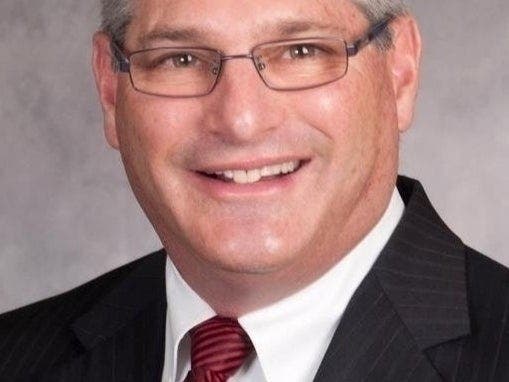
BOSTON – Representative David P. Linsky (D-Natick), along with his colleagues in the Massachusetts House of Representatives unanimously passed its spending proposal utilizing American Rescue Plan Act (ARPA) and Fiscal Year 2021 (FY21) surplus funds. Funded at $3.82 billion, the bill addresses disparities exacerbated by the COVID-19 pandemic, aiming to facilitate recovery through one-time investments in housing, environment and climate mitigation, economic development, workforce, health and human services, and education.
“I was proud to join my colleagues in the House in passing the American Rescue Plan Act. These funds will be life-changing for so many Massachusetts Residence who have been struggling in the wake of the COVID-19 pandemic” said Representative Linsky. “I want to thank Speaker Mariano, Chair Michlewitz and the rest of my colleagues in the House for all their hard work in getting these tremendously important funds to the people of the Commonwealth.”
Earlier this year, the Massachusetts Legislature voted to transfer the state’s $5.3 billion allocation from ARPA, which must be allocated by 2024, into a separate fund to ensure stakeholder and resident engagement in a public process. Following six public hearings and more than a thousand pieces of testimony received, the House Ways & Means Committee released its proposal which the House approved 159-0 last Friday.
Find out what's happening in Natickfor free with the latest updates from Patch.
Fifth Middlesex District Funding
- $150,000 shall be expended for economic recovery planning support for the Golden Triangle
- $150,000 shall be expended to the Natick Public Schools for after-school tutoring support and mental health services.
Economic Development
Find out what's happening in Natickfor free with the latest updates from Patch.
The House bill includes $500 million to replenish the Unemployment Trust Fund which will offset businesses’ contributions for unemployment programs. The bill includes $200 million worth of tax relief for small businesses that paid personal income taxes on state or federal relief awards during the pandemic. It also includes $60 million for grants to support small businesses negatively impacted by the pandemic, with $35 million of it reserved for minority-owned, women-owned, and veteran-owned businesses.
To assist recovering cultural organizations and artists, the bill appropriates $125 million to the Massachusetts Cultural Council for grants supporting cultural events, education or performances highlighting underrepresented voices. Other economic development investments include $40 million for youth summer and school-year jobs; $50 million to close the digital divide; and $12 million to assist in the resettlement of Afghan refugees in Massachusetts.
Health and Human Services
Building on the House’s longstanding commitment to support and protect community hospitals, the bill allocates $250 million for financially strained hospitals and $20 million for community health centers. This bill includes more than $250 million for behavioral health and substance use disorder treatment services, including $100 million for workforce initiatives with $15 million specifically for community health centers. The bill also includes over $150 million for local and regional public health systems.
Other investments include more than $78 million to address food insecurity; $15 million for prison re-entry grants; $10 million for community-based gun violence prevention programs, $6.5 million for coordination teams for triage treatment and service supports and post-treatment supportive housing in Boston; and $5 million for the Massachusetts Legal Assistance Corporation to bolster access to legal services for the most vulnerable.
Workforce Development
The bill includes $500 million towards providing premium pay bonuses for low- and middle-income workers who worked in-person during the COVID-19 State of Emergency. To promote employment, the bill also includes $150 million to enhance workforce opportunities through workforce skills training, as well as $100 million for vocational and career and technical schools.
Affordable Housing and Homeownership
The bill appropriates funds for affordable housing, with $150 million directed toward public housing maintenance and $150 million to create permanent supportive housing for chronically homeless individuals, survivors of domestic violence, seniors, and veterans. The bill also includes $100 million for homeownership assistance and $100 million for production and preservation of affordable rental housing for residents of municipalities disproportionately impacted by the COVID-19 pandemic.
Environment and Climate Change Mitigation
Building on the House’s commitment to the environment and clean energy, the bill includes investments for environmental infrastructure and development spending, with a focus on environmental justice communities, climate change resiliency and clean energy. This bill includes $100 million for port infrastructure development and revitalization to facilitate economic activity and support the offshore wind industry.
Other investments include $100 million toward infrastructure for communities to adapt and become climate resilient; and $100 million for water and sewer projects, including those to remediate combined sewer overflow into waterways.
Education
To improve indoor air-quality in schools and support healthy learning environments, this bill includes more than $100 million for grants to public school districts with high concentrations of low-income students, English language learners, and communities disproportionately impacted by COVID-19. This bill also includes $75 million for capital and maintenance projects for higher education; $25 million for the Endowment Incentive Program at the University of Massachusetts, state universities and community colleges, $20 million for special education, including $10 million for workforce development; and $10 million for programs focused on recruiting and retaining educators of color.
Accountability and Public Engagement
As a tool to inform future ARPA spending, the House’s bill allocates $5 million for the Inspector General’s office to create a public database and website to track total spending, including the percentage of funds spent in communities that were disproportionally impacted by the COVID-19 pandemic and to track the number of projects awarded to minority-owned businesses and organizations.
Speaker Mariano and the House Ways & Means Committee introduced their spending proposal on October 25, 2021, following a review of the Governor’s proposal and six public hearings. The bill House of Representatives approved the bill 159-0 and now goes to the senate.
###