Community Corner
Natick Will Bury Mashpee Wampanoag Man Taken From Grave
Alexander Quapish died in 1776. He was disinterred by a likely amateur archeologist, spending the last 150 years at a Harvard museum.


NATICK, MA — After his death 244 years ago, Alexander Quapish will get a final resting place.
On Monday, the Natick Board of Selectmen agreed to allow the Mashpee Wampanoag tribe to bury Quapish's remains on town land, marking the end of a journey that illuminates the troubling history between European colonists — and the generations that came after them — and Native Americans.
Quapish was born around 1740 in the Yarmouth area, and later moved to Dedham, which at the time was one of several "praying towns" where Native Americans who converted to Christianity lived. Natick was the first such town , established in 1651 by the Massachusetts General Court.
Find out what's happening in Natickfor free with the latest updates from Patch.
According to a history of Quapish's life compiled by the Federal Register, he married a Dedham woman named Sarah David and started a family. When she died in 1774, he joined the Continental Army to fight in the American Revolutionary War.
Quapish died in 1776 at 34, and was most likely buried Natick, although there's speculation he may have been buried in Needham, or possibly Dedham.
Find out what's happening in Natickfor free with the latest updates from Patch.
According to the Needham Historical Society, Quapish fought in the battle of Bunker Hill. A Revolutionary War soldier named Michael Bacon, who lived in a section of Needham that's now South Natick, took care of Quapish until his death. Bacon asked the General Court to be reimbursed for burying Quapish.
"That one Alexander Quapish, a poor Indian belonging to this state, who was taken sick in the army near Cambridge, came to the house of your petitioner in said Needham in a suffering condition, on the 15th day of November 1775 and remained there sick until the 23rd day of March 1776, and then died, and your petitioner was at great trouble and charge in boarding, nursing, and burying said Indian," the book "History of Needham, Massachusetts: 1711-1911" by George Kuhn Clarke says.
A generation later in 1856, a Boston doctor named Henry Jacob Bigelow disinterred Quapish and brought his remains to Harvard University's Warren Anatomical Museum. Bigelow was one of the most prominent doctors in the area at the time, credited as the father of anesthesia, and was head surgeon at Massachusetts General Hospital.
According to the Mashpee Wampanoag tribe, amateur archeologists would often dig up remains as a hobby, and often the remains would end up in a private collection or at a museum. In 1990, the federal Native American Graves Protection and Repatriation Act (NAGPRA) was passed to help tribes to reclaim and reinter remains lost to theft or recklessness. The law requires museums and universities to inventory human remains to find disinterred indigenous people.
But decades later, tribes across the U.S. are still working to identify remains and get them back. One of the most notorious fights under NAGPRA happened between tribes in the Pacific Northwest and scientists seeking to study the remains of the 9,000-year-old Kennewick Man. It took an act of Congress to return the remains to a group of tribes in the Columbia River basin.
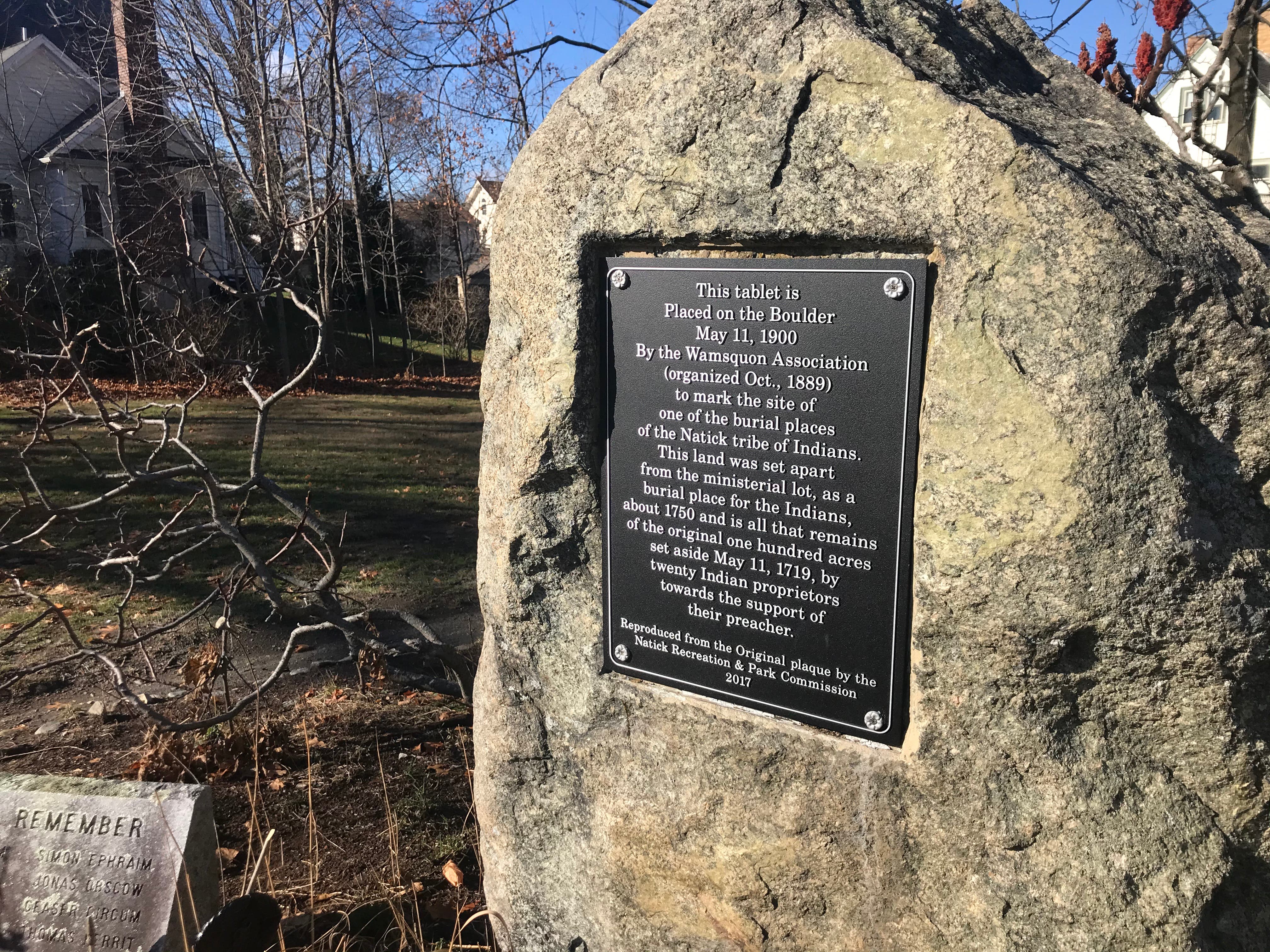
Quapish's remains were traced during an inventory of the Warren Anatomical Museum's collection under NAGPRA. Earlier this summer, the museum sought descendents of Quapish to claim his remains, but none came forward. The Mashpee Wampanoag tribe stepped in and asked that he be returned to the area where researchers believe he was first buried almost 250 years ago at a Native American graveyard at 29-1/2 Pond St. in downtown Natick.
The burial ceremony for Quapish will likely be discrete and non-public, according to Mashpee Wampanoag Tribal Historic Preservation Officer David Weeden.
"The primary focus of doing this is to ensure our ancestors are at rest and peacefully left alone," he said.
Get more local news delivered straight to your inbox. Sign up for free Patch newsletters and alerts.