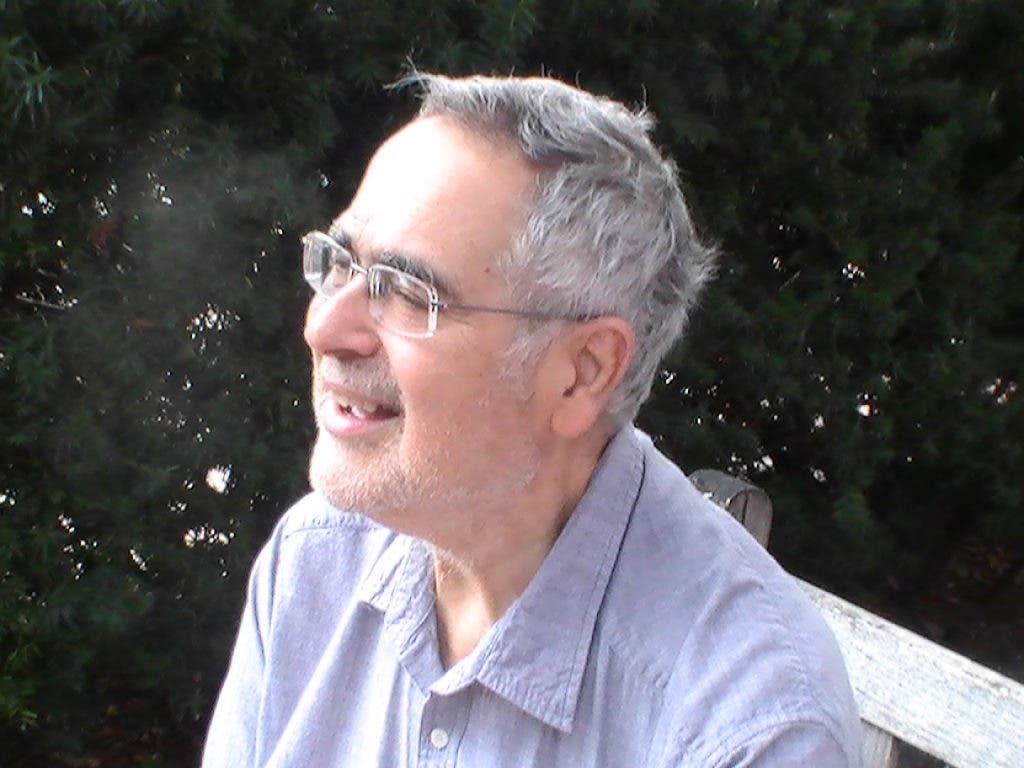

About four months ago, George Santiccioli, 65, realized he was in what he calls “an odd position." He was outliving the estimate he’d been given to live based on his diagnosis of advanced metastatic prostate cancer.
“I’ve lived longer than I thought I would and now people are telling me I should do survivor-type things,” he said.
The Needham resident’s search for “survivor-type things” led him to the Newton-based Facing Cancer Together, which offers support groups for people living with cancer and their primary caregivers. A weekly journal writing group, during which participants share entries about what they’re experiencing, appealed to the former computer programmer who previously studied literature at Columbia.
Find out what's happening in Needhamfor free with the latest updates from Patch.
“It’s become one of the important things in my life now,” Santiccioli said of the Writing for Wellness class. “It’s like a controlled cancer support group in the sense that we talk about ourselves but we also write and we have this one thing in common in our lives. We’ve all been affected by cancer which kind of colors everything.”
Santiccioli’s experience isn’t unique, said Nancy Gaulin, Psy.D., a staff psychologist at Facing Cancer Together (FCT). Social support for people facing the trauma of cancer is critical, she said.
Find out what's happening in Needhamfor free with the latest updates from Patch.
“FCT offers a range of support services that can help people with cancer and their family members manage the psychological, social and behavioral aspects of cancer that can affect their health care and outcomes. Participants who are strong advocates for themselves and are openly engaged in talking about their experiences may feel less alone with their experience of cancer,” Gaulin said.
A 2008 report from the Institute of Medicine translates scientific research findings into practical applications for improving the quality of cancer care and recommends the use of support groups during and after cancer treatment.
“According to the IOM report, cancer support groups can help people with cancer to promote a helpful sense of self-efficacy in dealing with the varied challenges of the illness and its treatments,” Gaulin said. “FCT offers a safe place to do just that.”
Founded in 2009, FCT offers clinician-lead support groups, expressive arts programming, and mind-body wellness classes to people living with cancer and their loved ones.
When Santiccioli was diagnosed with cancer two years ago this July, his prognosis was not good. The cancer had already progressed to his bones and, there was lymph node involvement as well. Meanwhile, he did not respond to conventional treatments.
“I assumed I was on a straight downward course to the grave,” he said.
But his oncologist entered him into a clinical trial that offered a different treatment. Santiccioli credits that, along with what he calls “home-brewed integrative oncology”—radical changes to his diet, the addition of exercise, and other lifestyle changes—with stabilizing his health.
“Around March it occurred to me for the first time that there would be a rest of my life,” he said.
Thus far on his journey into the rest of his life, he’s found great comfort in spending time with others going through the cancer experience.
“These are my people. There’s no other way of putting it. I understand them and they understand me,” he said. “Right now I’m sort of in this position where people are kind of confused and amazed by me, which is good. But I don’t know how much time I have."
At Facing Cancer Together, though, he is able to share his fears—and listen to those expressed by others going through similar experiences.
As Gaulin puts it, “There is value in helping people to make meaning of their experience as they go along.”
Facing Cancer Together is a nonprofit offering support services to people living with cancer and their loved ones. All cancer support groups are offered free of charge. Visit Facing-Cancer.org for more information.