Arts & Entertainment
Needham Filmmaker's 'For The Love of the Music' to Premiere Tonight at Boston Film Festival
Documentary feature tells the story of Cambridge's Club 47 and the folk music revival of the 1960s.


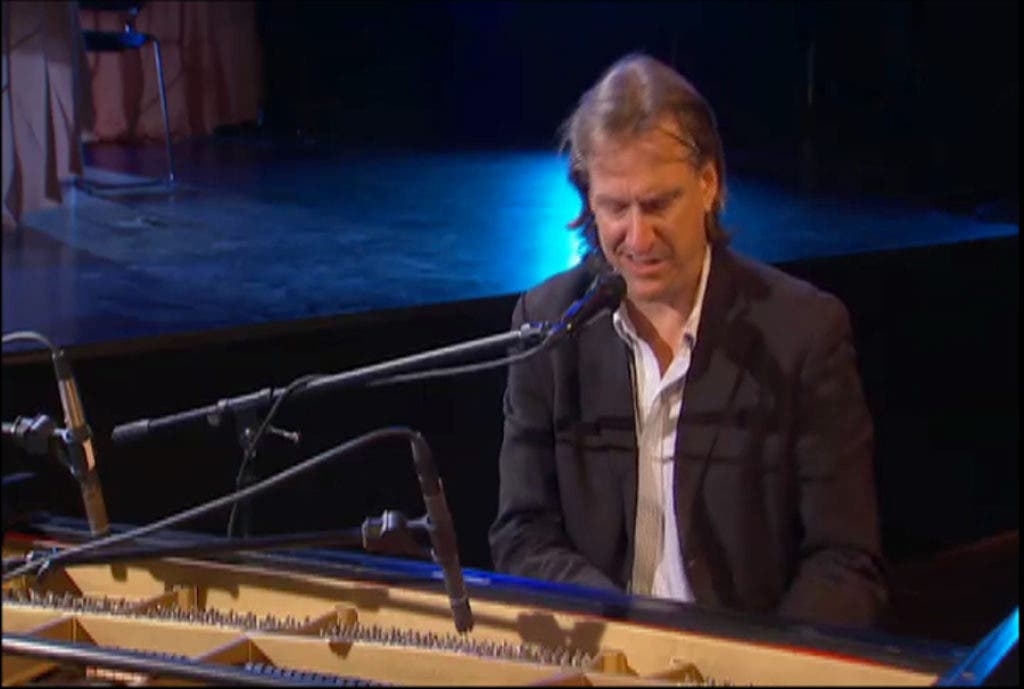


A new documentary film chronicling the Cambridge folk revival of the 1960s, co-produced and co-directed by Needham resident Rob Stegman, is being featured at the 2012 Boston International Film Festival this week.
“For the Love of the Music: The Club 47 Folk Revival” will premiere tonight along with another film, “White Space,” from 6-7:45 p.m. at the AMC/LOEWS theater in Boston Common. Tickets are available online.
The film tells the story of Club 47, an iconic Harvard Square coffeehouse—now known as Club Passim—that provided a stage to folk greats such as Joan Baez, Tom Rush, Taj Mahal and Judy Collins during the Cambridge folk revival of 1958-68.
Find out what's happening in Needhamfor free with the latest updates from Patch.
The film features interviews with a number of artists and people involved in the scene, shares previously unreleased music and photographs and mixes in newly filmed performances that bring together stars from that era.
According to a news release:
Find out what's happening in Needhamfor free with the latest updates from Patch.
Peter Coyote narrates the film, which documents the fateful day in 1958 when a young unknown singer named Joan Baez talked her way into becoming the first folk act to play the tiny Mount Auburn Street jazz club. From there, the film documents how the club blossomed to play a pivotal role in the American folk revival, which peaked in popularity in the mid-1960s.
'At the heart of it all was an amateur scene,' singer-songwriter Tom Rush says in the film, 'people playing for the love of the music.'
'For the Love of the Music' also explores the harsh business realities Club 47 faced over the decades, while also providing a platform for the civil rights and anti-war movements. And the film looks forward to the influence Club 47 and, later, Passim, has had and continues to have on folk, blues, bluegrass and rock ‘n roll.
The film also was shown at the SENE Film, Music and Arts Festival in Providence, RI on April 13.
In anticipation of the film’s Boston premiere, Needham Patch sat down with Stegman, a Needham resident and founder of BlueStar Media, to talk about the project, its challenges and successes, and what he likes about telling stories through film and video.
How did you get involved with this particular project? It actually came to me through my former college roommate [executive producer Todd Kwait]. He had made two music-oriented films prior to this one. When he was doing the other films, our schedules didn’t really align, but this one, he called me and asked whether I was interested. I’m not a fanatic, but I’m interested in music, in this type of music, so when he called with this project, I leapt at it. And it’s been a great experience. It was really kismet.
What was your role on the film? I’m the co-producer and co-director. In television, it’s called the line producer. It’s really the management functions—crew, travel, working with the editor, bringing the writer along, shaping the story. It is very much a creative management role. And then as co-director, it’s everything from choosing shooting style—documentaries can be created in all different ways, but settling on those creative decisions and then executing them—making sure that what you’re imagining the project is going to be is what it ultimately ends up being.
It was a collaborative experience. Todd is the executive producer and the co-producer on the project, and we very much aligned our vision before going forward, and then leapt in with both feet.
Is this the first feature film you’ve done? It’s the first feature. I’ve always done documentary-style production, and I’ve done three or four television documentaries for The History Channel and one for The Learning Channel. Those were television projects. The only difference is length—you’re a little more constrained in your storytelling and in the scope of your project for television.
Was it more challenging or more fun to create a feature-length film? The great thing about this is really, because it was an independent project and there was that collaboration, it was absolutely freeing in terms of having to check with anybody. There were always budget concerns, but not budget constraints, so if we thought something was a good idea, we would talk about it, decide whether it was worth spending the money to do that, and do it. Stories want to be told a certain way, and having the freedom to let the story evolve is very nice. It’s really freeing.
Was there a certain point in the process where you got a great story and you thought, “That’s it”? I would say it happened almost every step of the way. There were some interviews and some situations that we came out of going, ‘Hope we can get that in’ or ‘That was a nice story, but...” But I would say there were nice moments in pretty much every interview that we had—some of which unfortunately didn’t even make the show.
I would say the most interesting story to come out of this was this gentleman, Jackie Washington—Jackie Landron now. We did not know what to expect. He’d been out of the scene for a while. His story is a very complex one around race and civil rights and fitting in and that sort of thing. We had no idea what to expect. He ended up being far and away the most compelling story. It was a difficult moment, and we had to set it up just so. His story, I think, is the centerpiece of the movie, and it was completely unexpected.
What led you to study and eventually work in film? I got interested in television when I was in high school. Advertising, I was thinking about. I was lucky enough to go to a high school that had a television studio in it, so I started directing then. [Stegman graduated from Boston University with a bachelor’s of science in broadcasting and development].
I acknowledge that I’m very lucky to have been moderately successful at doing something I really love doing. I’ve worked with great people; I’ve worked on interesting projects. That’s what I love about it. I always talk about producing as a process-oriented occupation. The end is fine; it’s nice to have a really beautiful movie the way we have now. But I like the getting to it.
Get more local news delivered straight to your inbox. Sign up for free Patch newsletters and alerts.