Politics & Government
Newton Drone Owner Files Federal Lawsuit Against City
In his suit, Michael Singer claims federal law preempts a drone ordinance passed by the city in December.


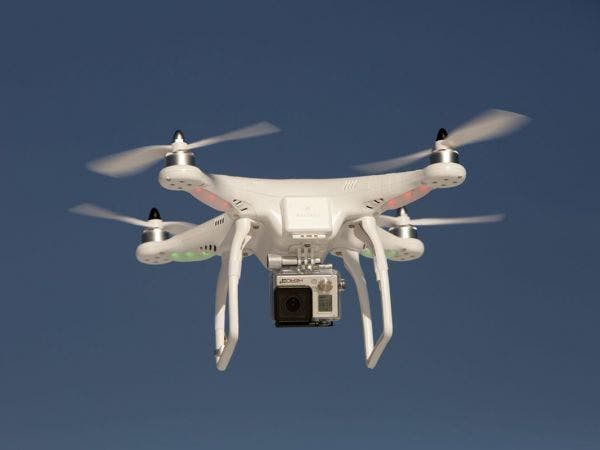
NEWTON, MA – A Newton resident filed suit against the city this week, claiming a recently passed drone ordinance is trumped by federal law and violates his First, Fifth and 14th Amendment rights.
In the suit, first published by the Newton TAB, Michael Singer also alleges the ordinance violates his statutory rights of navigation and the Massachusetts Privacy Act. Singer filed the lawsuit in U.S. District Court on Tuesday.
Newton's pilotless aircraft ordinance, passed Dec. 19, requires residents to register drones with the city, prohibits flight under 400 feet above private property without permission of the owner, requires drones to be within eyesight of the operator and prohibits flight above city or school grounds and sporting events without permission from the city, among other stipulations.
Find out what's happening in Newtonfor free with the latest updates from Patch.
Singer's suit alleges the law conflicts with the Federal Aviation Administration's regulation of airspace, which has its own regulations for small unmanned aircraft systems (sUAS).
"Newton's Ordinance takes off from a reasonable premise — protecting people on the ground — but climbs to unconstitutional heights," Singer's lawsuit says. "By attempting to regulate airspace and aircraft, the Ordinance increases the risk of aviation hazards, runs contrary to the will of Congress, and constructively denies sUAS operators access to the very airspace that the FAA allocated for them to use."
Find out what's happening in Newtonfor free with the latest updates from Patch.
According to the suit, Singer is a licensed physician and inventor certified by the FAA to operate small unmanned aircraft. He owns and operates two small unmanned aircraft in the city and is studying the use of drones to deliver medical services.
"sUAS have enormous potential to do public good," Singer writes in his suit. "They can deliver vital medicines, find a lost child, rush a flotation device to a drowning swimmer, monitor for Zika-infected mosquitoes, inspect buildings, survey land, and study wildlife. They enable hospice patients to (virtually) visit their favorite outdoor places before dying."
The Newton Law Department would not provide comment for the story, but said the matter is being evaluated.
Image via Shutterstock
Get more local news delivered straight to your inbox. Sign up for free Patch newsletters and alerts.