Community Corner
North Andover Searching For Its 'Post Cane'
Presented to the town's oldest living citizen, the cane went missing in the 1950s or 1960s.


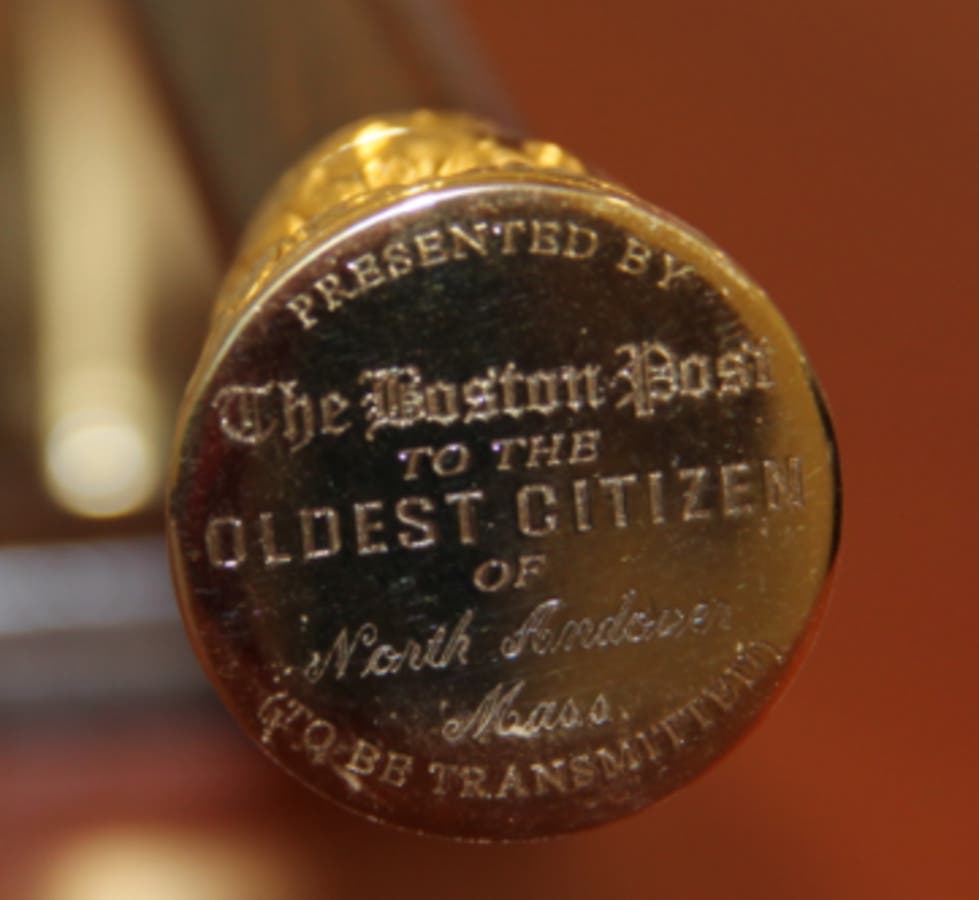
NORTH ANDOVER, MA -- Here's a decades-old mystery that needs solving. The North Andover Women's Club is looking for the town's "Post Cane," which is believed to have gone missing sometime in the 1950s or 1960s. The cane was presented to the town's oldest resident "until the appropriate time when it will be given to the next oldest citizen of the town."
Yeah, you can read between the lines on that one.
Boston Post Publisher Edwin A. Grozier sent the canes to the board of selectmen in 700 Massachusetts, Maine, New Hampshire and Rhode Island towns in 1909. Grozier excluded cities in his gift, and the towns were to retain ownership of the canes, technically, loaning them to the oldest resident.
Find out what's happening in North Andoverfor free with the latest updates from Patch.
The North Andover Women's Club is trying to restart the tradition and has purchased two replicas: one to be given to the oldest resident and one to be displayed at town hall. But the group would still like to find out what happened to the original cane and is asking anyone with information, as well as information of past recipients of the cane, to call Selectman Rosemary Connelly Smedile, who also serves as president of the North Andover Women’s Club, at 978-689-2949.
"Many towns have recovered their lost canes. Also, if you find the cane and return it, you will be rewarded with one of the replicas with gratitude and thanks," the group said in a news release. "So let the hunt begin, check your homes, attics, garages and barns. Ask your family and friends and help solve the mystery."
Find out what's happening in North Andoverfor free with the latest updates from Patch.
As for the Post, it folded in 1956 after 125 years in business. Grozier purchased the newspaper in 1891 and by the time he was sending out post canes, it was the largest newspaper in New England. Under Richard Grozier, who took over the paper after his father died in 1924, the Post became one of the largest newspapers in the United States.
But the younger Grozier suffered a breakdown after the death of his wife during childbirth. The paper began to decline with increased competition from other newspapers, as well as radio and, later, television.
Before its decline in the 1940s, however, the Post was the newspaper of record for Boston. In 1921 it won the Pulitzer Prize for its investigation and exposure of Charles Ponzi's financial fraud. Richard Grozier and City Editor Edward Dunn fielded complaints about Ponzi's "too good to be true" investment returns. It was the first time a Boston-based newspaper won journalism's highest honor.
Subscribe to North Andover Patch for more local news and real-time alerts.
Photo by North Andover Women's Club.
Dave Copeland can be reached at dave.copeland@patch.com or by calling 617-433-7851. Follow him on Twitter (@CopeWrites) and Facebook (/copewrites).
Get more local news delivered straight to your inbox. Sign up for free Patch newsletters and alerts.