Community Corner
Strategies to Bump Up Your FICO score
"As a guideline the scores will result in different types of loan availability."
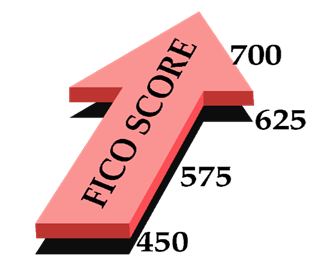
One of the biggest factors lenders use in determining credit worthiness is the FICO score; a numerical evaluation of a borrowers financial potential and history.
As a guideline the scores will result in different types of loan availability. As a rule of thumb, the following scores will result in different levels of credit offered to a borrower:
- 300-580: No credit or extremely high interest rates
- 581-650: High interest rates
- 651-710: Moderate interest rates
- 711-750: Competitive interest rates
- 751 and up: Lowest interest rates
It is important to understand how the FICO score is determined and steps a potential borrower can take to increase the score.
There are factors that are assessed when determining a borrower’s score.
- Payment history -- how payments have been made by the borrower in the past and how long a borrower has had credit.
- Outstanding debt -- how much a borrower currently owes in total.
- Credit types -- lenders prefer to see borrowers that have fixed loans, auto or student loans, and revolving credit.
There are steps that a potential borrower can take to move the score up; it may take some time, but moving to the next tier of interest can save thousands of dollars over the life of a loan.
Find out what's happening in North Andoverfor free with the latest updates from Patch.
- Review your credit report from all three agencies for accuracy and insure that errors are corrected – Even small errors on your credit report can cost points. It is a wise idea to review your score yearly.
- Make sure agencies report your credit limits accurately - Since FICOS looks at the percent of your debt to your available credit, you could be losing points due to mis-reported credit limits.
- Pay down balances on loans and credit cards - bring the balances of your cards down by making a larger payment each month
- Don’t close out older cards that have no balance - In fact use the older cards from time to time; the length of time that you have had credit is a big factor.
- Don’t open new lines of credit - Prior to making a big investment it is unwise to open new lines of revolving credit; FICOS looks at all available credit and newly opened lines send up a red flag.
- Pay every bill on time or early - Make all installment payment on time or early; it is a good idea to understand when your credit companies report to the three different agencies and insure that your payment are reflected accurately.
- Keep the percent of debt on each card to 20 percent of the available credit; Spread debt out over a number of cards. It is best to spread your debt out over a number of cards than to have only one that has a high balance.
- If you only have credit from revolving accounts consider a fixed loan, an auto loan - Borrowers with both types of credit are most attractive in the financial market.
The savvy borrower of today will manage their FICO score. By making a conscious effort of getting the score as high as possible and keeping it there can mean saving thousands of dollars.