Schools
Algonquin Students Meet Author M.T. Anderson
In a society, maybe not so far from our future, author M.T. Anderson delves into the world of technology and marketing in his sci-fi book, Feed.
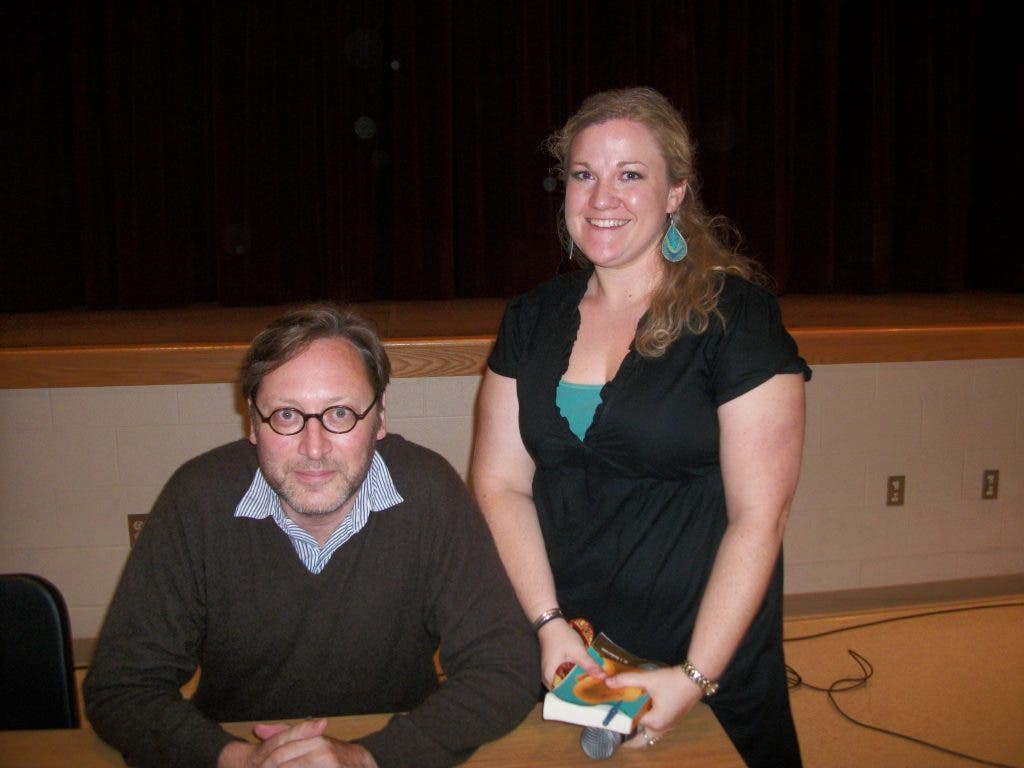

Feed was ’s "One School, One Book" selection this summer, and as part of the program author M.T (Matthew Tobin) Anderson was invited to speak to the students on Sept. 9.
“In a future world where internet connections feed directly into the consumer’s brain, thought is supplemented by advertising banners, and language has gone into a steep decline, a little love story unfolds,” reads the description of the book on Anderson’s website.
Emily Philbin, Algonquin’s Chair of the Book Committee, led a group of other teachers representing each department through the book selection process. At the first meeting, they had a list of 100 books that dwindled to the top three. Those books were read and discussed before Feed was chosen as the summer book.
Find out what's happening in Northboroughfor free with the latest updates from Patch.
Philbin took a chance and found Anderson’s website and email address and contacted him to invite him to speak to the students at the beginning of the school year. He was more than agreeable and accepted the invite.
“It is a process to choose the book,” said Philbin. "I’m already thinking ahead to next year and looking for other local authors.”
Find out what's happening in Northboroughfor free with the latest updates from Patch.
Anderson, a Stow native, greeted the students by thanking them for reading his book and humorously apologizing for ruining their summer with their having to read over the summer.
He read the first chapter of the book, followed by a lecture about why he wrote the book and what it meant. Students had the opportunity to then ask questions directly to Anderson, which led to an interesting discussion. The event ended with a much anticipated book signing.
Feed, a National Book Award Finalist, was written partially about things Anderson was angry about as a teenager.
The theme of technology is part of the book. Anderson questions, “Is technology and us all being linked in with one another making us more connected or not? In some ways, it is changing how community is being experienced.” It’s a complex question.
He used an example of how on-line relationships can be shallow and how it is difficult to express emotions, such as grief, on line.
The second theme of the book regards marketing and how it influences the way we create ourselves. “Marketing often has a bullying attitude,” said Anderson.
Students were to have classroom activities relating to the themes of the book after the author event.
Tenth grader Jennie Kush found the Q&A session helpful to answer some of the questions she had while reading the book.
Student Laura Welch admitted that while reading the book she was “freaking out that this is how it will be” in our future.
Another student, Fiona Watkinson, said that although she “found the dialogue weird, the message was good.”
Algonquin Principal Tom Mead and Philbin both felt that the book tied in well with science, health, and math curriculum; and having the opportunity for students to hear Anderson discuss the book was a positive experience.