Schools
Athlete of the Week: Heading to the Olympics in Curling
An Algonquin student heads to the Winter Youth Olympics as part of the curling team.


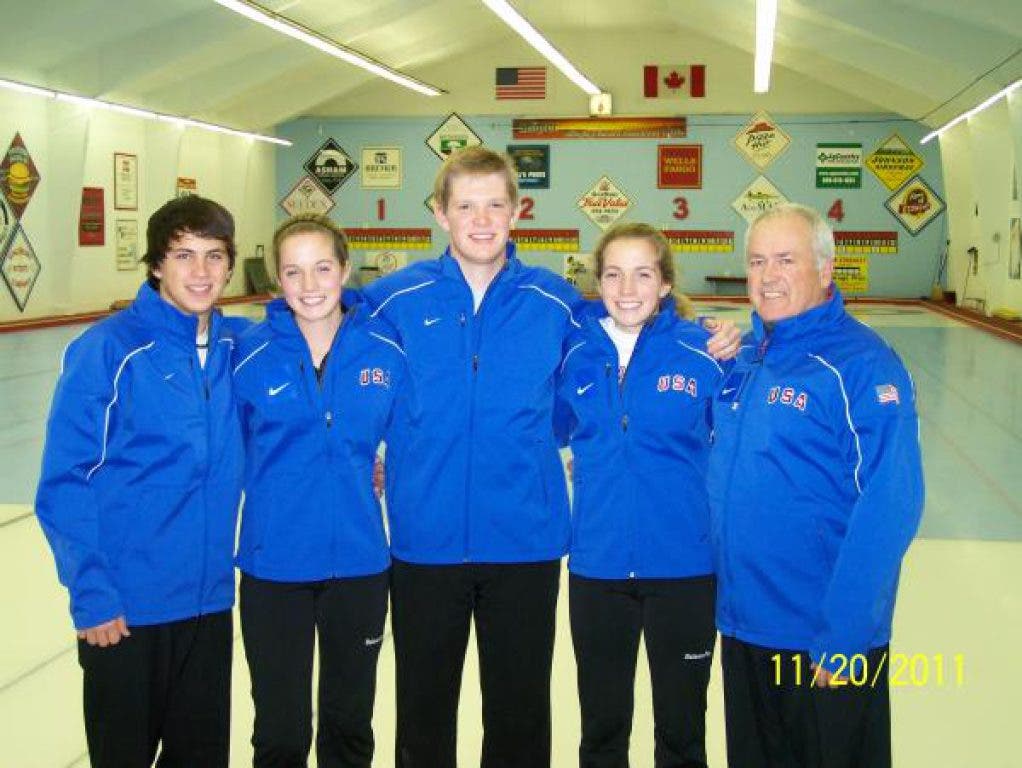

For Korey Dropkin, curling is a family sport. Now, it's taking him to the Olympics.
On Nov. 16, the junior competed in the Olympic Trials in Grafton, North Dakota in curling. Involving nine teams, the competition was set up round robin style, with four heading to the playoffs.
Dropkin's team prevailed, and he'll join three others to head to the the 2012 Winter Youth Olympic Games in Innsbruck, Austria.
Find out what's happening in Northboroughfor free with the latest updates from Patch.
Not a "typical" sport to learn, never mind excel at, in the United States, Dropkin has been curling since 2000, when he was five years old. His dad, Keith, started curling when he was in college and introduced it to Dropkin's mom, Shelley, when they were dating. His brother, Stephen, is also a well-known curling player.
Dropkin used to also play soccer at Algonquin, as well as outdoor track and field, but no longer plays those sports. "I am focusing on doing the best I can at curling," he said.
Find out what's happening in Northboroughfor free with the latest updates from Patch.
He's a member of two curling teams, both called Team Dropkin. He plays on a Junior Men's U21 team, and a Youth Olympic team, which is a mixed team of boys and girls between the ages of 16-18. His Junior Men's team is skipped by his brother, Stephen, who is 21.
Stephen, too, is a well-known skip in the country and has participated in several U.S. Men's Junior Curling Nationals. Joining Stephen's team in 2009-2010 along with another player Thomas Howell, the Dropkins made it to the Junior Nationals, but lost in the first playoff game.
"We still placed fourth, though, out of ten teams," said Dropkin, "which was fourth in the nation. Howell and I had never gotten to the nationals before, so we were thrilled, but we wanted more."
Traveling more and entering more tournaments, his team has won more than $10,000 in championship money. The team again made it to the Men's Junior Curling Nationals, this time advancing to the semi-finals.
This past summer, Dropkin was selected to participate in the U.S. Olympic Committee High Performance Program as athletes training for the 2018 Olympics.
"That's been a thrill as well," said Dropkin. "Then, to top all that, I put together a mixed team to try out for the Youth Olympics. The playdowns were in Grafton, ND, in November, and there were nine teams signed up for it. So there was a full round robin, and each team played everyone. We ended up winning the playdown, qualifying as the team to represent the USA in the First Inaugural Winter Youth Olympic Games (for 16-18 year olds) in Innsbruck, Austria from Jan. 13-22. So that is something that I am really looking forward to."
Dropkin said he usually practices or plays games four to five times per week, and his Junior Men's Team competes in tournaments every other weekend. As part of the HPP program, the players were instructed by Olympic trainers, so he was given a 12-week workout program to physically train for the curling season.
After high school, Dropkin plans on attending a "good college," perhaps in the midwest or Canada, and has gained interest from UNI of Minnesota as well as UI of Madison.
"Curling in the midwest it much more popular than in the east coast," said Dropkin, "which is part of why I want to go to college in the midwest. There are many more curling clubs in the midwest as well. So I feel like the midwest will be a good fit for me."
So what's curling? Here is some background on curling, courtesy of Dropkin: It was started on the frozen Ponds of Scotland in the 1500s and is currently the second biggest money earning sport in Canada, second to hockey. It's a combination of shuffleboard on ice blended with bocce, and the strategy of a chess game. A curling match lasts for 8 or 10 ends; ends are like the innings in baseball. There are four players on a team: the lead, second, vice skip and skip. The skip is the captain who determines the strategy and overall plan for how the game will be played. Each member of the team throws two stones, alternately against their opposition. Each team throws a total of 8, 42-pound granite stones/rocks. The lead throws the first set of two stones, the second throws the second set of two stones, the vice throws the third set of two stones, and the skip throws the last set of two stones. The vice helps call strategy while the skip throws his/her two rocks. The team with the most rocks closest to the center, or the button, of the target (called a house) wins the end. At the end of the 8 or 10 ends, the team with the most points wins the game.
Get more local news delivered straight to your inbox. Sign up for free Patch newsletters and alerts.