Schools
Being Gay In High School: Part I [VIDEO]
In part one of our series on the Gay Straight Alliance at Algonquin High School, Northborough Patch learns about the GSA itself.




“I’ve been called a dyke,” said one girl during a meeting of the Gay Straight Alliance (GSA) at last week, “but I’m not out. It’s just that I have short hair. I wear ties and stuff and I dress kind of guy-ish and that gives people the idea. I’ve never had anything happen to me where people are in my face. It’s just in passing. I’m coming out. I’m working on it.”
For many, that's exactly what the GSA provides for kids struggling with their sexuality, or hoping to change people's reactions to their sexuality.
October not only marks National Coming Out Day (Oct. 11), but it is the anniversary of the Matthew Shepard tragedy. Most remember the story.
Find out what's happening in Northboroughfor free with the latest updates from Patch.
On Oct. 7, 1998, Shepard was lured by two men to a remote area in Laramie, WY, where he was tied to a fence, savagely beaten and left for dead. He died on Oct. 12, and the death immediately permeated the media and magnified attention on hate crimes on gays.
To many, it’s a heart wrenching display of vicious and premeditated hatred (though the motive is still debated). Most remember the story and shake their heads; most were affected by it. But gay and bisexual people drape special significance on the Shepard story, and those like it, reflecting on the attack as not only a remembrance that hatred and bigotry still exist, but also a reminder of the strides in tolerance that have occurred since then.
Find out what's happening in Northboroughfor free with the latest updates from Patch.
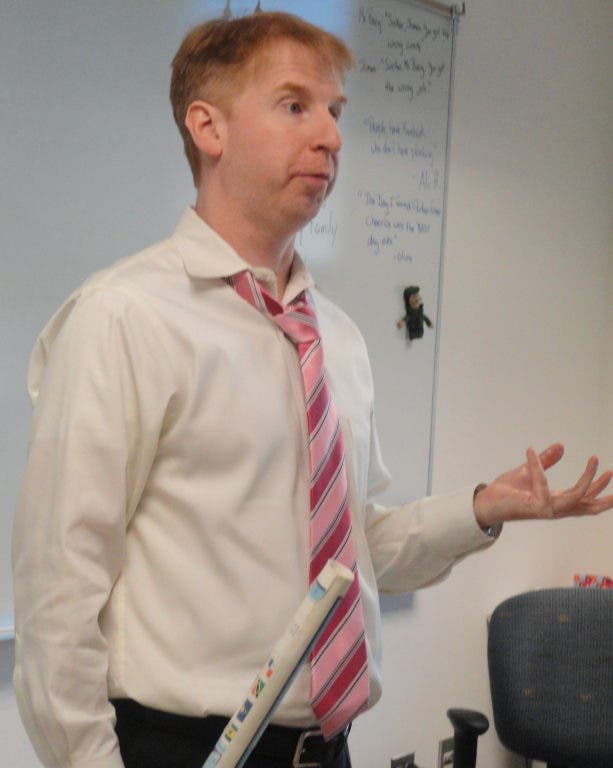
When Northborough Patch sat in on a Gay Straight Alliance (GSA) meeting last week at , the group, led by president Jacob List (and advised by teacher John Barry), talked about the Shepard tragedy and used it as a springboard to discuss initiatives and events in their school.
Years ago, when Shepard was murdered, there were very few groups such as the Gay Straight Alliance (GSA), particularly in a school setting. But every Thursday after school, in Barry’s classroom, kids who attend Algonquin have the opportunity to pop in and contribute to GSA meetings.
Barry, who teaches social studies at Algonquin, attended the high school as a student, has been teaching at the school for 19 years, and advising GSA for 10 of those years. He says Algonquin was one of the first high schools to have a gay straight alliance.
“It was around the time of the Education Reform Law of 1994,” said Barry. “It was Gov. [Bill] Weld that made it a mandate that every public high school have a gay straight alliance, and we were one of the first to jump on board with that. We’re talking at least 17 years ago, so almost my entire institutional memory here at Algonquin.”
Back then, said Barry, calling someone a “faggot” because they didn’t play a sport was simply part of a permeating cultural glossary of terms. Gay teens needed a place to feel safe, and talk about issues.
Barry said the group’s focus and size changed, and added it’s a more confident group than when he, and it, first started.
“GSA kind of changes from year to year,” agreed List, who has been the group’s president for the past three years. “It depends on what the people who are in it need. When I was a freshman, the group wasn’t nearly as big as it is now. We did some activist things, but it was more of a support group then, which wasn’t bad because it was what people wanted and needed.”
At last Thursday’s meeting, the GSA’s agenda focused on coming out day, and List and other board members urged those who wanted to speak to classes to do so. They also talked about plans to join the nation in wearing purple on Oct. 20 to bring attention to gay teen bullying and intolerance.
“I’ve been bullied since sixth grade, constantly,” said one girl, who is gay. “People were spreading rumors that I got some girl pregnant, which obviously isn’t possible. I get made fun of for being open about my sexuality and being myself. I think it’s ridiculous, because, who cares?“
Of the 35 some teens we talked with, a majority chose to remain anonymous (those who didn’t will be the focus of upcoming stories in this series). Some of these teens are not out to their families, others not out at all.
More than half of the regular attendees consider themselves gay or bisexual, but there are a handful of straight members, as well, including Rachel Barrett.
“I have gay friends, and I guess growing up I was never, like, homophobic,” said Barrett. “My family was never really homophobic. My mom is Christian but says she doesn’t believe in it. She said, ‘If you were gay, I don’t agree with it, but I won’t judge you for it.’ I have a really open family about that. I didn’t think it mattered. And when I found out they had a GSA here, I wanted to go because it shows that not every straight person is homophobic. I came because I really believe in gay pride and stuff and I don’t believe there is anything wrong with it.”
Holly Bisset, who is also straight, serves as an honorary board member, and helps List organize the meetings. For Bisset, being involved in GSA "runs in the family." Her brother, a past president of GSA, is also straight.
"People have asked me before why I'm in GSA," said Bisset. "I tell them it's because I like the people who are here. They are nice and I support the cause. My mom always said I'd be an advocate for someone's rights. I just don't mind if people are gay. I don't dislike someone because they are gay; I dislike them because they are annoying."
This is part I on our series on the Algonquin GSA. Stay tuned to Northborough Patch for “Dealing with Intolerance” and “Coming Out Stories.”
Get more local news delivered straight to your inbox. Sign up for free Patch newsletters and alerts.