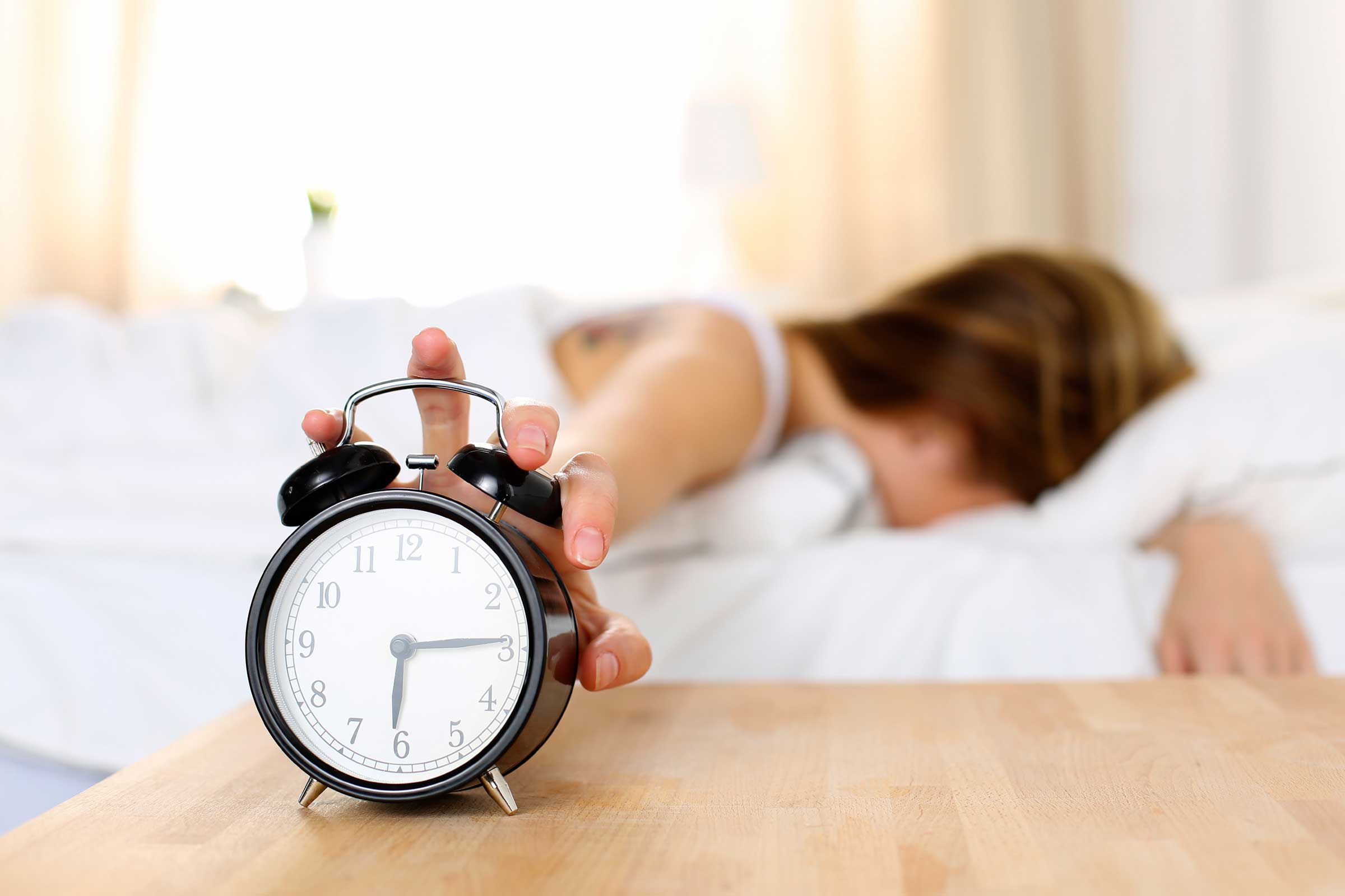
Did you remember to set all your clocks ahead? Daylight Saving Time means you lose an hour of sleep (‘Spring forward’). And contrary to what most people think, when the law passed in 1918, it wasn’t farmers who supported it, but rather city dwellers, retailers and recreational businesses.
Many people feel the effect of ‘changing the time’ for a few days, somewhat like jet lag. For most of us, iit wears off quickly. However, for people who have sleep issues – such as sleep apnea – the adjustment can be more challenging. Sleep apnea sufferers, often with heavy snoring that keeps others awake, are chronically fatigued throughout the year. A person who suspects sleep apnea should have a sleep test. Depending on the results, the doctor might prescribe CPAP (Continuous Positive Airway Pressure) therapy, in which a gentle airflow through a hose and face mask keeps airways open so sleep continues uninterrupted.
According to Respiratory Therapists at Reliable Respiratory based in Norwood (Mass.) (www.reliablerespiratory.com), chronic fatigue left untreated can result in poor health, lost productivity, depression -- even death. Long-term sleep deprivation can lead to high blood pressure, stroke, cardiovascular disorders, heart failure, dementia, memory problems, obesity, and diabetes. It can also lead to highway and workplace accidents. A few years ago, it was confirmed that the engineer in a horrific New York commuter train accident suffered from sleep apnea and fell asleep at the controls. It’s estimated that 30 million Americans have sleep apnea and most have not yet been diagnosed.
Find out what's happening in Norwoodfor free with the latest updates from Patch.
Here are experts’ recommendations to adjust to Daylight Savings Time that can also guide you throughout the year. On the day after setting clocks ahead:
* Get up at your regular time -- Don't sleep in.
Find out what's happening in Norwoodfor free with the latest updates from Patch.
* Spend an hour or more outside -- Sunlight helps advance your body clock.
* Take a morning walk -- After a short night, walking is an easy exercise.
And here are some lesser-known suggestions for a better night’s sleep all year long:
· Eat 3 - 4 hours before bedtime and stay away from sweets and caffeine.
· Eat healthy but gaseous foods for lunch, not for supper. (e.g. beans, cauliflower, broccoli and Brussels sprouts.) A system full of gas makes it difficult to sleep.
· Ban electronic items from your bedroom. No television, computer, tablets, video games, cell phone. Blue light prevents the release of melatonin, a hormone associated with nighttime.
· Write in a journal before going to bed. List 10 things you were grateful for that day and at least one thing you did that was a blessing for someone else. It's better than counting sheep!
· Avoid intense television programs or movies. Relax with a warm bath and curl up with a book.
Reliable Respiratory, one of the region’s leading providers of CPAP equipment and supplies, is a member of the Neponset Valley Chamber of Commerce and its Health & Wellness Alliance, and is a supporter of St. Jude Children’s Research Hospital, the Cystic Fibrosis Foundation, and Boston’s Schwartz Center for Compassionate Healthcare, among others.
For more than a decade, Reliable Respiratory has been a leading home respiratory equipment supplier, providing state-of-the-art equipment to help patients achieve maximum compliance that can result in a better quality of life. For info, call (866) 551-3335, email support@reliablerespiratory.com or visit www.reliablerespiratory.com. - By Stanley Hurwitz / stanhurwitz@gmail.com / 508-269-0570
-