Health & Fitness
The Ties That Bind: George Peabody and the Crystal Palace
The world's fascination with the Olympics in London is reminiscent of the first World's Fair that opened there in 1851 with the pivotal support of our city's namesake, George Peabody.
The Ties That Bind: George Peabody is a blog about the city’s namesake: George Peabody, the world’s first international philanthropist.
Born on Washington Street in 1795 into a poor family, he received a limited education in the school on the square, apprenticed as a child in a local hardware store and went on to become a merchant banker who used his money to support many causes, chief among them were education and public housing. Many of the enterprises he endowed remain alive and vital organizations.
Featuring newspaper accounts published locally during his lifetime, we meet “Mr. P” the same way as folks living here in the mid-nineteenth century came to know him. He moved away while in his youth, first to Newburyport, then to Baltimore and on to London. The people of his hometown were curious to learn about the benefactor who gave the town the funds to build the Peabody Institute Library on Main Street. As a result, the local newspapers, "The Danvers Courier" and the "South Danvers Wizard", reprinted any news about Peabody appearing in the international and national press.
Find out what's happening in Peabodyfor free with the latest updates from Patch.
---
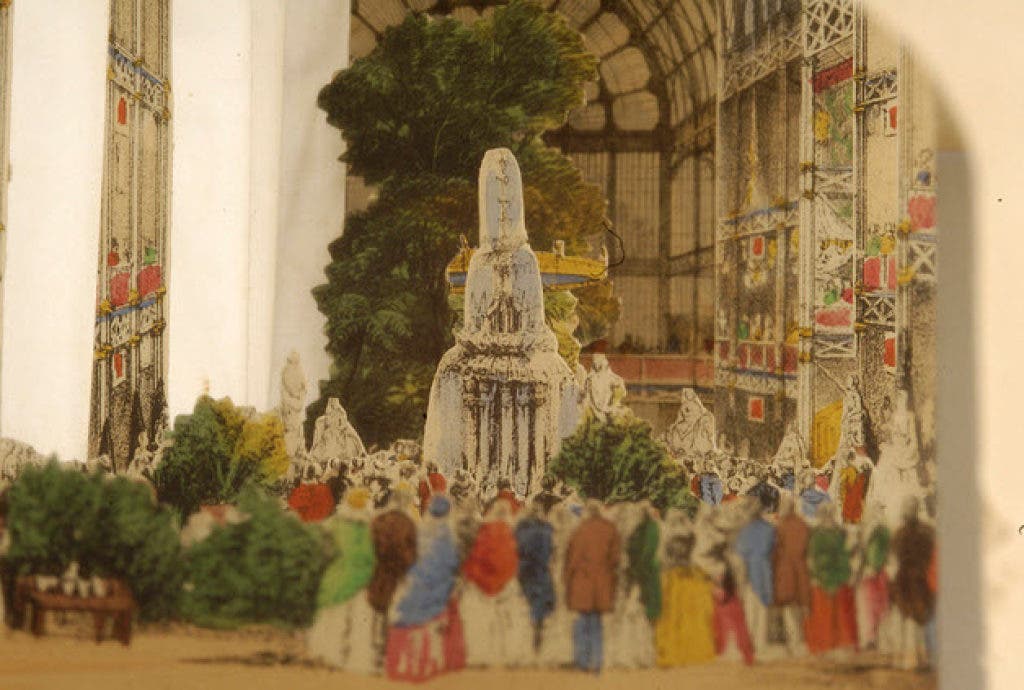
The Crystal Palace exhibition of 1851, a Victorian pleasure ground, was a passion of George Peabody, who then lived in London. Without his donation, the new inventions of the United States would have been missing from the exhibits featured at the first World’s Fair.
Find out what's happening in Peabodyfor free with the latest updates from Patch.
At 57, Peabody was large-framed, six feet tall and “slightly stooping at the shoulders.” He wore neat and fashionable attire and had a dignified bearing which made him appear as more of an English gentlemen than an American merchant.
His remarkable achievements in connection with Anglo-American trade began with
opposition in the House of Commons to the conception of the Great Exhibition. When the plans were first discussed, George Peabody was “shocked to learn that the governments of all other participating countries were subsidizing their exhibitors, but that the United States government alone was not providing funds.”
Congress did not provide an appropriation; the American commissioners who came to London were unpaid volunteers.
Abbott Lawrence, the American minister, was perturbed by the situation. Two months before the Exhibition opened, George Peabody sent Lawrence a polite note offering a loan of 3,000 pounds (about $15,000) to be spent on the American exhibits.
Peabody’s loan made it possible for “the American pavilion to be suitably prepared and decorated. With the help of Peabody’s financial contribution, America’s inventions were laid out to impress visitors: Alfred C. Hobbs’ unpickable lock, Samuel Colt’s revolvers, Hiram Power’s statue of a Greek slave, Cyrus McCormick’s reaper, and Richard Hoe’s printing press,” wrote Franklin Parker in
the biography "George Peabody."
Six million people paid an entrance fee to visit the Crystal Palace. The American Pavilion was very popular; George Peabody had a season ticket. He wrote to a friend in Washington “that the Exhibition was becoming more interesting every day, but that he himself was so busy that he had passed but one hour in it.”