Arts & Entertainment
Peabody Leather Industry On the Global Map
New digital maps at the Leatherworkers Museum web site tell the history of the leather business.


The is putting the city's leather industry on the global map – literally.
Later this month, new maps will depict the location and description of each leather-related business in town from 1939 to 1989.
“Now a researcher in Turkey can study our leather industry. This gives access to our archives from anywhere in the world,” said Merritt Kirkpatrick, curator of the George Peabody House Museum and Peabody Leatherworkers Museum.
Find out what's happening in Peabodyfor free with the latest updates from Patch.
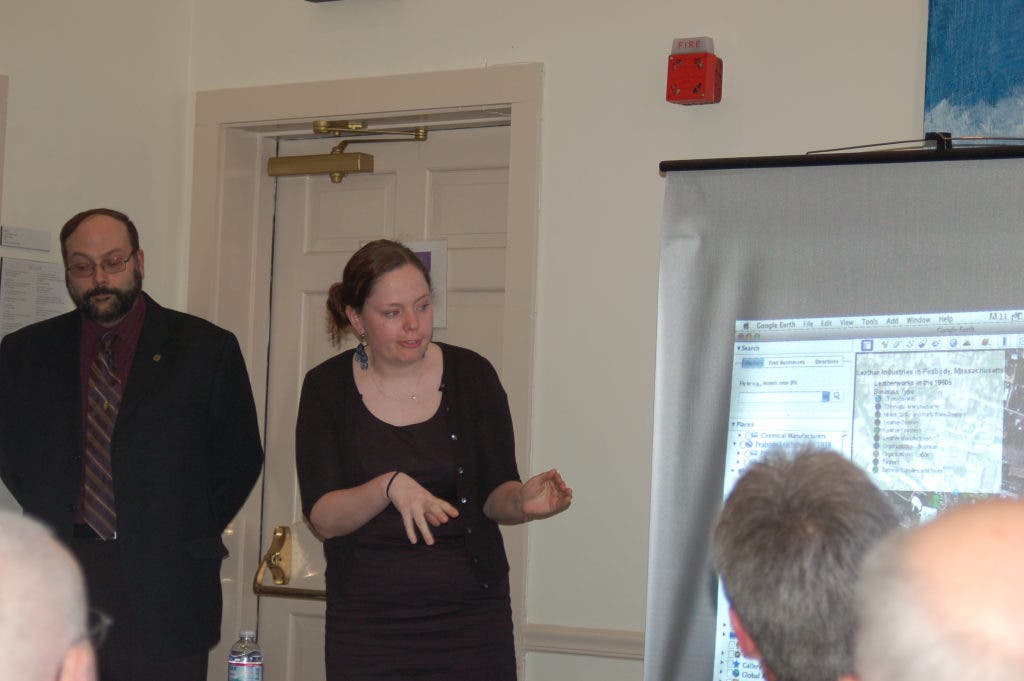
With a $3,500 grant from Mass Humanities and the expertise of Salem State University students, the leatherworkers museum has used Google Earth and Global Information Systems software to map the locations of each leather-related business in Peabody.
With just a click on a location, the name of the leather business pops up on the screen.
Find out what's happening in Peabodyfor free with the latest updates from Patch.
Kirkpatrick's plan is to link all the museum's archives to the new digital maps. She hopes it will encourage people with photos and information about the leather industry to go on-line or come to the museum and share it with the museum.
There will be a computer and large monitor in the museum to allow people to upload their personal histories and photos to the museum's on-line collection, Kirkpatrick said.
The Peabody leather industry was at its peak during the late 19th and early 20th centuries. A.C. Lawrence owned four factories that employed thousands, who performed the hard and dirty work from sunrise to sunset. The industry began to fade away after World War II.
The museum unveiled the new digital map of the historic leather-related industry sites to a standing room only crowd at the Peabody House. In the audience were several people who worked in the industry or were descendants of leather workers.
Henry Sullivan, who retired from a career in A.C. Lawrence factory in 1969, was disappointed that the maps did not have more information. “But it is a start,” he said.
The digital maps were assembled from historic business directories by a crew of students, who included Adam Kohn, Charles Rupp and Hannah Barthelemy.
Kirkpatrick, who described herself as now a “nerd,” said she attended a conference on how new computer geographical tools could be applied to historical research. When she found that Salem State had professors and students were also interested in applying geography to history, she decided to do the project. The students started work on the project last fall. Kirkpatrick said she expects the project to be completed by the end of the year.
“I didn't know where everything was, and I wanted to know,” she said.
Now anyone interested in the Peabody leather industry can log on and find out where everything was.