Politics & Government
Peabody Poised To Ban Retail Marijuana Sales
City Council is scheduled to consider a new zoning law next week that would ban retail marijuana establishments in Peabody.


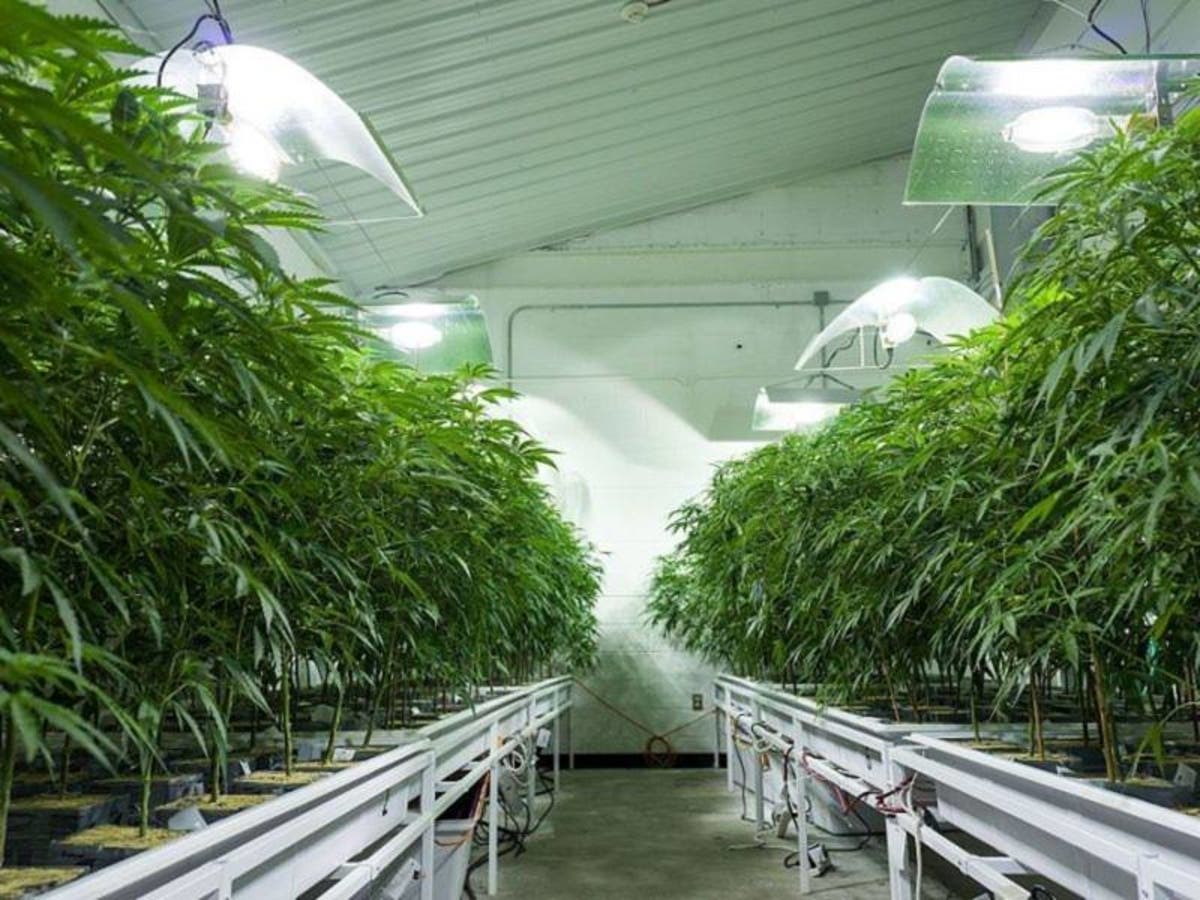
PEABODY, MA -- Peabody may be the next in a string of Massachusetts cities and towns to pass laws banning retail marijuana sales under the state law passed last year that would legalize recreational pot. City Council will consider a zoning amendment at its meeting on Thursday, November 16. The push to ban retail marijuana sales is backed by Peabody Mayor Ted Bettencourt.
But the ban may not be completely for moral reasons. In May, Daniel Fishman, a Beverly resident and ranking member of the Massachusetts Libertarian party, debated the Peabody pot proposal with Bettencourt in op/ed pieces in the Boston Globe. In his piece, Fishman suggested Peabody's retail marijuana ban was a way to protect the city's tax revenue from a proposed medical marijuana dispensary.
"I am going to give city officials the benefit of the doubt and assume it’s for moral reasons. I doubt the fact that the city is also considering zoning changes that will allow medical marijuana in the city has anything to do with wanting to keep a legal and cheaper alternative to medical marijuana out of the city," Fishman wrote.
Find out what's happening in Peabodyfor free with the latest updates from Patch.
The vote to ban recreational marijuana sales in Peabody mirrors debates playing out for legislative bodies in a band of towns along Route 128 north of Boston that all voted against last fall's ballot question to legalize recreational marijuana use and sales in Massachusetts. Starting in Bedford, the list of towns voting "no" on Question 4 in last year's general election winds east and includes Lexington, Burlington, Woburn, Winchester, Stoneham, Reading, Wakefield, Saugus, Lynnfield, Peabody, Danvers and Wenham.
No town voted overwhelmingly against legalization: the biggest margin was in Lynnfield, where 60.1% voted against the ballot question. In Woburn, just 50.7% of voters opposed legalized cannabis. The new laws do not apply to medical marijuana facilities and sales.
Find out what's happening in Peabodyfor free with the latest updates from Patch.
Almost all of the towns in Massachusetts that voted against Question Four are considering or have adopted laws that will ban recreational marijuana sales. In Peabody, 14,973 voters, or 54%, opposed Question 4 while 12,770 voters, or 46%, supported it.
Statewide, the measure passed by a margin of 1,745,394 to 1,511,747. Earlier this year, the state legislature passed a "compromise bill" that reworked the law to address concerns in the original language of the law. One of the biggest changes in the compromise bill was giving towns where the measure failed more leeway to ban recreational marijuana sales. That bill directly led to Wednesday night's vote by Lexington Special Town meeting.
By passing the measure, Peabody would lose its chance to collect a three percent, local sales tax on recreational marijuana sales. And it may prove even more costly: backers of recreational marijuana want to penalize towns and cities and town that ban retail marijuana sales. If the group's proposal works, municipalities with retail marijuana bans would be unable to tap into the pool of money that will come from the state's 17% sales tax on marijuana sales.
While their plan is admittedly facing steep odds of working, those legalized marijuana backers are pushing state legislatures to make sure towns that ban marijuana sales do not get any of the state tax revenue that will be generated from the sales.
"Municipalities shouldn't be entitled to something they took no part in," Kamani Jefferson, who runs the Mass. Recreational Consumer Council, told the Boston Globe, which originally reported on the proposal. The proposal "would force their hand and really encourage them to let these businesses in."
How much tax revenue will be generated is a question open for debate. Shawn McCormack, a litigation, real estate and environmental attorney in the cannabis group at the Boston-based law firm Davis Malm, said there have been varying estimates of how big the legal marijuana market will be in Massachusetts, so it's impossible to accurately predict how much towns could collect from the 3% sales tax, which would be on top of a 17% state sales tax on marijuana.
"Nobody really knows how large the recreational marijuana market will be, but estimates are between $700 million and $1.3 billion in sales in the first two years, meaning this could be a significant revenue source for municipalities," McCormack told Patch.
For more on this story, see the Boston Globe. Subscribe to Peabody Patch for more local news and real-time alerts.
Patch file photo.
Dave Copeland can be reached at dave.copeland@patch.com or by calling 617-433-7851. Follow him on Twitter (@CopeWrites) and Facebook (/copewrites).
Get more local news delivered straight to your inbox. Sign up for free Patch newsletters and alerts.