Health & Fitness
Preferably Preserved: Convert your barn to legal living space!
A number of home owners in Reading have the ability to create legal living space for in-laws, entertaining, or accessory apartments under a unique local by-law!

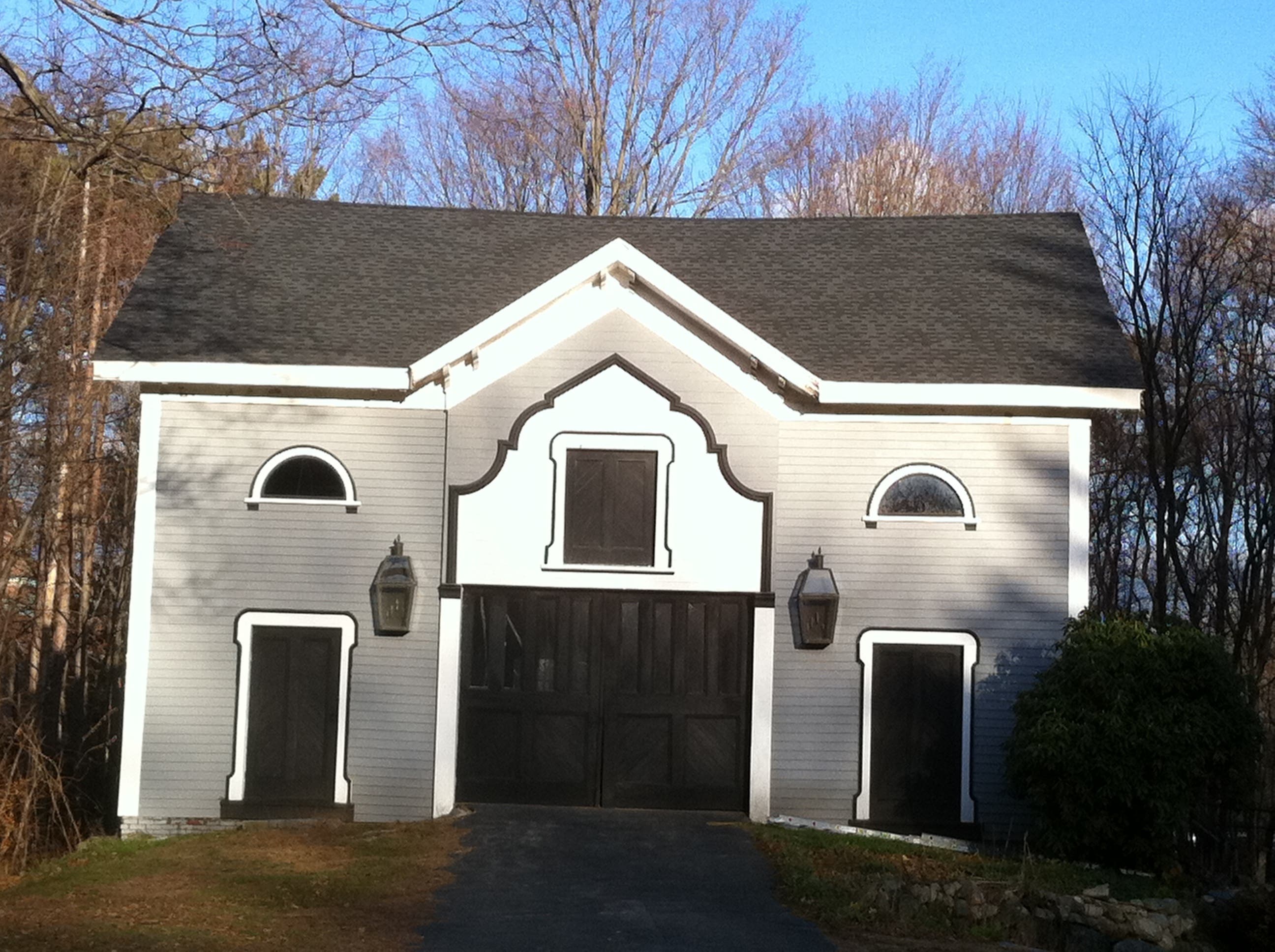

As an equestrian who can only imagine what rural Reading was like 30 years ago (and who drives 30 minutes to see her horse several times per week at $3.25/gallon!) – I have always been a huge fan of the “Carriage House-Stable-Barn Preservation” By-law (Zoning By-law 4.3.2.10). This local by-law was introduced by the Reading Historical Commission a number of years ago and approved by Town Meeting as a unique and positive way to encourage preservation of these early and once common structures.
Where most by-laws tend to restrict property rights, this Reading by-law provides relevant property owners with additional property rights. In a nutshell, if you own a pre-1910 former stable or carriage house – you have the option to create additional living quarters for your home. Try doing that with your typical garage! It’s a fantastic opportunity for antique home owners to be able to do what no one else in town can do…..create a second, legally permitted residence outside of the multi-family zoning areas.
Mark Cardono, the current Reading Historical Commission (RHC) Chair, tells me,” The commission authored this by-law in order to provide property owners with an alternative to demolition and a way to add to their income. Rather than watch these jewels, which make Reading a desirable place to live, disappear forever, town leadership & the RHC decided to take proactive measures to help preserve our neighborhoods while benefiting the owners.” Mark adds, “Adaptive reuse is always better than losing history and filling landfills.”
Find out what's happening in Readingfor free with the latest updates from Patch.
So how does one convert their old carriage barn to modern living space? The process is not that much different than other construction projects, but there is a key difference. Under this by-law, homeowners do not need to go through a full-blown hearing process with the ZBA as long as they meet the guidelines. Being able to proceed without ZBA approval saves the homeowners valuable time and money.
Typically, the first step would be to verify that the structure is old enough to qualify under the by-law and the structure does need to be free standing (not attached to the main home.) If your home is already on Reading’s Historical Inventory, there’s a good chance your stable or barn qualifies. If your home isn’t on the inventory then public records, library research or a call to the RHC may help you date your carriage house or barn.
Find out what's happening in Readingfor free with the latest updates from Patch.
Once you have determined the structure qualifies then there are a few other additional items to keep in mind when planning the project. Although the exterior of the building should preserve as much of the original look and feel as possible - there is an opportunity to enlarge the footprint up to 10%. The renovated living space must meet current building and safety codes, and there must be room for all cars to be parked off of the street. Finally, post construction, the home must always have an owner occupant living on the premises to maintain the “legal” status. The RHC will also want to meet with the homeowner to make sure the original exterior look and feel is preserved to the extent possible.
Beyond these stipulations – which can be viewed on the Town Website – a carriage house conversion project, will be much like any other building project. You may want to hire an architect and/or contractor that has historic project experience to make things flow more smoothly. As with any building project it’s best to expect the unexpected and be prepared to problem solve!