This post is the Final Installment in my four-part series on Reading’s constrained budget.
(Note: text in green is hyperlinked, throughout).
Click these links to read the rest of the series:
- Part I: Reading’s Split Tax Rate
- Part II: Why Reading’s Budget is Tight (“How Did We Get Here?”)
- Part III: Plans in Place Move Reading Forward (“How Can We Get Out?”)
*******
Find out what's happening in Readingfor free with the latest updates from Patch.
This series grew out of discussions about fixing Reading’s budget problems, and decreasing our heavy reliance on residential taxes in order to feed our operating budget.
Soliciting the voters for periodic property tax increases is one strategy. Certainly neighboring towns (particular the more affluent) pass larger overrides with greater frequency than does Reading. That’s one way to get extra revenue.
Find out what's happening in Readingfor free with the latest updates from Patch.
As two-term member of the Board of Selectmen and candidate for re-election, I propose an alternative. I want to grow our commercial-industrial property class, in order to lessen our dependence on residential taxes.
At the same time, I'm planning to keep Reading, Reading.

Can You Do That?
I love this town, and I certainly don’t want to see it change materially from what it was when my children were young (they’re now in their 20s and 30s). Overrides will likely still be necessary on occasion, but any override passed will last far longer—have more sustainability—by also adding incremental sources of revenue into our operating budget.
It is possible to grow our commercial base and maintain Reading's character. We’ve completed similar projects before at Walkers Brook Drive. It’s not going to be easy work, it’s not going to be an instant project. It will take ingenuity, understanding, and problem-solving. The later we start, the later we’ll finish.
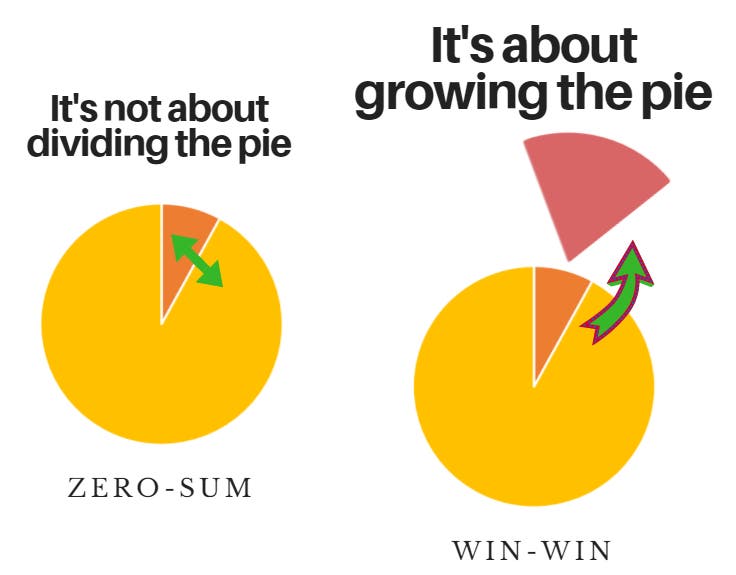
Some have instead called for a split tax and a CIP shift as a way to boost revenues. I don't believe that shifting more of the tax levy responsibility onto our primarily small business community (that is 1/12th the size of our residential class) is the answer. Any tax shift is revenue-neutral to the town, so we’re no better off for it. It adds no new dollars into the town budget and it puts a disproportional burden on our small businesses.
Instead, here’s an option where we all benefit: I call it “Growing the Pie”, while maintaining Reading’s character and charm.
Step 1: Identify Underutilized Space
Reading is nearly completely built-out. Less than 1% of open and undeveloped land remains. Reading can accept its lot in life and surrender regular tax increases (no thought-leadership there), or encourage proposals and opportunities to re-develop commercial land.
One such example is Reading’s 7-acre Department of Public Works (DPW), located across the street from Walkers Brook Drive, behind the Stop & Shop. Reading uses the DPW property to house, maintain, and operate our highway and public works vehicles and operations. Immediately adjacent to the DPW property are multiple private commercial parcels, ranging from half an acre to several acres in size.
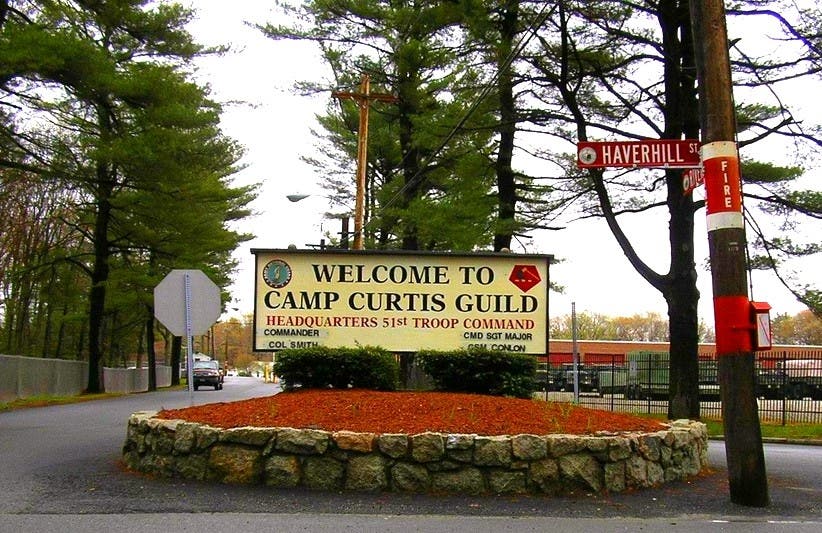
In the winter of 2017, Reading’s Town Manager (Bob LeLacheur) announced a mid-term objective to relocate our DPW facility and functions to a new location at Camp Curtis Guild. The new site would be co-located/co-operated with the Town of Wakefield’s DPW, who have also expressed interest in relocating.
Step 2: Use Available Space More Effectively
A shared DPW site makes sense on many levels. There are economies of scale (it’s not necessary to have two of every tool, every truck, every staff member, etc.): that in turn would lower annual facility and staff costs to Reading’s budget.
There are other opportunities to generate revenue on the co-located DPW. Wakefield has expressed that it might outsource its public works to Reading: in which case we perform the work for two towns and Wakefield pays Reading a fee for that service provided.
Lastly: the DPW relocation plan would free up ~7 acres near Walkers Brook Drive and I-95 highway, as a step towards redeveloping this larger underutilized area. This first step (freeing up the land) would immediately increase the value of the abutting private commercial properties. Owners would then receive a higher pay-out for their properties, which would in turn expand the developable area greatly.
Step 3: Grow the Pie
The resulting area, particularly given its proximal location to the highway, would be attractive to a developer and other businesses looking to set up shop. Imagine a Walkers Brook 2.0, or a Mini "Market Street”-type development as in Lynnfield. This area could be cluster of specialty stores—a place that makes Reading a destination for shoppers. There could be a high-tech incubator/light industrial provider located in this area. The opportunities abound.
Adding to our commercial sector on a parcel of this size would increase Reading's commercial segment significantly enough to move the needle, and therefore decrease our town’s reliance on residential taxes for operating funds.
Benefits to Reading
Were this plan to come to fruition (and I hope I’m on the Board long enough to get it off the ground), Reading would enjoy several benefits:
- Commercial development located near highway (less impact to neighbors)
- Commercial sector grows (more dining/shopping/commercial opportunities nearby)
- More commercial tax dollars paid into Reading
- More employment opportunities in Reading
- Secondary spending occurring in Reading (e.g. meals, shopping, etc.—helping local businesses thrive)
- More sales taxes generated (additional funding to town budget)
- Decreased dependence on residential taxes

As with any project of this size and scope, there are many decisions and steps ahead. But the longest journey begins with a single step, and that first step is the relocation effort for our DPW.
Seeing this through properly requires deft, committed, capable leadership. I will provide that. In the past six years since joining the Board, we have made great strides in economic development, and we’re now at the point of it taking flight. Seeing this idea become reality requires imagination, vision, skilled/careful execution, and diligent oversight. Reading would need to facilitate the DPW relocation and the subsequent steps to promote and engage interested developers to understand and consider the potential of this project.
I know I am the candidate for Selectman most capable of executing this plan.
Reading is a Goldilocks Town
Since I moved here in 1982, I’ve always thought of Reading is a Goldilocks Town: it’s not too big, it’s not too small. It’s not too residential, it’s not too commercial. It’s not too close to Boston, it’s not too far. In so many respects, it’s just right.
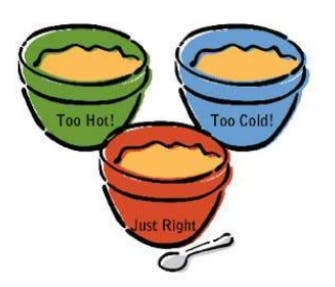
I really don’t want Reading to change to become like any other town. I don’t want to follow Winchester’s or Lexington's models (higher taxes, more frequent and larger overrides, and large economic disparities in town neighborhoods and schools.) I don’t want to be like Woburn or Burlington, which have significantly more and larger commercial-industrial developments.
I want to keep Reading, Reading—while also planning for the future. Reading is a special place we’re all privileged to call home, let’s make sure it stays that way.
Please support Reading and vote for me to remain on the Board of Selectmen. Cast your ballot on Tuesday, April 3rd!
Polls open 7am-8pm at RMHS. And thank you for reading!
Find pieces like this and more at www.JohnArenaforSelectman.com