Neighbor News
Reading Public Schools Must Respect Students' Rights
Suspicionless Use of Drug-Detecting Dogs Raises Constitutional Questions
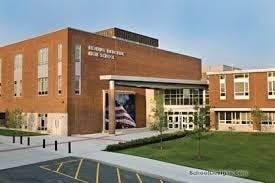
As a Reading Memorial High School graduate, I was deeply concerned to learn about the so-called “search drill” that took place at RMHS on Wednesday, May 1. According to a press release from the Reading School Department and the Reading Police Department, the school was shut down for nearly an hour while law enforcement personnel used narcotics-detecting canines to search “parking lots, common areas, lockers, and several random classrooms.” In particular, the suspicionless sniff of students’ personal belongings in classrooms – backpacks, purses, etc. – raises serious constitutional questions.
Under Article XIV of the Massachusetts Declaration of Rights, every individual in the state is afforded “the right to be secure from all unreasonable searches, and seizures, of his person, his houses, his papers, and all his possessions.” The Fourth Amendment of United States Constitution provides nearly identical protections. Although students have a diminished expectation of privacy in a school environment, their constitutional rights do not disappear when they step foot onto school property.
Neither Massachusetts state courts nor the United States Supreme Court have directly ruled on the constitutionality of drug-detecting dog sniffs in public schools; existing jurisprudence mostly involves dog sniffs subsequent to traffic stops. However, in a landmark 1985 case, New Jersey v. T.L.O., the United States Supreme Court held that searches of students and their personal effects require “reasonable suspicion” that a law or school rule has been broken. The RMHS administration has not stated that any such suspicion exists. However, even if there is reasonable cause to believe that illicit drugs are present on campus, it is unreasonable and constitutionally questionable to conduct generalized searches rather than individualized searches of suspected students.
Find out what's happening in Readingfor free with the latest updates from Patch.
In justifying this search, the school district cites its interest in maintaining a “positive learning environment” free from “unlawful and harmful activities such as illegal substance possession.” This is undoubtedly a valid interest. However, addressing this interest by subjecting every student to suspicionless search is not only constitutionally problematic but also counterproductive. Implementing a prison-style lockdown and treating every student as a potential criminal suspect certainly does not create an environment conducive to learning. Moreover, treating drug use and abuse as a law enforcement issue rather than a student health issue is a failed “War on Drugs” tactic that neither tackles the root of the problem nor helps at-risk students.
I strongly urge the School Committee to implement reforms to the district’s policies concerning the use of drug-detecting police dogs. Specifically, the district’s search and seizure policy should be updated to allow canine sniffs of students’ personal belongings only when individualized reasonable suspicion of drug possession exists. If we continue to treat our public schools as a new front in the criminal War on Drugs, the wellbeing and constitutional rights of our students will be the first casualties.
Find out what's happening in Readingfor free with the latest updates from Patch.
Gabrielle Weatherbee, RMHS '14