Community Corner
Sharon Native's Book Reflects on Grieving
Joel Peckham Jr. says he had to write 'Resisting Elegy,' and 'I had to write it well.'


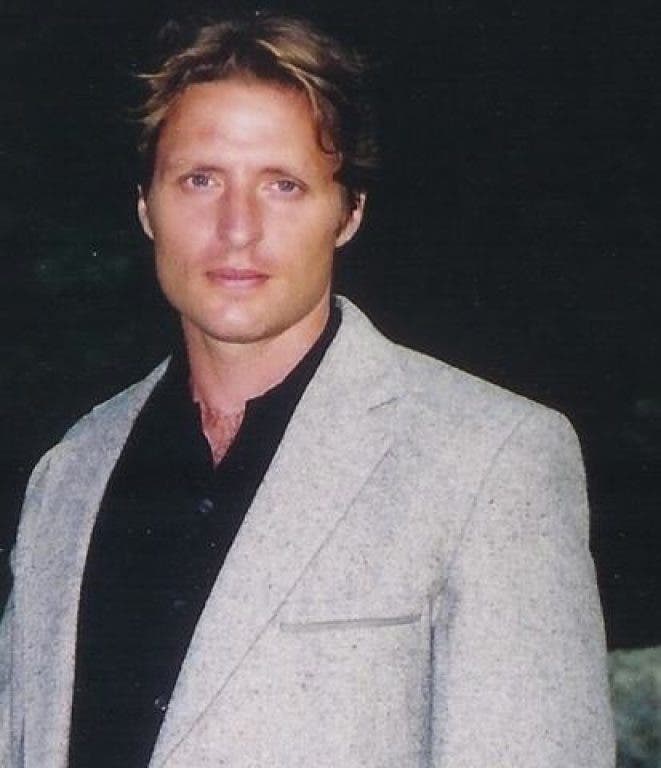
Just over eight years ago, Sharon native Joel Peckham Jr. was in an automobile accident in Jordan, where he was on a Fulbright scholarship.
His wife Susan, their oldest son Cyrus and their tour guide Akhmed were killed.
Peckham, his younger son Darius, and his mother-in-law Farideh survived.
Find out what's happening in Sharonfor free with the latest updates from Patch.
Last month, Academy Chicago Publishers released "Resisting Elegy," Peckham's newest book, in which he reflects on his life before and after the accident, and on how he grieved.
This is the story of that story.
Find out what's happening in Sharonfor free with the latest updates from Patch.
The 1988 graduate and former SHS football captain and Hockomock League baseball All-Star answered Sharon Patch's questions by e-mail. He is an assistant professor of American literature at the University of Cincinnati, Clermont College.
SHARON PATCH
What inspired this book?
JOEL PECKHAM JR.
The simple answer to that is, I'm a writer. So, my way of understanding my life is often filtered through the written word.
Before the accident, I had been a publishing poet and scholar of American literature. But the truth is, following the accident I couldn't write at all for a long time.
In some respects I have to give my father credit for this book existing at all. My father is a guidance counselor and he's great at it. But he's kind of what John Wayne would be as a guidance counselor. Tough love.
Anyway, after about a month of me just lying on my back doing very little but taking pain killers and watching television, my father got me a computer, dropped it on the bed and said, basically, you're a writer, write.
Still, it was a struggle.
Even after I returned to work at a small private school in New Hampshire called Kimball Union Academy, I struggled with both the grief and the writing.
My first piece of prose that could any way be called essayistic was an act of desperation. It had been nearly five months since I had written anything of substance. I tried to write, but whenever I sat down to begin a poem or attempt a scholarly article I felt either disinterested, disconnected, overwhelmed or lost.
For the first time in my adult life, I was struggling with profound writer's block that was the progeny of an even more profound depression. Not only was I not certain if I wanted to be a writer any longer, I wasn't certain I was up to the task.
To be blunt, I’m not even certain I wanted to be at all I'd sit in front of my computer, hip aching, foot burning, exhausted from a long day of teaching and single-parenting, doped up on Oxycodone, Tramadol, and perhaps a beer or two, and after randomly hitting the keys, I’d let my arms fall to my side, feeling myself gradually sink inward, imploding like a building in the midst of demolition, only slowly, one brick and hour.
I suppose in retrospect I should be amazed I functioned as well as I did—that I had a job, taught, parented.
The previous February, while on a Fulbright scholarship to Jordan, my family had been in an auto accident. We were in a touring van returning from Aqaba to Amman. Somewhere deep in the night on a desert highway, while I drifted off to sleep in the back, we hit a sand truck parked across the road. The impact killed my wife, Susan, my oldest son, Cyrus and our guide, Ahkmed. Darius broke a leg but survived, as did my mother-in-law, Farideh.
Two days later, I woke in a military hospital to what I thought would be a life of guilt, grief and pain. Of course, nothing is so simple. Accidents are banal, devoid of meaning. But we cannot let them alone. We revisit, rewind, replay, slow things down, imagine it from different angles and perspectives. The images we remember stay imprinted in our minds. Susan's silhouette as she took pictures of the desert, Cyrus falling asleep in front of me, his head against Ahkmed's, our guide's, shoulder. And we imagine what we did not see in even more brutal and visceral detail. Cyrus lifted from his seat flying through window, glass shattering around him.
And we question and question. We need answers. What happened? Why? Whose fault was it? What could I have done differently? There were no seat belts in the van. Cyrus was in the front seat. What were we thinking?
And then there is everything surrounding the accident—the cruel ironies and bitter regrets—a marriage falling apart, unresolved angers and resentments. Life becomes a swamp of what was, and what if, and especially, what now. Where do I go from here? What does it all mean?
As I sat in my small apartment on the side of hill in New Hampshire, still healing from the injuries incurred by that accident, I realized that, in order to write— in order to live, I had to write that essay. And I had to write it well. I poured a cup of coffee and, word by word, brick by brick, I got back to work.
SHARON PATCH
You've written about grief and recovery before this. Did recovering from the accident challenge your feelings about grief and recovery?
JOEL PECKHAM JR.
I don't know that I had any fully-formed, conscious ideas about grief and recovery. Before the accident--like most people--I looked at it from a certain distance.
And maybe that's healthy. We can't imagine what it would be like to lose a child or a spouse, so we protect ourselves from it. The closest we come is what we read in fiction and film (which, no matter how realistic or artistic allows us to imagine grief as something that happens to someone else and to be indulged in briefly, in its proper place) or in those god-awful self-help books that treat it like a process or a journey that proceeds in a series of definable steps that progress in a linear fashion towards health and well-being.
It doesn't work that way at all.
Even religious practices tend to cover grief in comforting, theatrical ritual that seems to pack the experience in cotton and gauze, rather than face it directly.
These practices give us a sense of closure for something that really has no closure. We develop a language for speaking about grief and to the grieving that protects us and isolates the aggrieved.
I am a religious man, but, for example, whenever people would say things like--God has a plan for you or You'll see them in heaven, I'd have this surge of terrible loneliness and anger. I didn't want to wait to see them in heaven, if this was God's plan--well, we had a few things to talk about, etc.
But that's not really what was upsetting. You see, we say those things to people instead of asking questions, instead of listening.
The grief experience is universal in one sense, but incredibly individual in another. We don't know, for example, the state of the relationship the aggrieved had with the deceased. Marriage and parenting are complex, full of love, but often, also, guilt, shame, regret. Every relationship is.
After a death, the aggrieved experiences every mistake again, every regret, every unresolved argument. And even if the aggrieved is lucky enough to have their beloved pass when the relationship is healthy there is this exquisitely complex and aching sense of abandonment that is incredibly hard to process--often leading to shock or emotional paralysis.
I guess I can say that my experience moved me from sympathy to empathy. Real healing and real art must come from empathy, not pity.
SHARON PATCH
I found your remark to your friend, "Don't tell me how to grieve," interesting. Do you expect readers to take sides on this issue: those that support traditional grieving methods, and those who feel grieving is an individual path?
JOEL PECKHAM JR.
That was not one of my better moments as a human being, but it was honest and raw.
Maybe people will feel the need to take sides. There are no sides.
There might be people who read this book and want to defend religious ritualistic practices, but if they did, they would be missing the point. I have no problem with traditional grieving methods. There is a very great need for public and communal expressions of grief and healing. After the accident, there was this incredibly beautiful memorial service at the Congregational church. I will always be moved by that experience. At a time when I felt like the loneliest man on earth, here were all these people coming together to support me and my family. It was shatteringly moving. It gave me an entirely new sense of what the word Family meant and who was included in that concept. Likewise, I think the practices of wakes and the beautiful tradition of shiva are important acts for a community.
The problem is not the ritual but what starts to happen after the ritual is over.
Everyone else goes home and talks about the beautiful service. For the aggrieved, there is no home to return to. Home is a place filled with memories both comforting and painful and the absences there are cavernous.
How each person deals with that moment when they climb into bed and turns off the lights is different. How they wake up to that new reality the next morning is different. And sadly, we tend to want things of that person--things that are more projections of what we'd expect from ourselves than what is good for them--pushing them forward or holding them back in accordance with our own Romantic notions of love and loss.
And this results in greater isolation and often a disconnection between what the aggrieved feels and what he or she feels allowed to express. You start performing for other people, then you start to feel confused and angry and trapped by those expectations.
What I want people to do is let go of their Romantic notions, expectations and comforting fictions about the aggrieved and instead, listen, be patient, ask questions. Reserve judgment. Let the aggrieved find their way back into the world of the living and give them support when possible.
SHARON PATCH
To what extent did you and Darius help each other recover from the accident?
JOEL PECKHAM JR.
I don't like to think of what would have happened to me if it weren't for Darius.
He and Rachael (my current wife)--along with my sisters and brothers-in-law, their beautiful children, my mother and father--saved my life simply by reminding me every day that I had something to live for.
Love's ties tether us to this world, remind us that our lives have meaning and impact.
Darius and I became so close after the accident. When I couldn't walk, he'd lie next to me in bed for hours. I'd draw pictures of Spider Man and then he'd color them in. We'd sing Beatles' songs together (Darius and I share a bizarre affection for Paul Mccartney--silly love songs and all). When I could get out of bed I'd sit in a chair in the back yard and toss a ball to him.
Every step forward physically and emotionally was attached to him. And though there were and still are many moments with him that are rending--when he asked if he could take a plane to heaven so he could see his mother and brother, when he wanted to try and call them from a pay-phone--there were many more days of sledding and cooking and playing and singing that were profoundly beautiful. Seeing the world through his eyes reminded me of the possibilities that life still held. I love him desperately for it.
I should also say that there were many many people who helped me in a similar fashion--too many to list here. It seemed as if every childhood and family friend stopped by the house at one point or another: I don't know what I would have done without Neil Feldman, Freddy Kaplan and Matt Hart--as well as all former ministers, teachers, relatives, fellow writers and students. Then there were all the people I worked with at Manitou, the summer camp where I teach baseball and music, and then colleagues at Kimball Union Academy and now where I work at UC Clermont.
And Rachael. I don't have a way to express how her love and patience and support helped me learn to not simply survive, but live.
It's a long, long list.
SHARON PATCH
Does the book close the book, figuratively, on the accident for you?
JOEL PECKHAM JR.
No. And that's OK.
To some degree or another I will probably be writing about this or from this for the rest of my life. The loss of a loved one--especially a child or a spouse, never mind both--never goes away and the expectation of closure can be a cruel one that we impose on ourselves and others. I don't know that anyone ever gets over it. But you can learn to live with it, within it, and sometimes learn to live better.
After the accident I asked a close friend who had lost a son in a military accident, "Does it ever get any better?"
He paused for a long time before saying, "It's like you're carrying this huge bag of sand with you and there is this tiny hole it. Most likely the bag will never be completely empty, but as you walk, you get stronger and the load gets lighter."
I'm getting stronger. The load is lighter. I may not have an easy life, but no one's is. While I'm around though, I'm pretty determined to live and love intensely, trying to find beauty everywhere and maybe make add a little to the universe in the process.
Get more local news delivered straight to your inbox. Sign up for free Patch newsletters and alerts.