Arts & Entertainment
Bag Your Own Produce With a 'Landless Garden'
Landless garden maverick from the South End gave a demonstration on Saturday.
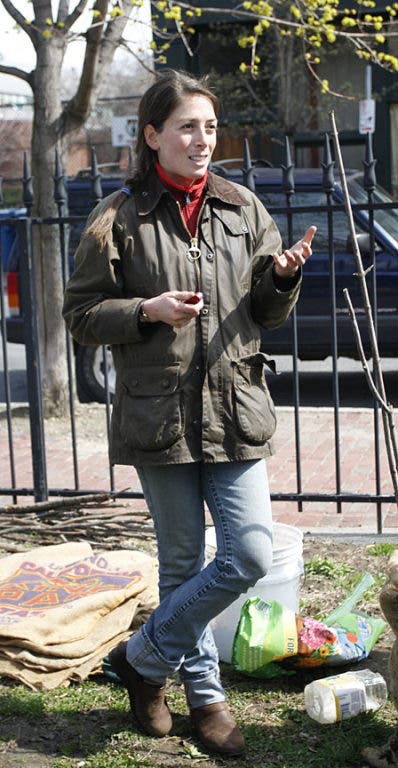


In a feat of MacGyver-like skill Laurel Valchuis, South End resident and senior analyst at an agribusiness consulting firm, demonstrates how to create an urban garden with a burlap sack, four sticks, two bags of soil and a smattering of gravel.
Saturday morning at Blackstone Square a group of around 10 South Enders gathered to watch Valchuis build a ‘Landless Garden,’ a term she coined herself. Starting with an empty burlap sack, Valchuis layered gravel and soil around a hollow cylinder made of a deconstructed yogurt container, using sticks to hold up the corners.
A core of gravel functions as “a water column to penetrate the entire bag,” Valchuis said, warning onlookers to avoid driveway gravel as it may contain dangerous contaminates from vehicles.
The landless garden promotes education about the growing process and food choices, Valchuis said. She described the U.S. model for agriculture as "get big or get out," making it harder for family operated businesses to survive, and often distancing people from their food.
Find out what's happening in South Endfor free with the latest updates from Patch.
The landless garden makes fresh produce available to anyone with a small porch area and there is no waiting list for a plot of land. Slits can be cut in the sides of the burlap bag to allow plants to grow out at different angles.
“Beware of viney things on the bottom,” Valchuis said, referring to cucumbers and squash, both of which fall into the “heavy feeders” category and sap nutrients from the soil. Instead, she recommended herbs such as basil, thyme, rosemary and mint.
Find out what's happening in South Endfor free with the latest updates from Patch.
“Think mini things,” such as salad greens, finger eggplants or cherry tomato plants, she said.
Planting a diverse garden ensures the soil will not be drained of nutrients. Compost tea or organic fertilizer can be used to replenish nutrients and keep plants healthy through the whole growing season. Marigolds can be grown in with the vegetables as an option for natural pesticide that keeps aphids at bay, Valchuis said.
Seedlings should be kept indoors until June when the weather is more temperate. If you're not up to sprouting your own seeds, pay a visit to Albany Street's for seedlings. Valchuis is also offering to build gardens for residents, you can email her at landlessgardens@gmail.com or look for her at the SoWa Open Market, which opens May 1.