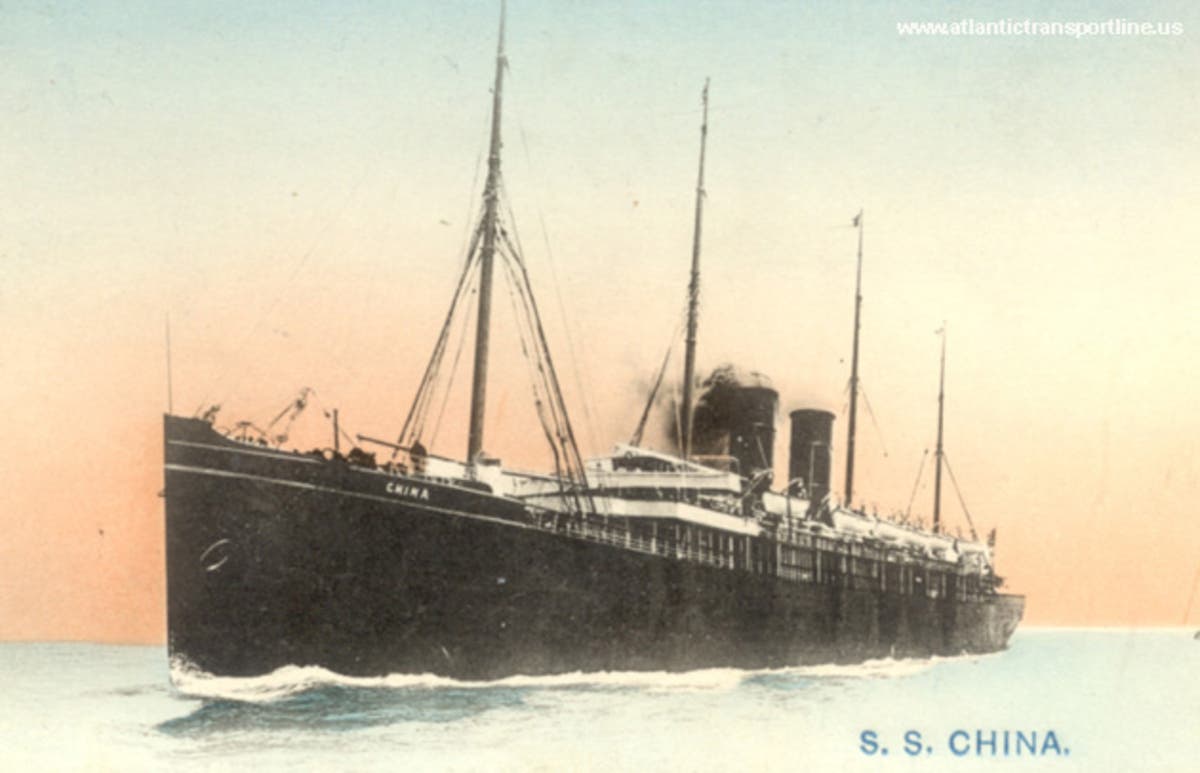
My family’s Ellis Island isn’t New York, but San Francisco. In 1916, during the Great War, my grandfather, Ivan Bogdanovich, stood on deck of the S. S. China as it steamed through the Golden Gate, carrying him to a new life in America.
How my grandfather got from Southern Russia to San Francisco is a long story. I’ll tell the short version. It began one night in 1915 when a village elder wrote down on a scrap of paper the names of five cities: Irkutsk, Harbin, Mukden, Shanghai, and San Francisco.
These were the stars he must follow if he wished to avoid re-capture. Having been arrested in 1914 in Odessa, he had been sentenced, along with other religious and political dissidents, to exile in Siberia. From jail to jail, he had been transported east across the Ural Mountains to a fishing village on the Ob River. But while in transit to another place of exile, he had escaped and found his way home. Now he was being told he must leave the country.
Find out what's happening in Stonehamfor free with the latest updates from Patch.
So, with money collected by his family, he purchased a train ticket for Vladivostok, the far eastern port of Siberia. Then, dressed in a discarded army uniform with one arm in a sling and feigning shell shock—the trains going east were full of wounded soldiers—he again crossed the Urals, then on to Irkutsk. When the Siberian railway cut through northern Manchuria, he jumped train in Harbin.
It was again winter, and on foot he headed south, avoiding the main roads and crossing rivers on the ice to avoid the guarded bridges. He battled blizzards and frostbite. He survived, thanks to the kindness of strangers, who guided and sheltered him.
Find out what's happening in Stonehamfor free with the latest updates from Patch.
Finally, he arrived in Mukden, then by train to Shanghai, where, with money borrowed from church members, he booked passage to San Francisco.
I can only imagine with what relief he must have boarded the steamer. No more police or soldiers. No more “black angels,” the transport guards who once drove the prisoners with unsheathed swords across the snow.
However, his relief was cut short when, in neutral waters outside Shanghai, an Australian armed cruiser, the H.M.S. Laurentic, fired a shot across the China’s bow. Then another.
What happened next I learned from my grandfather. But I also read about it in the archives of the San Francisco Chronicle in an article dated March 12, 1916: “U. S. Probing Seizures on Steamer China.”
Next week I’ll tell the conclusion of the story. But for now, as we await the coming of Christmas, I think about my grandfather, a refugee and a fugitive, and how desperate he must have felt, wondering if he would ever make it to safety.
There are many like him, today. Men, women, children, trying to escape war and violence, looking for a safe place to raise their children, eager to work and build new lives.
As we approach this holy season, may are hearts be open, not only to a poor carpenter and his wife seeking shelter in Bethlehem, but to the thousands at our border who seek a haven among us.