Neighbor News
Remembering one of our own
From Stoneham, Carl Yancey was the first African American state trooper
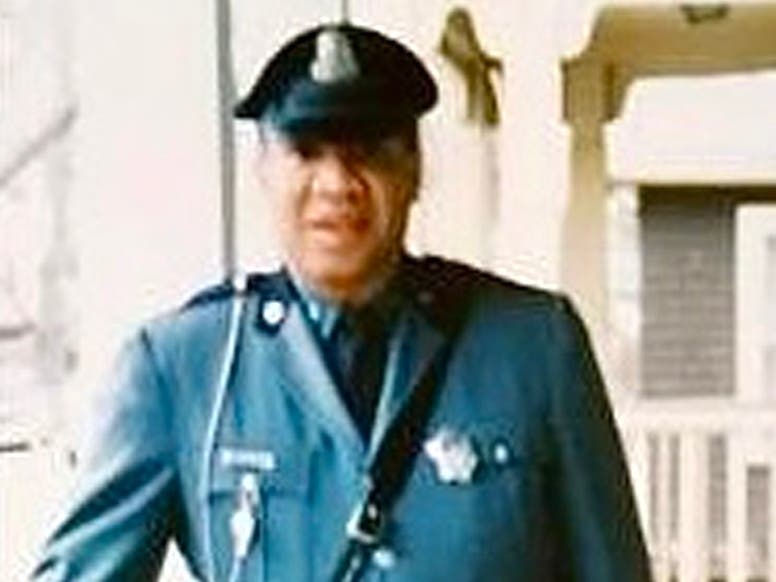
His name was Carl S. Yancey, and he was the first career Black state trooper in Massachusetts. I learned about him recently from retired Stoneham Police Detective George Sullivan. George is gathering information about Yancey, whom he remembers growing up in Stoneham. George lives on the Cape now, but was happy to talk about Yancey on the phone. Here’s what I found out.
One of four children, Carl grew up in Stoneham, graduating from the High School in 1965. That fall he enrolled at Delaware State University, but left after two years to join the United States Army. Serving as a military policeman in Vietnam, he was awarded the Bronze Star.
If you look on the Vietnam War Memorial beside Town Hall, you will find the names of Carl and his two brothers. Robert, the oldest, enlisted in the Air Force, and Brad went into the Army.
Find out what's happening in Stonehamfor free with the latest updates from Patch.
“Carl didn’t need to go,” George said, “but he wanted to do his part. Three sons served in Vietnam and two of them got Bronze Stars. That’s something.”
After Vietnam, Yancey returned to Massachusetts and continued his training at the State Police Academy. Graduating in 1972, he began a 31-year career as a state trooper. While in the State Police, he also served on the Boston Police Anti-Gang Unit. A mentor to others, Yancey was the first secretary of the Massachusetts Minority State Police Officers Association. After retiring, he served on the Emerson College Police force.
Find out what's happening in Stonehamfor free with the latest updates from Patch.
In Brockton, Yancey and his first wife, Darhl, raised a family, a son and two daughters. In 2012 he relocated to Charlotte, N.C. After he died in 2018, he was brought home to the McDonald–Finnegan Funeral Home in Stoneham and buried in the Massachusetts National Cemetery in Bourne. He is survived by his second wife, Evelyn, and his two daughters, Leigh and Lauren.
In telling the story of Carl Yancey, George Sullivan is collaborating with Charlie Gardner, a Stoneham friend who also lives on the Cape. A few years behind Yancey, they remember going to Rec Park to watch Yancey, a three-sport athlete, play football there. George and Charlie also played for Stoneham High.
Others in town have memories of Carl or his family, including Jeanne Craigie, who first alerted me to the Yancey story. I also found some interesting quotes in the memorial messages left at the funeral home. Here are three of them.
“Was a member of the 56th Training Troup with Carl,” wrote a fellow trooper. “[I] stood next to him in our first line-up. Carl was a colorful and committed trainee and trooper. Knew him, liked him from day one. Everyone in our class enjoyed Carl and was pulling for him. He was honest, genuine and witty.”
And another: “It is rare to meet in a lifetime a person who is serious yet humorous, wise yet unimposing, dependable yet spontaneous, in many ways unpredictable.”
Another, from an old friend who grew up with Carl: “How I remember walking down the railroad tracks to school every morning with you and your brother Brad. Those were happy times!”
One of only a few African-American families in town, the Yanceys, from what I can gather, found Stoneham a good place to live. Which doesn’t mean there was no prejudice. The decades were turbulent times, and Stoneham wasn’t exempt from age-old attitudes and biases. Two years after Yancey joined the State Police, a federal judge ordered the desegregation of Boston schools. Widespread backlash and hostility followed.
There’s much more to know about Carl Yancey, and I look forward to the discovery work Sullivan and Gardner are doing. In the meantime, as we close out Black History Month of 2022, it’s good to remember that in our search for heroes, we must not forget our own.
Note: The first African American to enter the uniformed division of the Massachusetts State Police was Samuel Range of Jamaica Plain, who entered the police academy in 1956. After graduation, he was told to turn in his uniform, and only after the advocacy of the NAACP and state legislators was he assigned to duty. After a brief period, Range left. He later served with the Boston Police and a sheriff’s police department in California. In 1984 he became director of security for the Lafayette Place in downtown Boston.