Neighbor News
Saul Weiss: Farmer, Athlete, Scholar, Businessman, Giver
A history of Weiss Farm and a profile of Saul Weiss. Part 1 of 3.
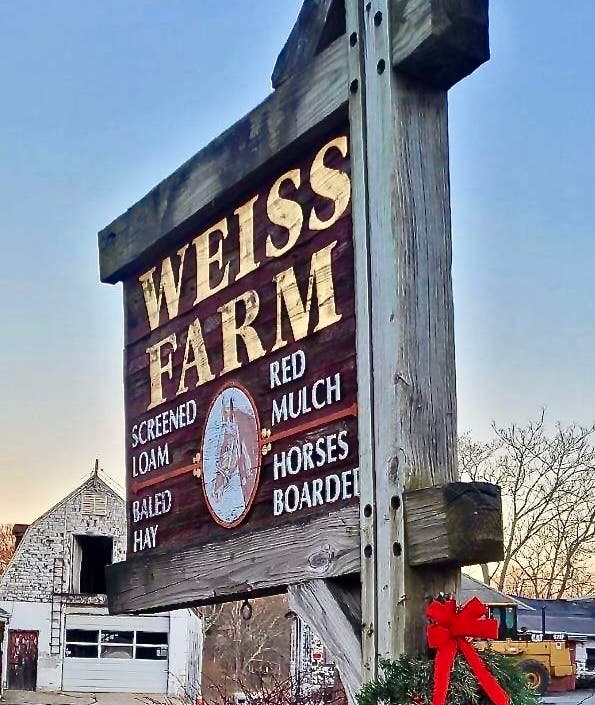
Not that I am running out of the supply of Stoneham war heroes to profile, but I felt that a change in focus might also be interesting to Stoneham readers. With that in mind, I turned to someone who has a personal connection to me. Saul Weiss’s friendship wove a continuous thread all through my years growing up in Stoneham. My first knowledge of him came because of the farm’s proximity to my home on Franklin Street (all of a half mile—only a short bike ride.) Like everyone else who looked at the barn and fields every time they went past, I naturally wanted to know more about what happens on a dairy farm in the middle of a suburban area.
However, once I started looking for early mentions of Saul in the Stoneham Independent archives, I quickly realized I needed to research the history of the property and the background of the Weiss family to examine the considerable influence that the Weiss family and the farm exerted on the town’s development.
As many already know, Weiss Farm has been a constant presence in the Stoneham community. I found that the depth of its influence and the ownership of the land and the house reached back as far as the mid-1700s; this necessitated a deeper look at where it started.
Part I (History of the Farm)
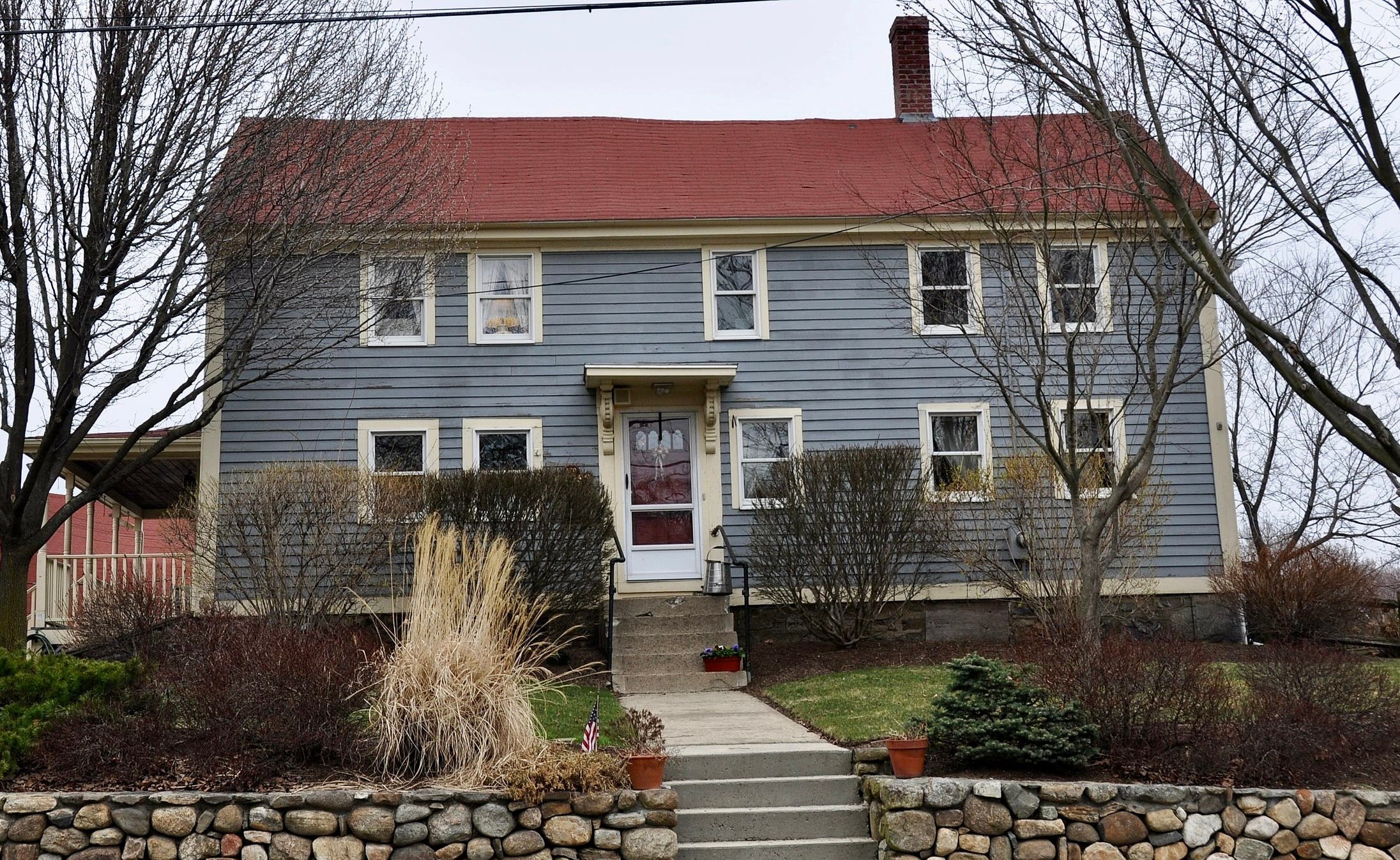
The farmhouse at 170 Franklin Street, known as the Elisha Knight Homestead, built circa 1749 is listed in the National Register of Historic Places in Massachusetts. The house and the farm went through several permutations of Knight family ownership beginning with Elisha Knight’s marriage to Sarah Holden in 1747 and then his taking possession of the property. Their daughter Anna, (1758-1813), was the first of three daughters while a son Thomas died in infancy (1749). Anna then married Thomas Greene in 1780 and being the oldest, continued her residence in the homestead. Elisha Greene was born to Thomas and Anna in 1800 and he, in turn, married Martha Williams in 1830.
Confirmation of that lineage comes from the “History of Stoneham, Massachusetts” written by William B. Stevens and Francis Lester Whittier, published in 1891 where a notation was made that “The first house on Franklin Street, now owned by Mr. Outram, was that of Thomas Green.” (Pg. 67) Further confirmation comes from the Stoneham Independent in 1909: “Passing easterly but a few rods and on the south side of the old road, we come to what is now the Outram place, built by Elisha Knight about 1748, and here he lived and died, rearing a family of at least six children, five of whom are on our town records and died here Aug. 19, 1798, and was succeeded by Thomas Greene, who married his daughter Anna in 1780. This Thomas Greene spelled his name with a final e and is of a different family from the others so plentiful in early Stoneham days, being a son of William and Elizabeth (Sloan) Greene of Charlestown.” (Pg. 3) Through Anna’s descendants, the Knight family owned or resided in the house for a total of 111 years until 1858 when Edward Outram took it over.
Mr. Outram had come from Derbyshire, England via New Jersey, and ran the property as a dairy farm which continued in operation after his death in 1905. Subsequently, his son, Albert W. managed it until he died in 1918 after which his widow took over and then sold it to the Forbes Brothers of Melrose who operated it for only two years. The lineage of ownership covered nearly 200 years at that time.
Remarkably the farm had had only two owners (discounting the Forbes Brothers) up to the time Samuel Weiss bought it in 1928. Samuel and his wife, Molly had come from Latvia, most likely around 1905, fleeing political oppression after a bloody battle between troops and petitioners before the subsequent uprising against the tsarist regime by the Bolsheviks. Of note, the original family name was Weissgant (German for white goose) which they Americanized to Weiss. They settled in Chelsea, MA and started a dairy farm in 1910.
When Samuel bought the Outram Farm in 1928, he bravely took his family—wife Molly, children, Abraham, Carl, Emmanuel (Manny), Hyman, Philip, and Sarah from a secure community in Chelsea and came to live in Stoneham. He began doing business in Stoneham as the simply named Weiss Farm. Manny (1929), Philip (1931), and Carl (1934) all graduated from Stoneham High School and played sports, notably basketball where Carl played with Robert Yancey, father of Roberta, Bob, Carl, and Brad of later athletic fame.
Samuel began active participation in the Stoneham community in various ways beginning with a significant contribution to the building of St. Patrick’s Playground in 1935, a sign that he intended to build a connection to the town in ways other than just commercial activities. What was notable about this particular action was that the Weiss family’s Jewish religion contrasted starkly with the donation of money, labor, or materials to a Catholic organization for the good of the community. Samuel’s interdenominational focus periodically came into play throughout his lifetime; he contributed several times to the Christmas Seals as well as to Boy Scout drives. He publicly endorsed a diverse slate of candidates for Selectman in 1938 and contributed money to the Stoneham Community Fund, the Visiting Nurses Association, and the United War Fund in the early 1940s. Philip’s wife, Ann, also contributed to the Visiting Nurse Association in 1943. A tire rationing drive listed Samuel as a contributor in 1942. Here we see the beginnings of the philanthropic activities for the Weiss family that wove throughout the years of their residence in Stoneham right up to the present day.
After graduating from Stoneham High School, Philip stayed on the farm, married Anne Cohen of Chelsea in 1937, and began working as a full-fledged participant in all the affairs of the business. Weiss Farm was awarded the contract to supply milk to the Stoneham school system in 1937. Still, only one year later, the contract was given to Fallon Milk for the dubious reason that the School Committee wanted to make sure that “no one dealer should have the contract permanently” (SI pg. 1, 12/15/1939.) Philip’s mother, Mollie passed in 1937, missing the birth of his first son Lawrence in 1938. Philip and Anne’s family steadily grew with the arrival of his next three children, Marsha in 1942, Marvin in 1944, and Saul in 1949.
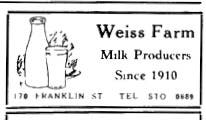
The farm also sold corn and various other vegetables as detailed in many advertisements in the Independent including one in 1941 stating Weiss Farm had been in the dairy business since 1910, obviously starting in Chelsea. With the addition of a family, Philip began engaging with the community in more than just commercial activities. When the Jewish Community Center was first organized, Philip and Anne joined immediately at a time when their meetings were held informally in a moving rotation around various members’ residences. Philip joined the newly organized chapter of B’nai B’rith and later served as president of the Kiwanis Club. Anne began working with the Girl Scouts and Cub Scouts when Marsha and the two older boys joined those organizations.
Philip incorporated the farm in 1950 in a proactive business move. A fire in the barn in 1953 brought the Weiss family closer to the Stoneham community in that the fire department acted quickly and efficiently to extinguish the blaze. Later, the Weiss family wrote and published a heartfelt letter to the fire department showing their gratitude for the rapid reaction. The children began taking a more active part in community affairs: Lawrence read the opening prayer at a Passover Seder in 1952, Marsha’s Bat Mitzvah was noted in the paper, Marvin and Saul took part in Boy Scout activities while Saul’s athletic and academic skills began to be noticed. Saul, Marvin, and Marsha attended the Bat Mitzvah of Sheila Klainer in 1953.
Principal among several noteworthy events in the next few years was Philip’s donation of land situated in the corner of the farm where Gerald Road and Franklin Street intersect to build a place where the Jewish Community could meet and worship. In June 1955, the cornerstone was placed and the building was officially named the Temple Judea in a ceremony in March of 1956. This was an exceedingly generous and productive move fostering the growth and diversity of the town. When Samuel passed in 1959, the farmland and business with accompanying headaches now belonged to Philip.
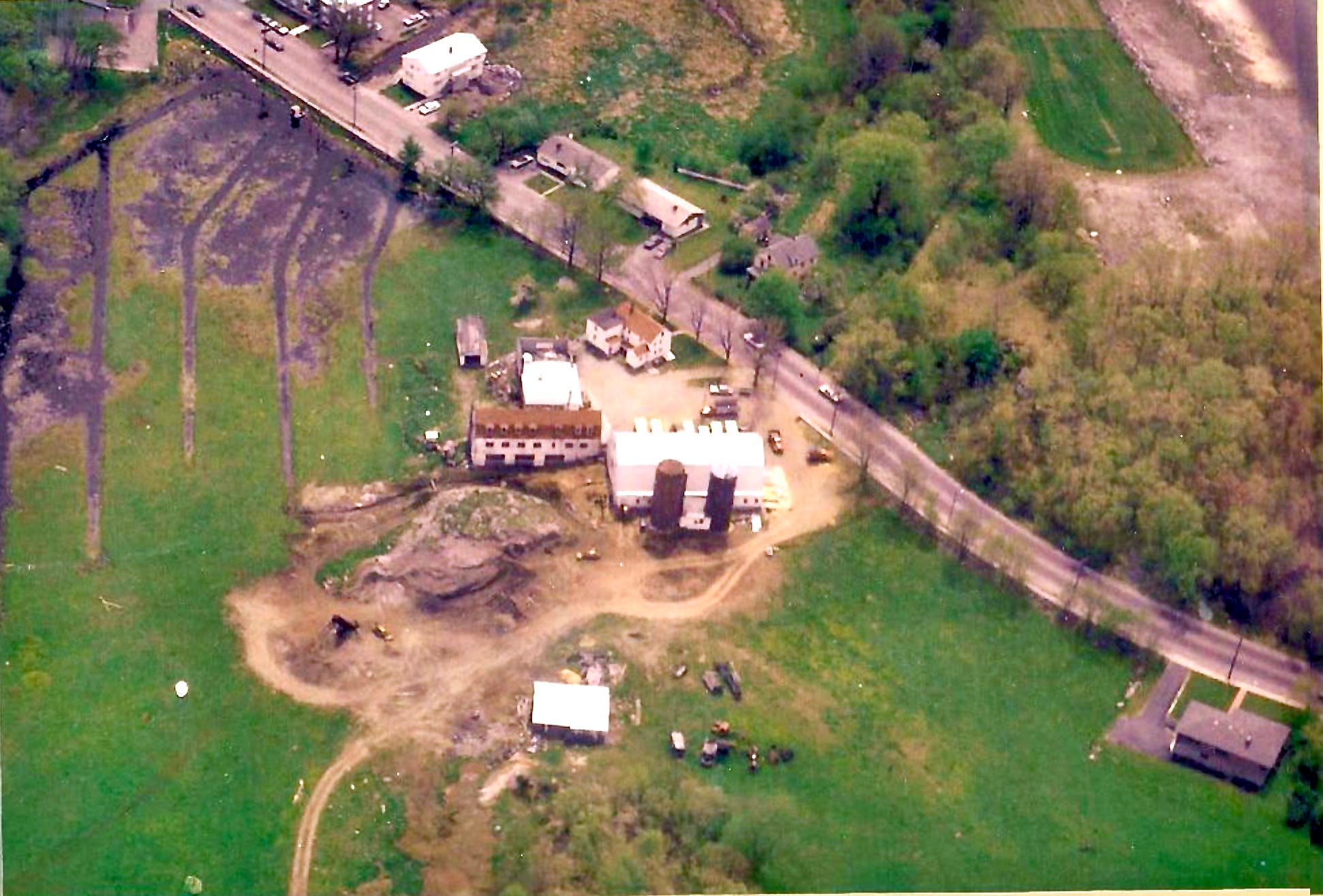
Problems with flooding and surface water had been part of the farm’s background since the 1700s and have cropped up periodically ever since. Frequent problems with surface water and drainage have plagued all of the owners of the property. Sunset and Rustic Road residents experienced the fallout from this (flooded basements) which some neighbors actively complained about as well as the odors from the cows. I n a special town meeting in October 1964 to discuss the construction of a new junior high school on the opposite side of Franklin Street, the town began the process of acquiring land. Discussion was at first about the cost of such an acquisition from the Weiss family. Later, the land was taken by eminent domain after the state’s contribution was deemed inadequate in the total accounting for the site and its development.
Find out what's happening in Stonehamfor free with the latest updates from Patch.
Parts 2(A) & 2(B) of 3 next week