Neighbor News
Should we worry about CRT?
"To me, it means telling the truth, even in the face of criticism." -- Derrick Bell
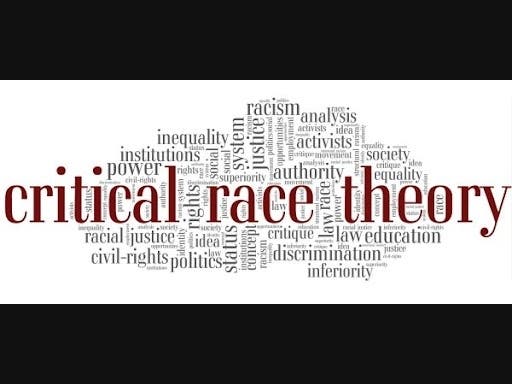
CRT, or critical race theory, is being used by teachers to brainwash our children. By teaching that our country was built on slavery, liberals are negating the democratic ideals of our founders.
That’s the gist of my cousin’s message to me the other day as I sat down with him to discuss the daily news.
Further, he went on, by teaching that racism has been embedded in our institutions, these “woke” educators are labeling us (meaning white people) as racist. And they’re making our children feel guilty for the sins of a few bad apples in our history.
Find out what's happening in Stonehamfor free with the latest updates from Patch.
My first thought was to ask my cousin where he had heard about CRT. But then I wondered, what, exactly, is critical race theory, and why are so many people on the far right making a fuss about it?
Here’s what I found. Critical race theory is an academic approach to studying race in history and its continuing role in our society. It sees racism not just as the expression of bigoted individuals, but as a building block in the frameworks of our legal, economic and social institutions.
Find out what's happening in Stonehamfor free with the latest updates from Patch.
When a landlord refuses to rent to a Black family (a practice that continues despite open-housing laws), that's racist. When governmental or financial institutions devalue whole neighborhoods, a process called red-lining, thus depriving citizens of business loans and home mortgages, that’s systemic racism.
Numerous other examples exist in criminal justice, housing, employment, health care and education. Critical race theory looks at outcomes, then seeks to determine why. Why, do we have segregated schools almost seven decades after Brown vs. Department of Education? Or, why, to choose one of many disparities in criminal justice, are African American women three times more likely than white women to be imprisoned, while Hispanic women are 69 percent more likely?
Recently quoted in a New York Times article, Professor Mari Matsuda, a law professor at the University of Hawaii, said:
“The problem is not bad people. The problem is a system that reproduces bad outcomes. It is both humane and inclusive to say, ‘We have done things that have hurt all of us, and we need to find a way out.’”
Critical race theory, then, is a way of examining history and the structures of society while calling for systemic reform. According to the late Professor Derrick Bell, sometimes called the godfather of CRT, it can be defined in even simpler terms.
Teaching at Harvard and New York University law schools, Bell wrote several books on racism, civil rights and American law. Asked by a colleague what critical race theory means, he replied, “To me, it means telling the truth, even in the face of criticism.”
I have never known a teacher to oppose telling the truth in education. Neither should we. Seeking and reporting the truth is the foundation of learning, both in the arts and sciences. I must admit, however, that telling the truth can sometimes be unpleasant.
For us to learn that several founding fathers in Stoneham, including our first minister, owned slaves is disturbing. To find out that some of my ancestors grew wealthy on the sweat and misery of others is painful. But I have learned that telling the truth can also be freeing.
Our children in K-12 will never be exposed to the complexities of critical race theory found in collegiate and graduate study. They should, nevertheless, be encouraged to examine history with a critical eye. In doing so, we respect their intelligence and capacity. And we give them the tools to deal with challenges they face, and will face, in the American society we are leaving them.
© Ben Jacques