Neighbor News
SHS Grad First Military Jet Pilot
Bio of Laurence Carbee Craigie: first military jet pilot
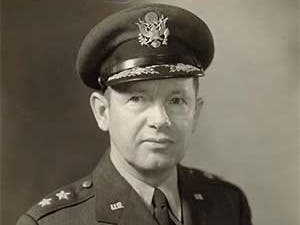


Laurence Carbee “Bill” Craigie
In our look back at notable Stoneham residents, we find yet another Stoneham military hero has been brought to our attention. Unlike the courage we have previously detailed in the undercover narcotics investigations of Carl Yancey in Vietnam or in the face-to-face WWII heroics of Thomas Leccese in Italy, Laurence Craigie’s courage on October 2, 1942, at Edwards Air Force Base differed from the heroics of those two Stoneham military men. Laurence was a test pilot, tasked with guiding the first jet plane through its initial flight. It takes a special kind of bravery to trust the engineering and manufacturing process that produces such an experimental projectile (an apt description of the plane’s capabilities) and Laurence was just that man. At the speed generated by a jet plane, the uncertainty surrounding the question of its viability can be frightening. No one could be certain with any degree of confidence that the plane would be manageable at those extreme stress levels of high speed and thin air at high altitudes or even break apart. Laurence Craigie was the first US military pilot to brave those unknown factors. As he said at the 50th anniversary of that flight "It was a great thrill to be part of it. But it really wasn't as emotional a flight as you might think. We were just feeling out the aircraft.” Some of the skulduggery surrounding the development of the Bell XP-59A would have pleased James Bond. To disguise the plane, a wooden prop was put in place and tarpaulins were draped over the obviously unusual engines. In addition, the XP-59A’s flight was not formally announced for another 15 months. His wife did not even know about it.
But Laurence’s background and subsequent career(s) proved him to be more than just a fearless test pilot. Born in 1902 in Concord, NH, his family moved to Stoneham around 1910. At 51 Duncklee Avenue, he continued his interest in farming (originally fostered on his uncle’s farm in Bath, NH) by tending a garden and owning a cow. While spending summers at the farm, he found he liked that life so much that his mother, Florence said they had difficulty persuading him to come back to Stoneham for school. Eager to join the cadet corps, he quickly moved up to major. He distinguished himself in high school by graduating early in 1919 at just 17 (he had skipped from third to fifth grade) and did not wait around until graduation to get his diploma, proceeding straightaway to West Point where he excelled in the classroom, pitched on the Army varsity baseball team, graduated as a second lieutenant in 1923 in the top quarter of his class, and was assigned to the Air Corps. Initially he had passed the entrance exam for Annapolis but jumped on the opportunity to attend West Point when a spot opened up late that spring.
Find out what's happening in Stonehamfor free with the latest updates from Patch.
From there, Laurence took his recently (1925) married wife, Victoria Morrison to Texas to begin his military service. After entering a flying instruction program, he became a flight instructor for four years, achieving the rank of first lieutenant in 1927. Victoria gave birth to their two children, Gale and John while in Texas. In 1929, the family went to France Field in the Panama Canal Zone where they stayed until returning to Texas in 1931 and then Laurence attended the Air Corps Engineering School at Wright-Patterson Air Force Base in Dayton, Ohio. It was there that Laurence first became acquainted with Orville Wright himself, spending so much time with him they became friends. He was named Project Officer for the Training and Transport Aircraft and later Chief of the Engineering Unit of the Air Corps Materiel Division in 1937. At this point, Laurence was rapidly advancing through the coursework at the Army Industrial College in DC (1939) and the Air Corps Tactical School in Alabama (1941). He also gained promotions to Captain in 1937 and to Major in 1939. In July of 1941, Laurence was named chief of the Aircraft Projects Branch and later that year was promoted to Lieutenant Colonel.
All of the schooling, promotions, and moving around prepared him well for his most noteworthy accomplishment: piloting the XP-59A jet on its maiden flight at Muroc Dry Lake, CA on October 2, 1942. He was not the very first pilot (a Bell
Labs test pilot performed that task) but he was the first military man to successfully complete a flight. Airpower Journal described the secrecy surrounding the assembly of the plane as follows:
Find out what's happening in Stonehamfor free with the latest updates from Patch.
"The super secret engine was assembled at Lynn, Massachusetts, under the project title ‘super-charger Type #1.’ At Larry Bell’s factory, the airframe project received an old program number so as not to arouse any suspicion. The workers themselves were segregated from each other so that even the members of the team were not totally sure what they were building. The Army Air Force (AAF) officer who was to be the first American military man to fly a jet, Col. Laurence ‘Bill’ Craigie, never revealed his mission, even to his wife, who found out about it in January 1944 with the rest of the country. Craigie recalled that ‘the only project I knew of that was more secret was the atomic bomb.’"
Following that singularly historic flight, Laurence took charge of the Boston Air Defense Wing and moved on to command the New York Fighter Wing, advancing to brigadier general in late 1943. In a return to Mitchel Field, NY, he acted as the commanding general of the 87th Fighter Wing and subsequently went to Corsica to the North African Theater in early 1944, working on B-29 programs. In yet another return to a previously visited field, Laurence found himself at Wright-Patterson in the position of deputy chief of the Air Technical Service’s Engineering Division. Promotions and new assignments came rapidly when he became chief of the division and promoted to major general in July, 1946. He then was named chief of the Research and Engineering Division at Headquarters Army Air Force and later that year became Director of Research and Development at Headquarters US Air Force. Finally in September he returned again to Wright-Patterson to be commandant of the US Air Force Institute of Technology.
Next, during the Korean War, Laurence was vice commander of the Far East Air Forces in Tokyo and then notably, served as an Air Force delegate on the five member United Nations Armistice Negotiations Team during the peace talks with Korea in Kaesong and Panmunjom.
There were other significant events during the war years: in 1945, Laurence was the first Army Air Force officer to fly in an entirely remote controlled aircraft where, from take off to landing, he did not need to touch any of the controls. The most pleasing, however, was to stand next to Orville Wright when the surviving brother first witnessed the flight of a jet plane, the Lockheed YP-80 in October of 1945. In Laurence’s words, “You could see the look of wonder on his face,” upon seeing how far his invention had progressed.
By the early 50s, Laurence had travelled and lived all over the globe, brought about astonishing innovations in flight technology, and contributed mightily to the US war efforts. But he was not close to being finished. For the next twenty-five years after he retired in 1955 because of a heart attack, he worked in the private sector from 1957 to 1964 as director of the Air Force requirements section for Lockheed Aircraft Corp. He was also director of the freight airline Flying Tiger Line and served on the board of directors of the Falcon Foundation and the International Science Foundation. He retired again in 1982 after consulting with various firms for nine years.
For his 90th birthday, a gala celebration was held at March Air Force base with a few generals, his children, and their families. Laurence co-piloted a B-25 with four P-51 Mustangs in formation over the air base. A glimpse of his playful side emerged when he invoked an “arrangement” with St. Peter to repeat this event every 90 years. One attendee at the party, Mike Pupich, an LA businessman who piloted his own B-25, recalled that Laurence was “determined to distract his neighbors on Super Bowl Sunday.” Laurence said “We’ve got to make two low passes. The first one gets their attention. The second one gets them outside.” This was not the first time he had performed such a maneuver. In a June 24, 1932 article in the Stoneham Independent, we find that while Laurence was flying from Texas to Boston (with stops on the way), he found himself faced with a storm front over the Allegheny Mountains forcing him to deviate from his planned route. Five years prior while also flying to Boston, he had been forced down in the very same area.
"Swooping lower, he recognized buildings and land where the terrific storm that had caught him then had forced an immediate landing. He dove toward the house and attracted the residents therein to come out. Mutual waving of hands showed that he was recognized."
We now know when and where this little trick of buzzing the ground to attract people’s attention first came to him. He had a sense of humor and playfulness that his nephew, Paul Craigie remembers so very well. In fact, Paul’s father, Robert (born 12 years after Laurence) tells a perhaps apocryphal story about Laurence flying his biplane over Stoneham at a VERY low altitude, resulting in people coming out of their houses, initially annoyed at the noise, and frightening livestock to such a degree that cows had reduced milk production for a few days. Although we could find no articles in the archives to corroborate this, it still makes a great anecdote. Paul fondly remembers the excitement of anticipating Uncle Laurence’s visits to his family. Paul says that he frequently told engrossing stories about the many countries he had lived in and visited. Occasionally Paul’s father became mildly irked at how Laurence immediately became the center of attention upon arriving, typically bringing a slide show with him that soon spurred fantastic descriptions and, as Paul put it, “slightly” embellished tales. Laurence loved being the hub of attention in every trip back East. He tried several times to persuade Paul to apply to West Point, but Paul was not interested at that time, thinking later he probably should have tried (serving as a “grunt” in the National Guard did not quite muster the same panache as West Point) as Paul eventually discovered.
The Stoneham contingent of the Craigie family went on an extended visit to Burbank which Paul remembers vividly. Laurence took them to Disneyland in his vintage Lincoln Town car which Laurence drove as only a test pilot would—at 75 MPH which made the rides at Disneyland tame in comparison. At the age of 82, Laurence would climb on his roof every morning to pick oranges for the breakfast juice. Framed pictures of Laurence with a variety of Hollywood/West Coast celebrities were scattered about the house.
Always parsimonious, Laurence visited the Craigies three years later, choosing to fly free with the Flying Tiger corporation (of which he, of course, served on their board). Paul says of his uncle “He was not the Rocketman, to me he was always the JET MAN!”
Laurence set another record when he became the oldest to fly a hang glider in 1992. True to his character to the finish, when he did not feel quite right on a day late in February of 1994, he drove himself to the hospital where he passed two days later on the 27th. No one else was going to be the pilot when Laurence finally went to meet St. Peter.
All of the high level positions, awards and promotions, notable achievements, and serious business dealings belie the playful personality of Laurence Craigie. He was certainly a force to be reckoned with on a variety of levels.
For all of his work and bravery, Laurence Craigie was enshrined in 2000 in the National Aviation Hall of Fame in Dayton, OH, a tremendous honor for a man who had dedicated his life to improving aeronautics. Our town of Stoneham is grateful for his military service and all that he accomplished in a long and distinguished career.
A video of the XP-59A flight is at YouTube video of the P-59 first flight.