Neighbor News
Slavery was in Stoneham, too
In a town of farmers and shoemakers north of Boston, at least eight families owned slaves
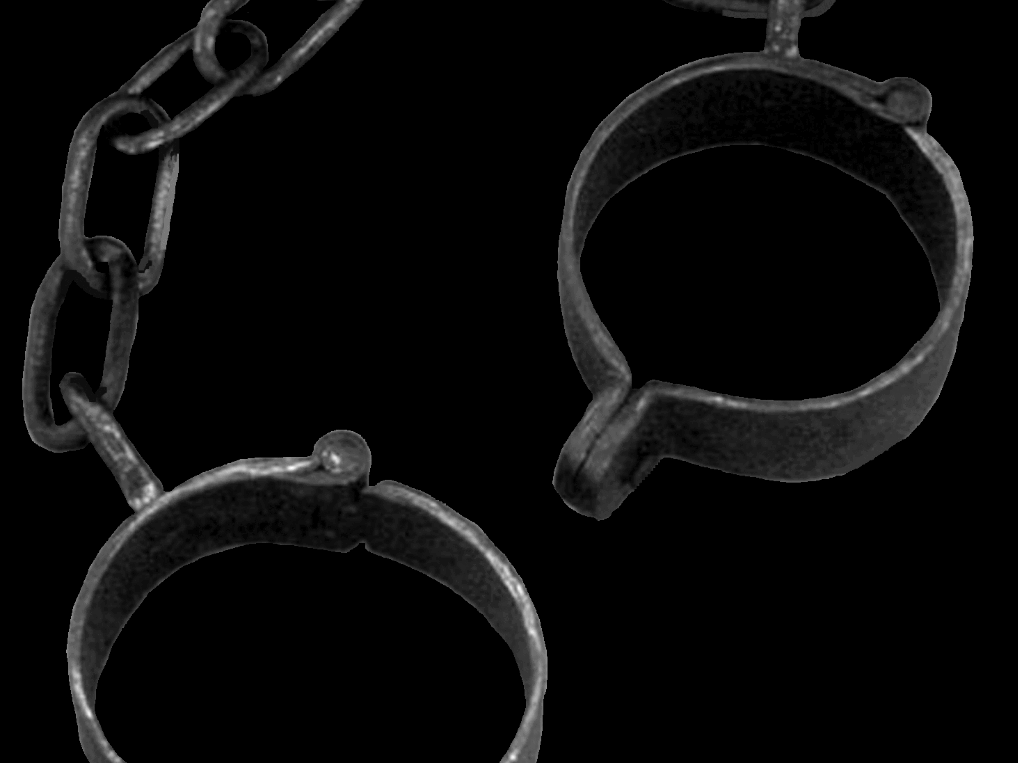
On June 16 the Town of Stoneham commemorated something that happened in Texas 157 years ago—the order delivered by General Gordon Granger proclaiming the end of slavery in one of the last holdouts of the Confederacy.
Now a state and federal holiday, Juneteenth (June 19) has long been celebrated by African Americans as the date when all Black people in the United States became free.
As citizens and public officials mark the end of centuries of cruelty and oppression, we should not forget that slavery existed here as well. In Massachusetts and, yes, in Stoneham.
Find out what's happening in Stonehamfor free with the latest updates from Patch.
Stoneham, once part of Charlestown, was founded almost three centuries ago by farmers and shoemakers--hardy, pious and independent. In 1726 they came together to build a church, refreshing themselves with cider and rum. My kind of people.
After I retired from teaching, I began looking deeper into local history. I started with Stoneham’s first minister, installed in 1729. His name was James Osgood and he was a graduate of Harvard, the Puritan college founded in 1636.
Find out what's happening in Stonehamfor free with the latest updates from Patch.
A member of the Congregational Church, I turned to the Congregational Library in Boston. Here I found several church documents, including James Osgood’s account book. Digitized, but not yet transcribed, Osgood’s book is a record of daily expenses paid out for food, household items, family necessities and hired labor. Despite the minister’s mundane entries, written in cursive scrawl, I kept on reading until I came to one dated February 21, 1744. I stared at it a long time, making sure I understood what I was seeing:
“Paid away in part for a Negro woman named Fibby, £20.”
A week later in the account book came another payment of 12 pounds. Then on April 2:
“Paid for my Negro woman in full, £43.”
I was stunned. I knew that a few of the early colonizers in Massachusetts had owned slaves. But the minister of my own church? I soon expanded my research. I found two 19th-century histories of our town which covered the colonial period. I looked up old vital records, including baptisms, marriages and deaths. I read the wills of heads of families.
What I learned was that at least eight families in Stoneham, families that had achieved greater financial and social status, at one time owned slaves.
As we celebrate Juneteenth in Stoneham, I’d like to state the names, not of the owners, but of the enslaved men and women who toiled here without pay or expectation of freedom. Who were prescribed by race and circumstance to the lowest rung of society. Who were buried in unmarked graves in the Old Burying Ground on Pleasant Street.
Here are the names I have found: Cato, Simon, Dinah, Mingo, Moll, Lucy, Sambo, Mercer, Phebe, Quecoo, Pomfrey, Amos, Obadiah, Chloe, Phillis, Peter, Catherine, Moses, Priscilla, Pomp, Obadiah How, Cato Freeman, Sharper Freeman, Cato Green, John Noyes, Pomp Green, Isaiah Bailey, Caesar Malcolm, John Webb, Jack Thare and Daniel Kingstone.
Slavery in Massachusetts ended in the 1780s not by legislative action or popular vote, but by the state courts, which upheld the rights of enslaved individuals based on the new Massachusetts Constitution. Slavery in the United States would continue another three quarters of a century, ending finally in the Emancipation Proclamation of 1863 and the Juneteenth Proclamation of 1865.
Happy Juneteenth!
Ben Jacques is the author of In Graves Unmarked: Slavery & Abolition in Stoneham, Mass., and If the Shoe Fits: Stories of Stoneham Then & Now, available at Book Oasis on Main Street in Stoneham.