Neighbor News
The St. Louis and the children at our border
"Suffer the children to come unto me, for such is the kingdom of God."
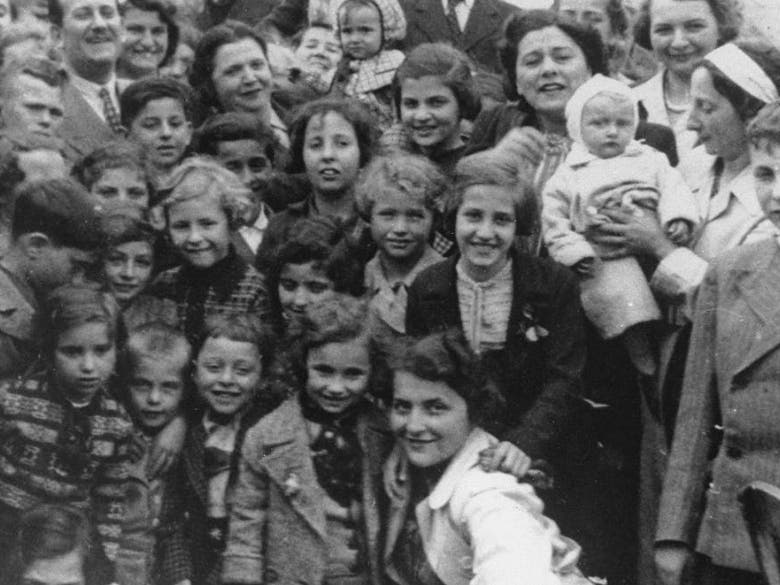
The moon was full on the night of June 2, 1939, as the M.S. St. Louis approached the coast of Florida. On board were 907 passengers, many of them children. From the deck, they could see the lights of Miami across the water.
Escaping Nazi Germany, the refugees waited desperately while the captain requested permission to enter the harbor. A day earlier they had been denied entry to Cuba, after that country had issued landing permits, then withdrawn them, allowing only a few passengers to disembark.
After repeated appeals to government officials, the ship got its answer: request denied. Under the United States’ restrictive immigration policy, that year’s quota for Jewish immigrants had already been reached.
Find out what's happening in Stonehamfor free with the latest updates from Patch.
The refusal to grant entry to the St. Louis refugees is generally regarded as one of the most shameful in our nation’s history. Forced to return to Europe, they landed in Belgium. After German forces over-ran Western Europe, however, many were rounded up by the Nazis. Two hundred and fifty of the passengers perished in the Holocaust.
Today thousands of refugees, many of them children, are at our southern border. Like the St. Louis passengers, they are desperate for asylum, fleeing violence, hurricanes and hunger.
Find out what's happening in Stonehamfor free with the latest updates from Patch.
Again there is an outcry of alarm. The brown-skinned hordes are coming. They will bring disease. They will take our jobs. They will over-run us, destroying our culture.
To understand the current immigration crisis on the Mexican border, it helps to take a broader view. First, the crisis of immigration is world wide. Wars, environmental degradation, economic exploitation, and ethnic and religious conflicts have pushed the number of refugees worldwide to epic proportions.
According to the United Nations, more than 80 million people around the world have been forced to flee their homes. Thirty-four million of these are children.
Taking a global perspective, 67 percent of refugees come from five countries: Syria, Venezuela, Afghanistan, South Sudan and Myanmar.
The five leading countries who have taken in refugees are Turkey, Columbia, Pakistan, Uganda and Germany. Germany, a country with a population one fourth of ours, has taken in over a million refugees from Syria.
The United States, a nation created by immigrants, has had a checkered past, at times lifting the “lamp beside the golden door,” at other times turning off the light and locking the door. Groups favored have been, for the most part, white and Christian: western and northern Europeans. Groups restricted or denied have been, for the most part, people of color or undesirable ethnicity or religion: Chinese, Haitians, Irish, Jews and Muslims.
Preceding each restriction on targeted groups has come a campaign of debasement, fueled by prejudice and gross inaccuracies—the characterization of Mexicans as rapists and murderers, or of Muslims as terrorists.
Current law allows asylum on the basis of persecution or endangerment. This includes those at severe risk because of their political, religious, or gender identity. Since 1980 when the United States resettled over 200,000 refugees, the numbers have drastically declined, despite the surge in need. In 2000 approximately 120,000 were admitted. Under the Trump administration’s anti-immigration measures, the number fell from 85,000 to just over 11,000.
Meanwhile, we face a surging humanitarian crisis—what to do with the thousands of asylum seekers from Central America, including unaccompanied children.
The question is whether we can act in a responsible and compassionate manner. I believe we can. The issue is not do we have room for asylum seekers. We do. The issue is do we have room in our hearts.