Schools
Stoneham Elementary Redistricting Committee Produces Interim Report
The committee released the interim redistricting report on Nov. 29.


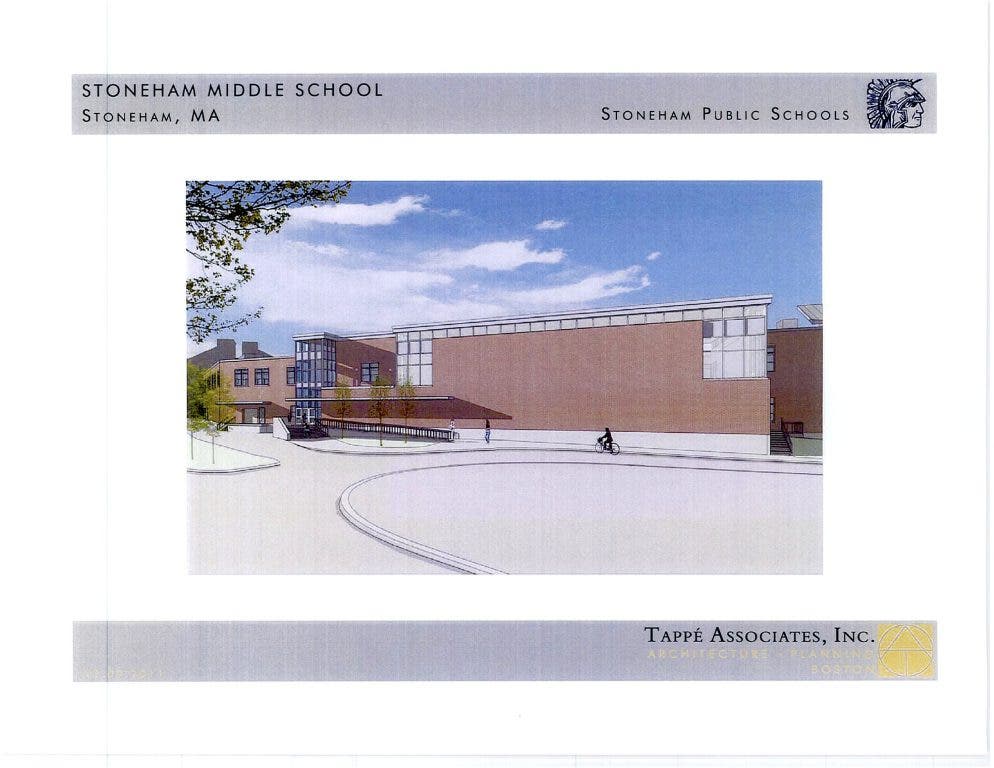
The Stoneham Elementary Redistricting Committee recently released an interim redistricting report related to the Middle School project, according to the Stoneham Public Schools website.
The 13-member committee released the interim redistricting report on Nov. 29. The report provides an overview as to why redistricting is necessary and some of the potential changes that may be on the horizon.
Why Redistrict?
Find out what's happening in Stonehamfor free with the latest updates from Patch.
In 2012 at a Stoneham Special Town Meeting, voters approved the estimated $40 million Middle School project, which involves converting the existing Central Elementary School into the Central Middle School for grades 5-8, according to the report. Additional reasons for redistricting also include opportunities to improve educational programs and eliminate class size disparities, the report notes.
Schedule
Find out what's happening in Stonehamfor free with the latest updates from Patch.
According to the report, the timeline for redistricting is as follows:
- Fall 2012: Evaluation of program location options and initial decision.
- Spring 2013: Evaluation of elementary district boundaries and initial decision.
- Fall 2013: Confirmation of decisions based upon fall enrollment.
- Fall 2014: Implementation of redistricting plan.
The comittee is hoping to accomplish several tasks through the redistricting process, according to the report, including:
- Define new elementary schools.
- Balance distribution of students and special programs.
- Arrange grades to equalize class sizes 2c) Limit transitions when possible.
- Maintain spaces for elective programs (arts, technology, etc.).
Enrollment Planning
As far as planning enrollments, the preschool would have 100 students for four classrooms, while kindergarten through grade 4 would have 180 students per grade and 44-49 rooms which would be about eight or nine per grade, according to the report. The average class size would be between 20 and 22 for K-4, the report notes.
Meanwhile, the number of proposed classrooms for the three elementary schools would be 17 for Colonial park, 23 for Robin Hood and 23 for South, respectively, based on the report. The tallies include rooms for fine art and technolog instruction, but does not incorporate half-sized rooms and offices, the report adds.
In the report the committee makes assumptions with regard to the redistricting planning.
"Due to the current size of Colonial Park, we cannot have three identical PK-4 schools. We may not even be able to have a smaller Colonial Park and identical programs at Robin Hood & South," reads the report. "It is preferable to have preschool in one school. The RISE and PARTNERS programs will probably be in different schools."
Based on the report, students in grades K (full day) through 4 will have these courses once per week: art, music, physical education, library and instructional technology. Meanwhile, half-day kindergarten will have an abbreviated schedule of electives, according to the report.
Redistricting Models
The committee discussed the positive and negative aspects of three redistricting models, including:
- Three school model: Grades PK-4 at Colonial Park and Grades K-4 at Robin Hood and South.
- Early childhood model: Grades PK-K at Colonial Park and Grades 1-4 at Robin Hood and South.
- Tiered model: Grades PK-K at Colonial Park, Grades 1-2 at either Robin Hood or South and Grades 3-4 at the other school.
"Each option has additional decisions on location of special education programs (RISE and STRIDE) and number of sections of each grade level," reads the report.
Three School Model
Some of the positives of the three school mode include closest to what parents might be expecting, closest to current model of neighborhood schools and requires the least amount of busing, according to the report. However, the plan's negative aspects include Colonial Park still only having two sections per grade and may not resolve class size inequalities, according to the report.
Eary Childhood Model
Among the positive aspects of the early childhood model are no MCAS testing and room for preschoold expansion at Colonial Park, less busing than the tiered model and more efficient use of staff than with the three school model, according to the report. Some of the negative points raised by the committee are no older role models for prekindergarten and kindergarten students, more busing than the three school model and no MCAS testing at Colonial Park which may foster lack of accountability, according to the report.
Tiered Model
Some of the positive aspects of the tiered model include the most efficient use of staff of all three models, encourages sharing of resources and ensures equitable class sizes, according to the report. However, a couple of the negatives include too many transitions, more busing than the other two models and likelihood of siblings in different schools, the report notes.
The committee reached a few conclusions based on their findings.
"The 'pros' of the tiered model are primarily logistical rather than educational, (and it) may have the strongest negative factors," reads the report.
To view the complete report, visit the Stoneham Public Schools website.
Get more local news delivered straight to your inbox. Sign up for free Patch newsletters and alerts.