Neighbor News
Thanksgiving in "troublous" times
When the war was going badly, a Stoneham pastor found reason to give thanks.
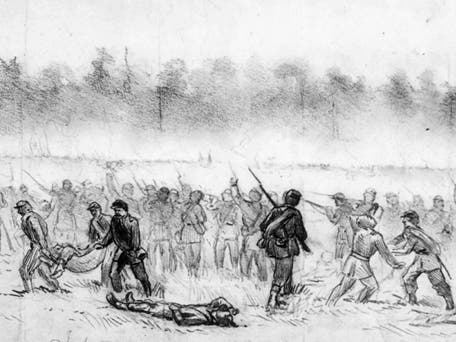
Coming together as a community to give thanks is important, especially in troubling times. So it was on November 21, 1861, when the Rev. William C. Whitcomb returned to the pulpit of the Congregational Church in Stoneham to preach the Thanksgiving sermon.
Known for his fiery sermon against the Fugitive Slave Act of 1850, Whitcomb had pastored the Stoneham congregation for five years, before moving on to parishes in Southbridge, North Carver and Lynnfield. Meanwhile, a polarized nation had begun to fracture.
On Nov. 6, 1860, Abraham Lincoln was elected president, winning all the free and none of the slave states. On December 20, before Lincoln had even taken office, the legislature of South Carolina voted to secede from the United States. Ten other states would soon follow.
Find out what's happening in Stonehamfor free with the latest updates from Patch.
Before dawn on April 12, 1861, Confederate cannons opened fire on Fort Sumter in South Carolina. The War of the Rebellion had begun.
When the Civil War broke out, the people of Stoneham were quick to respond. No town in Massachusetts sent more men proportionate to its size than Stoneham, wrote historian William B. Stevens. By the end of the second year, 269 men from Stoneham had enlisted. Hundreds more would follow. A 17-year old boy was the first to be killed. Others would be shot, lose limbs, die of disease, or languish in Confederate prisons.
Find out what's happening in Stonehamfor free with the latest updates from Patch.
Every student of American history knows of the early losses of the Union Army. By autumn, many in the nation found little to be thankful for. Not so, however, for Reverend Whitcomb. He began his Thanksgiving sermon by reading a proclamation from the governor. Then he acknowledged the hardships and difficulty of the times, the “stinging Bs” of early Union defeats, Big Bethel, Bull Run, and Ball’s Bluff.
Victory may not come soon, he said, and there will be much sacrifice, but it will come, “so sure as truth and virtue and liberty and knowledge and piety shall prevail over falsehood, crime, despotism, ignorance and wickedness.”
We can be thankful even in “troublous times,” Rev. Whitcomb said, even as David the Psalmist had praised God while wielding a sword.
“Let us rejoice, and thank God for the privilege of living and dying in this grand and awful time.”
Like many, Reverend Whitcomb saw the Civil War as a righteous and necessary campaign to once-and-for-all rid the nation of the curse of human bondage.
“The panting fugitives in the Dismal Swamps of Florida and Alabama, the unpaid laborers in the rice and cotton fields of South Carolina, and the numerous runaways from the ‘sacred soil’ of Virginia to the safe enclosures of Fortress Monroe, are stretching out their hands imploring, with the Macedonian cry, ‘come over and help us.’”
The following spring, Whitcomb, himself, would enlist in the Army as a chaplain. For over two years he would minister to sick and dying in Army hospitals in North Carolina, before he would succumb to yellow fever, and his body be returned for burial.
But now, as he looked out over a packed church in Stoneham, he called on the people of Stoneham not to lose heart. Instead, he said, “Let us rejoice, and thank God for the privilege of living and dying in this grand and awful time.”
His words resonate today.
Note: Excerpted from In Graves Unmarked: Slavery and Abolition in Stoneham, Massachusetts (2018) by Ben Jacques. This book, along with If the Shoe Fits: Stories of Stoneham Then & Now, is available at the Book Oasis on Main Street.