“Kanuck, Tuckahoe, Congressman, Cuff, I give them the same, I receive them the same.”
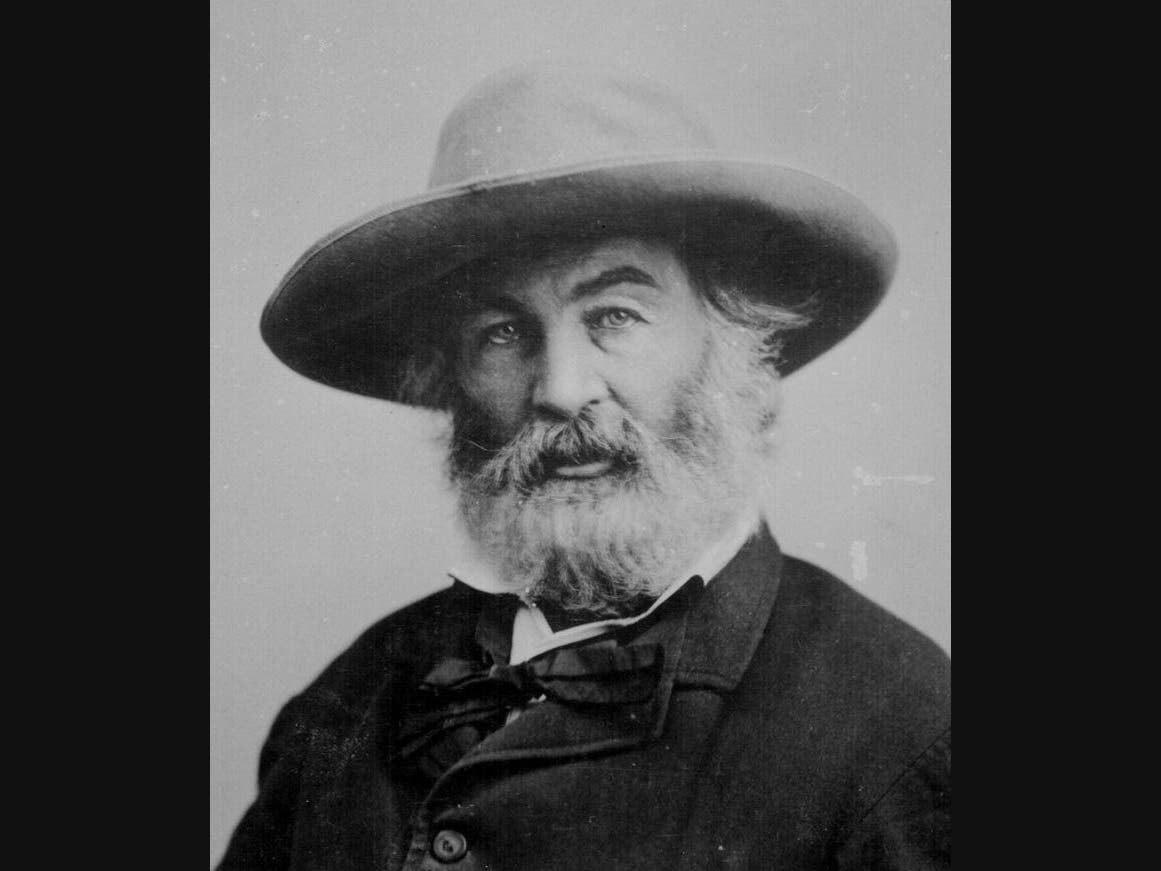
I can almost hear Walt Whitman, our country’s great democratic poet, as he chants these words--a 19th century rapper--delighting in the sounds of the words.
The line is from “Song of Myself,” the heart of Whitman’s 1855 Leaves of Grass. The “I” of the line is the grass, subject of this stanza, the grass “sprouting alike in broad zones and narrow zones,/ among black folks and among white folks.” But it also is the voice of Whitman himself, calling out his big-hearted acceptance of his fellow Americans, regardless of race or rank.
Find out what's happening in Stonehamfor free with the latest updates from Patch.
Whitman, who championed democracy in all spheres of life, knew that no political or legal system could succeed without the affection of human beings for each other. We pride ourselves, he said, in our Constitution, in our laws. Yet, if we do not bond as a people, accepting and respecting each other as brothers and sisters, the great American experiment in democracy will fail.
In “Song for Occupations” Whitman proclaims the infinite value of all persons. The typesetter is as important as the editor, the maid as the madam, the carpenter who carved the pulpit as the preacher, the street car conductor as the President.
Find out what's happening in Stonehamfor free with the latest updates from Patch.
Writing long before women had the right to vote, the poet wrote: “The wife, and she is not one jot less than the husband,/ The daughter, and she is just as good as the son,/ The mother, and she is every bit as much as the father.”
Whitman’s embrace of his fellow Americans transcended race, gender, ethnicity and class. He moved, one of a living crowd, among immigrants and stevedores, factory workers and carriage drivers. At the time, however, the nation was being torn apart by slavery. Not long after the Fugitive Slave Act, he writes of harboring a fugitive slave, drawing him a hot bath, treating his wounds and sharing food and clothes. During the Civil War that followed, Whitman nursed the wounded in Union hospitals, wrote letters to their families and held the hands of the dying.
A century and a half later, our experiment in democracy is again threatened by those who would divide us. We speak of “those people,” think in terms of “us”and “them.” When someone says, “black lives matter,” we take offense, as if we were being devalued. We move in circles that reinforce our prejudices. We seem stuck in the mire of self-justification.
If Walt Whitman were with us today, I believe he would remind us that our potential to become one nation lies in our ability to care for and stand up for each other. He would say, have courage. Reach out to the one different from you. Step over the divide. Hear each other’s stories. It may just happen that, in doing so, “they” will become “we.” “Them” will become “us.”