Neighbor News
They fought on two fronts
Seeking freedom for the enslaved, they also claimed their rights as women
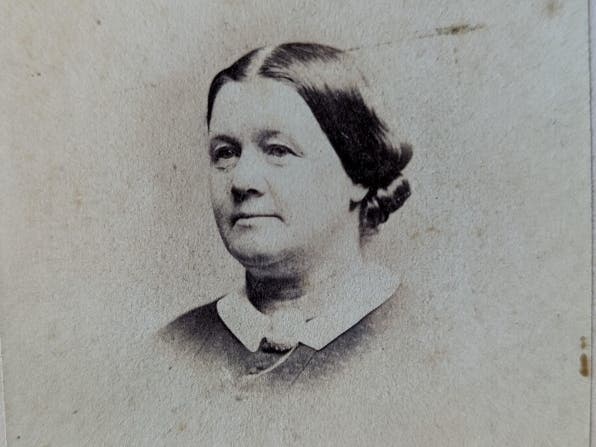
They were married, single or widowed, mothers and grandmothers, wives of prominent men and workers in the shoe factories. And when in 1838 they announced the formation of the Stoneham Female Anti-Slavery Society, they used their own names, not their husbands as was the custom.
We find their names, including those of several single women, in the Feb. 8, 1839, edition of The Liberator, the abolitionist newspaper published in Boston by William Lloyd Garrison. Mrs. Sarah Gerry, not the name of her late husband. Mrs. Levina Bryant, not Mrs. Abijah Bryant, and so on.
Then there was simply, Paulina Gerry, not Mrs. Ira Gerry. Ira, son of the Society’s president, Sarah, was a leading figure in Stoneham business and civic life.
Find out what's happening in Stonehamfor free with the latest updates from Patch.
By using their own names, the women of Stoneham were taking a stand. Ardent abolitionists, who challenged both church and town to stand against slavery, they were waging war on two fronts. The first, the accepted belief that Blacks were less than human and could justifiably be enslaved, and second, that women were incapable of rational thinking and should be barred from public affairs.
For the women who formed the Stoneham Female Anti-Slavery Society, one battle was as important as the other. We find evidence of this in a letter Paulina Gerry wrote in 1839 to Maria Chapman, founder of the Boston Female Anti-slavery Society and an editor of The Liberator.
Find out what's happening in Stonehamfor free with the latest updates from Patch.
In her letter, Paulina Gerry, then 25, informs Chapman that the Stoneham chapter has been sewing children’s clothes to sell at a fund-raising fair, then asks for advice on other items “that will render our table pleasing and attractive and sell to the best possible advantage.”
Gerry then goes on to speak her mind about the controversy splitting the abolitionist movement, the role of women. Some men were insisting that only they should make decisions, that women should be kept out of deliberations and only play a supporting role.
Paulina doesn’t mince words: “The hue and cry about Woman’s Rights is absolutely disgusting,” she states. “If Women are persons, the constitution surely entitles them to the right to act in any of the anti-slavery deliberations, and no man conscious of possessing the superiority his sex claim would fear any diminution of his rights permitting Women to cooperate with him.”
Concluding her letter, Gerry draws a parallel between the struggles of Blacks and women. After Massachusetts ratified its constitution in 1780, “declaring all men free and equal,” slavery persisted for a while until the realization that they were entitled to be free led those in bondage to claim their freedom in the courts. So it is with women, she argued. Entitled to full rights as citizens, women are now claiming their right to be full partners in the anti-slavery cause.
The joining of the two great struggles would continue as women joined men in pressing for the immediate abolition of slavery in America. It would be voiced in 1850 at the first national Anti-Slavery Convention in Worcester by renowned abolitionists like Lucy Stone, Sojourner Truth, Lucretia Mott, and Frederick Douglass.
Paulina Gerry would attend that convention as well, leading and inspiring others in Stoneham and beyond to fight not only for abolition but for women’s suffrage.
As we celebrate National Women’s History Month, we remember the courageous women of Stoneham, who made the cause of freedom their own.