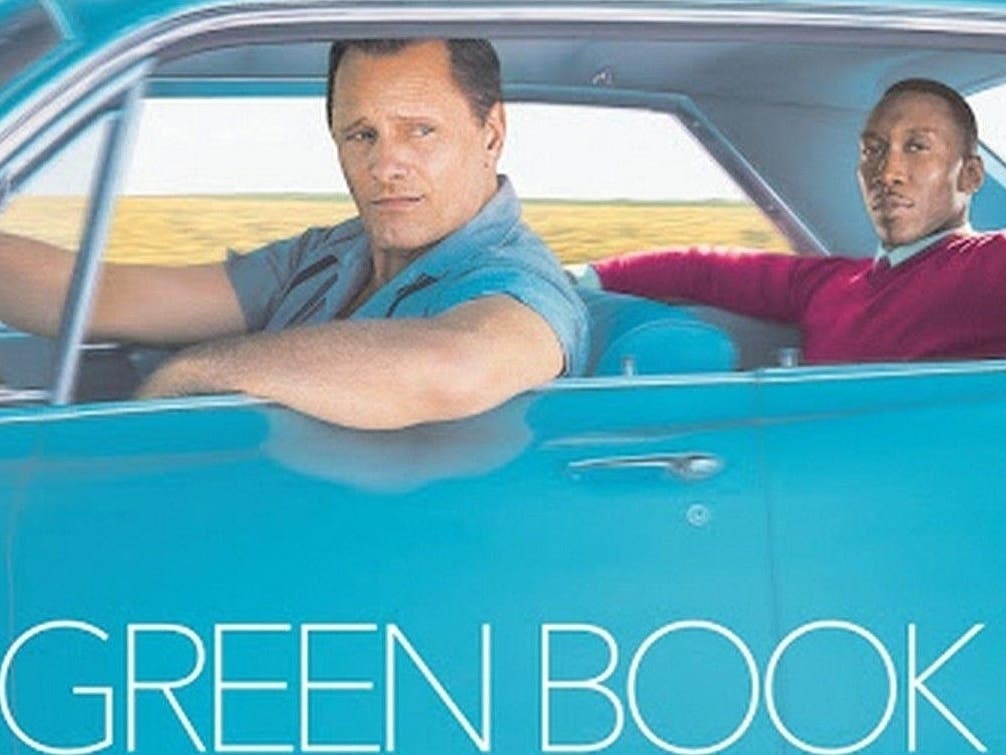
So much depends on the lenses through which we see the world. I was reminded of this when discussing the 2018 movie, Green Book. Winner of numerous awards, the movie cast Mahershala Ali as the Black pianist Don Shirley and Viggo Mortensen as his Italian-American driver, Tony ‘Lip’ Villelonga.
I liked the movie, partly because I liked Don Shirley’s music. A prodigy classical pianist, he later moved into jazz. Now, a half century later, I was seeing him portrayed on the big screen.
If you haven’t seen Green Book, the movie is about the relationship between Shirley and Vallelonga. Shirley lives in Manhattan in a posh apartment above Carnegie Hall, where he regularly performs. Vallelonga, from the Bronx, is unemployed, having worked as a bouncer, maître d’ and chauffer. In 1962 Shirley hires him to drive him on a concert tour through the segregated South.
Find out what's happening in Stonehamfor free with the latest updates from Patch.
The movie follows the mismatched pair as they travel from city to city, using The Negro Motorist Green Book, a guidebook for African-American travelers seeking safe accommodations on the road.
On the way they encounter racist cops and homophobic thugs, with Villelonga coming to the rescue. They also interact with upper-class whites, who praise Shirley for his talent, but exclude him from their society.
Find out what's happening in Stonehamfor free with the latest updates from Patch.
A year later—the movie condenses this into a few weeks—the pair returns to New York. Vallelonga goes home to his Italian-American family in the Bronx, gathered for the Christmas holidays. Shirley, however, returns to an empty apartment. Seemingly isolated from family and friends, he ends up at the door of his chauffer.
Green Book won several top awards, including Golden Globe and Academy awards. Although I enjoyed the movie, I wondered about its biographical accuracy.
Discussing it with family, I asked my daughter-in-law, who happens to be African American, for her perspective.
“It was OK,” she answered. “Why just OK?” I prodded. “Well,” she replied, “I saw it as another ‘white savior’ film.”
Thinking more about this, and how Shirley’s story was portrayed, my eyes started to open. I could understand why it’s satisfying to many white viewers to see a white man rescuing a black man not only from overt racism, but from his own isolation.
I wondered how the script could have been different. Could it have put more emphasis on how Shirley rescued Villelonga from his own prejudice and ignorance?
Seeing through the eyes of others is an important goal of the Stoneham Reads program. Right now, individuals throughout Stoneham are reading Stamped, Racism, Antiracism and You by Jason Reynolds’ and Ibram X. Kendi.
As a co-facilitator for an upcoming discussion group, I invite you to read Stamped, available at the Stoneham Library, the Book Oasis, and on Audible. And to sign up for one of several discussion groups in May and June. Carlyene Prince-Erickson and I will be hosting group #3, which meets on Saturday, May 15 at 3 p.m.
So much of history depends on who is telling the story, and from which angle. Stamped gives us another perspective, a lived perspective that is different from what we learned in school.
Note: You can sign up for a discussion group at www.stonehamcdc.org/stoneham-reads.