Community Corner
Animal House: The Great White Shark
With summer in full swing, and locals heading off to the various beaches in the area, Christopher D'Arpino breaks down the Great White Shark in this week's Animal House column.
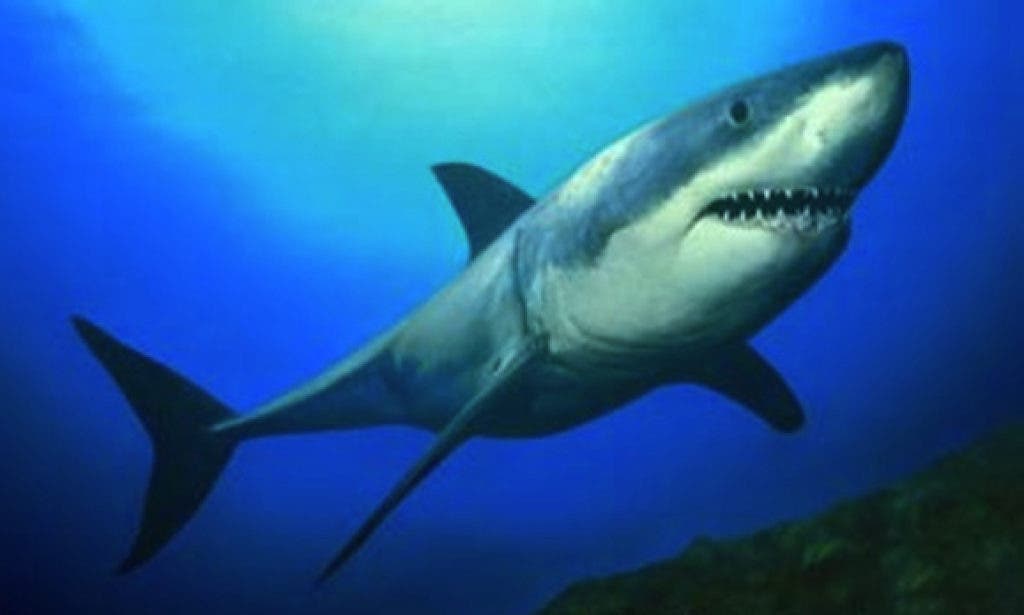
Summer is here and if you are headed to the beach and frolicking in the ocean, and you are like me, as you bob up and down in the water that song creeps up in the back of your head….yup, the theme from JAWS!
This in some ways is not a completely ridiculous thought.
Recently, on the Cape, in Chatham, Monomoy Island and Truro, there were Great White shark sightings.
Find out what's happening in Stoughtonfor free with the latest updates from Patch.
The Great White generally is found in coastal regions with a water temperature of 54 to 75 degrees. The Great White shark is found in New England all the way to California, Australia, South Africa and Mexico.
Born as a pup, the great white is generally five feet long at birth and immediately swims away from the mother and spends its life working its way up the oceanic food chain. They are generally fifteen feet in length fully grown.
Find out what's happening in Stoughtonfor free with the latest updates from Patch.
Generally if the pup can make it after the first year of life without becoming prey, they will survive.
Being an amazingly efficient and fast swimmer is one of the shark’s best assets. Shaped like a torpedo, the pointed tip of this fast and powerful swimmer is armed with three thousand teeth set up in three rows. These teeth are shaped like an Indian arrowhead with serrated edges used for ripping and tearing flesh.
The Great White shark does not chew its food, but rather takes chunks of prey and swallows it whole. Once the shark has eaten a meal it can go one to two months without eating again if needed.
This shark is the largest predatory fish in the world. The other major asset the great white possesses beyond the thousands of teeth and efficient swimming is the shark’s ability to sense electrical fields given off by moving animals in the water. This ability is due to a sensing organ known as the Ampullae of Lorenzini, which is a network of jelly-like pores known as electro receptors. They are so sensitive the Great White can detect a half a billionth of a volt—now that is sensitive!
So what are these sharks doing off Cape Cod? No, they are not taking a vacation; they are chasing prey.
The prey they are chasing are not humans at all. In fact, in the case of the Cape Cod sharks, they are feeding on seals. The Chatham beaches are filled with seals, and that attracts the sharks.
As of the writing of this article no beaches have been closed based on the sightings, though the sightings have attracted tourists.
There have been instances of shark attacks on humans but scientists believe that we are not pry at all, but rather our silhouette in the water may look like a prey item, causing the shark to believe that it is about to get a seal or sea lion for a meal instead.
The great white is a very efficient predator, but there has never been any evidence that the sharks will seek out humans as a prey item.
This is not to say humans are not at risk being in the water with these sharks and should not enter water where these sharks are sighted.
From 1926 to 1991 there have been 115 great white attacks on humans. More than eighty percent of the people attacked survive because the sharks have a realization that what they are attacking is not prey and release the humans.
Out of the 375 species of sharks found in our oceans, only 30 have been documented to have attacked humans. Of the thirty species the most common sharks that have attacked humans are the Bull Shark, The Great White and the Tiger Shark.
So, as we travel to the beaches of our beautiful coast, and enjoy all that the Cape has to offer, please head the warnings of the local officials and remember, just when you thought it was safe to go back in the water…
