Schools
Black Students Disciplined At Disproportionate Rates In Stoughton
Public records show that black students are suspended and referred to law enforcement at higher rates than their white peers.


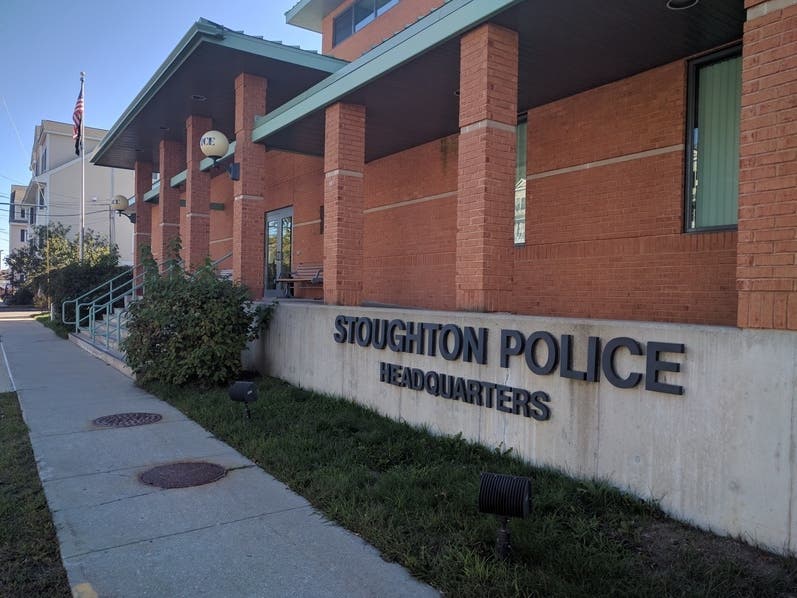
STOUGHTON, MA — Black students in Stoughton are suspended and arrested in school at rates higher than their white peers, public records show.
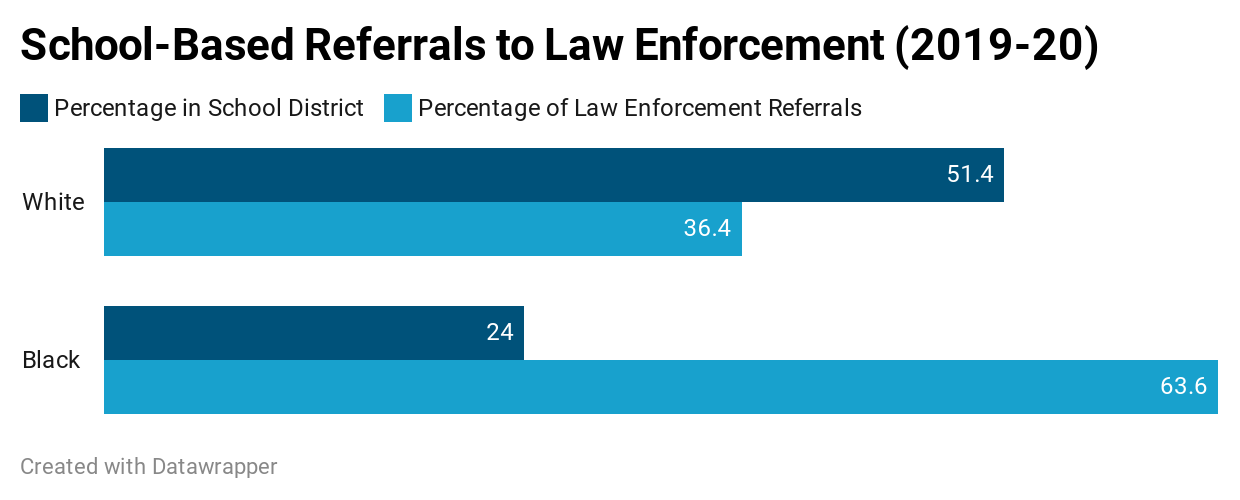
During the 2019-20 school year, Black students accounted for 63.6 percent of school-based arrests and summonses, despite making up just 24 percent of the school district’s population. White students, who account for just over half of the school population, made up 36.4 percent of referrals to law enforcement.
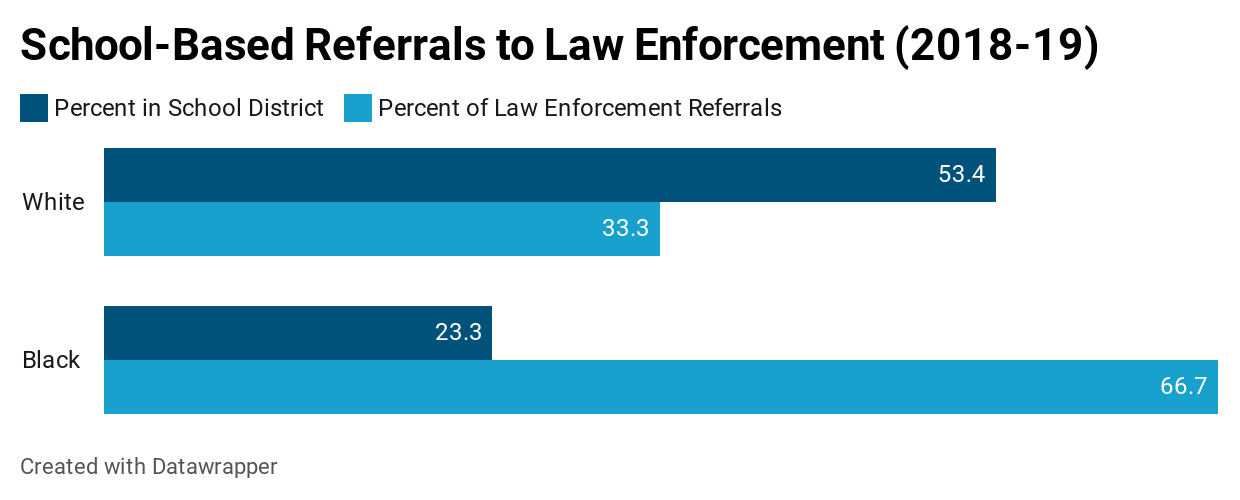
During the previous school year, Black students accounted for two-thirds of referrals, though they made up less than a quarter of the district’s student body. White students accounted for one-third of referrals that year, despite comprising more than 53 percent of the school population.
Find out what's happening in Stoughtonfor free with the latest updates from Patch.
These figures are not unusual for Stoughton: Black students have been referred to the police at disproportionate rates for at least 20 years. They also get suspended at higher rates than white students.
Nor are these statistics unique to Stoughton. According to data from the Civil Rights Data Collection, in 2015-16 Black students comprised 15 percent of the U.S. school population while accounting for 30 percent of school arrests and referrals to law enforcement.
Find out what's happening in Stoughtonfor free with the latest updates from Patch.
That report showed similar trends in school discipline: Black boys make up 8 percent of the national school population but 25 percent of the out-of-school suspensions. Black girls made up 8 percent of the school population but 14 percent of out-of-school suspensions.
In Stoughton during the 2018-19 academic year, 6.1 percent of Black students were given in-school suspension. That’s 54 students, the same as the number of white students given in-school suspension, although white students outnumber Black students 2-1. An even greater disparity can be seen in out-of-school suspensions: 62 Black students, compared to 52 white students.
Rahsaan D. Hall, the director of the Racial Justice Program at ACLU Massachusetts, said he's disappointed but not surprised by the statistics.
"It speaks to the presence of institutional racism," he said. "The fact that police are responding to disciplinary issues in schools, as opposed to teachers handling it, is highly problematic."
Leon Smith, the executive director at the Boston-based Center for Juvenile Justice, said that these disparities mean that more students of color become vulnerable and disconnected, pushing them into the school-to-prison “pipeline.”
“Not only are they slipping behind in their education, but they're also put more at risk,” Smith said. ”And then you have, right next to it, a direct pipeline where behaviors that often
are a cry for help and more support, students are instead arrested and put directly into the justice system.”
In Massachusetts records, school arrests and summonses are denoted with the same -AR ending on the case number. An arrest means that a student was handcuffed and taken into custody; a summons is given when an officer issues an order to appear in court. Both result in a student being charged with a crime, and are together classed as “referrals” to law enforcement.
School Resource Officers
Police have been in Stoughton schools for decades, said Lt. John Bonney, the spokesperson for the Stoughton Police Department. He said that they are essential members of the schools, because students can turn to them with problems at school or home, and such relationships build trust with law enforcement.
These officers used to be a part of DARE—Drug Abuse Resistance Education—teaching a curriculum about drug-use prevention. The program is no longer in Stoughton schools, but the police officers remained.
The district has two officers designated as school resource officers, or SROs. One works out of the high school, one out of the middle school, and together they cover the elementary schools.
Some advocates say that having police in schools increases the likelihood of children being pushed into the criminal justice system, especially children of color. But Bonney said race does not affect an officer’s decision to make an arrest.
“Race does not come into play (in) whether or not someone gets charged with a crime,” Bonney said. “You get charged with a crime if you commit the crime.”
"I know that black children are not any worse behaved than white children," Hall said about the disparity. "It's really about the way that black children are disciplined in school, the faculty and staff in the schools, the lack of cultural competency at the least, or at best, and outright racism at worst."
Schools Superintendent John Marcus, who has been in the job for a year, said he was unaware of racial disparities in arrests.
“Am I aware that it's something long-standing with the police department, and in the town? No,” said Marcus.
During his tenure as superintendent, Marcus said, there has been only one arrest, which involved a student of color, but that’s a small sample size.
Marcus said he didn’t have any further information on racial disparities in the way students are treated.
“If there's something that I should know, then I would want to know what that information is and look at it more carefully,” said Marcus, who has previously worked as an assistant superintendent in Sharon and Stoughton.
The school resource officers are appointed by the chief of police for one year; after the year is up, they can reapply for appointment, while other officers are given the opportunity to apply. Selection for school resource officers in Stoughton is at discretion of the chief.
Smith, of the Center for Juvenile Justice, argued that a district’s school committee should be in charge of appointment, not the chief of police or superintendent.
He said data on how having SROs in school affects students should be presented to the committee, noting that a bill pending in the Massachusetts Senate would make such reporting mandatory.
“It also has a provision that says, if you don't cooperate (in providing) this data, then you shouldn't get to apply an SRO,” he said. “Because how can we judge how effective an SRO is if we don't have the data on the outcomes?”
Charges
Last year, Black students in Stoughton schools were referred to law enforcement for such crimes as assault, harassment, larceny, terroristic threat and drug possession. White students were referred for assault, terroristic threats, and weapons possession.
Before the 2018 school year, students could be arrested for “school disturb,” a charge that could be made over any sort of disruption.
The charge was outlawed in 2018 as part of the state’s Criminal Justice Reform bill — to the relief of some youth advocates but to the confusion of some law enforcement officials.
“The elimination of that rule is astounding to me, frankly,” said Lt. Bonney.
He said that if someone becomes disorderly in the middle of the street, or in the middle of a Target, they can be put under arrest. But the same behavior in a school building isn’t considered criminal.
Bonney said that fails the majority of students who follow the rules.
“That is not taking the best interest of the rest of the student body in mind,” he said. “It took away any type of ability for a police officer to step in and handle it.”
But some advocates disagree. Smith said most people have the idea that school arrests are for students who committed felonies, but they actually could involve anything from kids shouting at each other in the cafeteria to everyday shoving on the playground.
“In reality, it’s the type of behavior that should have been handled through the school discipline system or alternative means,” he said.
School Discipline
Marcus said school officials, typically principals, decide on suspensions.
“It's a set of criteria based on the degree of seriousness of the offense and the student's particular needs,” he said. “The idea really, no matter what it is, is to find ways to create a consequence, but also to ensure that students have the ability to learn and grow. So we're always weighing those two things whenever we're thinking about suspension.”
Smith contends that the practice of suspension rarely fixes the problem that caused the bad behavior in the first place.
“The reality of suspension is that if two kids have a problem with each other and you just suspend them, it just suspends the problem, because you’re not dealing with the underlying thing that’s happening,” Smith said.
He said suspension can exacerbate existing problems, especially if a student is acting out because of difficulties at home.
“If a kid shows up and they’re having a bad day because things are really terrible at home, to send them back there for a week doesn’t address the underlying issue,” Smith said.
Some suspensions and expulsions result from felony charges. This increase in the number of days missed is a problem, Smith said, and it’s based on an officer’s decision to make an arrest.
“Just by the fact that you’re charged, you can be excluded from school,” said Smith. “And so, even if that case is ultimately dismissed and thrown out, you’re sitting at home missing school based on an allegation.”
The CFJJ is collecting and organizing the data of discipline and suspension in schools, and will publish it in a map that shows “gateway cities” in Massachusetts — that is, “mid-sized urban centers” that were previously considered a “gateway” to the American Dream because of their job opportunities.
The CFJJ says these gateway cities have insufficient funding for education. From what the organization has seen so far, Smith said, not only are students of color are not only disciplined at disproportionate rates to their white peers, but so are economically disadvantaged students and those who suffer from disabilities.
“Students with disabilities are disciplined more overall, but the racial disparities really explode,” Smith said. “So Black and brown kids who have additional needs are suspended and disciplined from school by far the most often.”
Marcus said the district tries to resolve issues in school, and some staff members are dedicated solely to that goal.
A program in the high school facilitates peer mediation, where students are encouraged to work through their problems with each other. Marcus said when a student is misbehaving, it’s not always a cop that’s called; an adult the student trusts is often involved, such as a teacher or guidance counselor.
Stoughton also has “adjustment counselors,” who are typically geared toward special education but can also jump into “tricky” situations that might otherwise involve a school resource officer, Marcus said.
Hall, of the ACLU, said that the police officers need to be removed from schools. He said their presence is problematic, and has resulted in more Black students being charged for something that could have been resolved in school.
Smith called for “restorative justice,” in which students are brought together to resolve conflict and be kept in school.
Marcus said the concept of restorative justice can mean different things — for Stoughton, it’s about finding ways to solve problems without doling out punishment.
“I'm using it as conceptually restorative practices include as you say things like mediation, reparations, discussion, finding ways to restore what's happened as opposed to straight up consequences,” Marcus said. “So yes, it's absolutely very important to me, and it's something that we should be looking at as an administrative team.”
Get more local news delivered straight to your inbox. Sign up for free Patch newsletters and alerts.