From grief came common ground and a better understanding of how to intervene in a crisis.
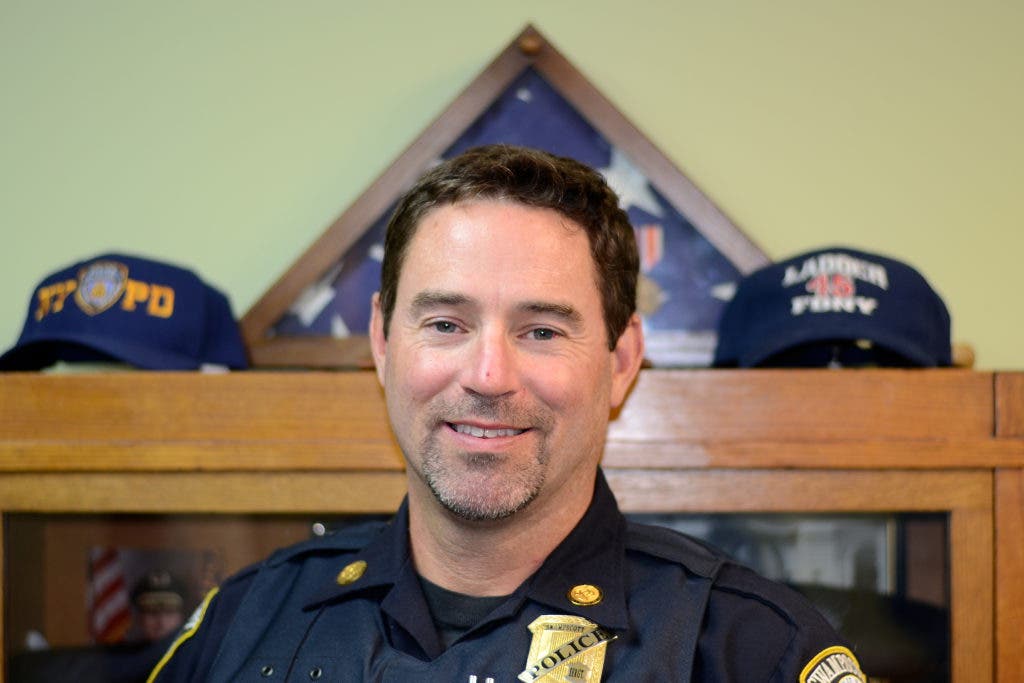
Sgt. Rick McCarriston teaches part-time police officers how to respond to people who are in crisis.
The class he teaches at the police academy draws on personal experience, some of which came right out of New York City in the weeks after 9/11.
Find out what's happening in Swampscottfor free with the latest updates from Patch.
McCarriston tells the reserve officers that some people in crisis, overwhelmed by emotions, are more likely to listen to an officer who speaks to them with understanding and empathy as opposed to threats and orders.
To make his point he takes the students back 10 years ago, the morning of Sept. 11, 2001.
Find out what's happening in Swampscottfor free with the latest updates from Patch.
He was just leaving his mother's funeral at the Swampscott Cemetery when someone told him about events unfolding in New York.
He was immersed in his own grieving and the crashed planes, collapsing towers and clouds of dust and distress seemed removed from him, he said.
But about a week later when the new police chief, Ron Madigan, put out a call for officers to drive to New York and help , McCarriston and Swampscott officers Jay Locke and Dave Skomurski said yes.
McCarriston, who was further along in his grieving, knew it was the right answer — to help.
What followed was two stints of several days in New York City, helping first responders cope with the tragedy.
His job was to drive chaplains to where they were needed.
He drove them to Ground Zero where they counseled firefighters, police officers and iron workers.
He stood at Ground Zero, a place and time he now recognizes as a part of history but at the time saw only as place that had people in need.
The days had a surreal quality, he said. Sixteen-hour shifts rolled by in what seemed like three hours.
Ultimately he became not just the counselors' driver but a counselor.
He counseled a New York City Transit Authority officer who was experiencing survivor's guilt over his partner's death at the Towers.
Victim's relatives gravitated towards him.
The grief he was still experiencing connected hm to the grief that they were feeling.
"A personal connection," he said.
In his class he tells the students what he did in New York and how people responded.
He tells the students that sometimes a person-to-person approach can reach people in crisis.
Get more local news delivered straight to your inbox. Sign up for free Patch newsletters and alerts.