Community Corner
Exhibit of Tewksbury's Earliest Business on Display April 13
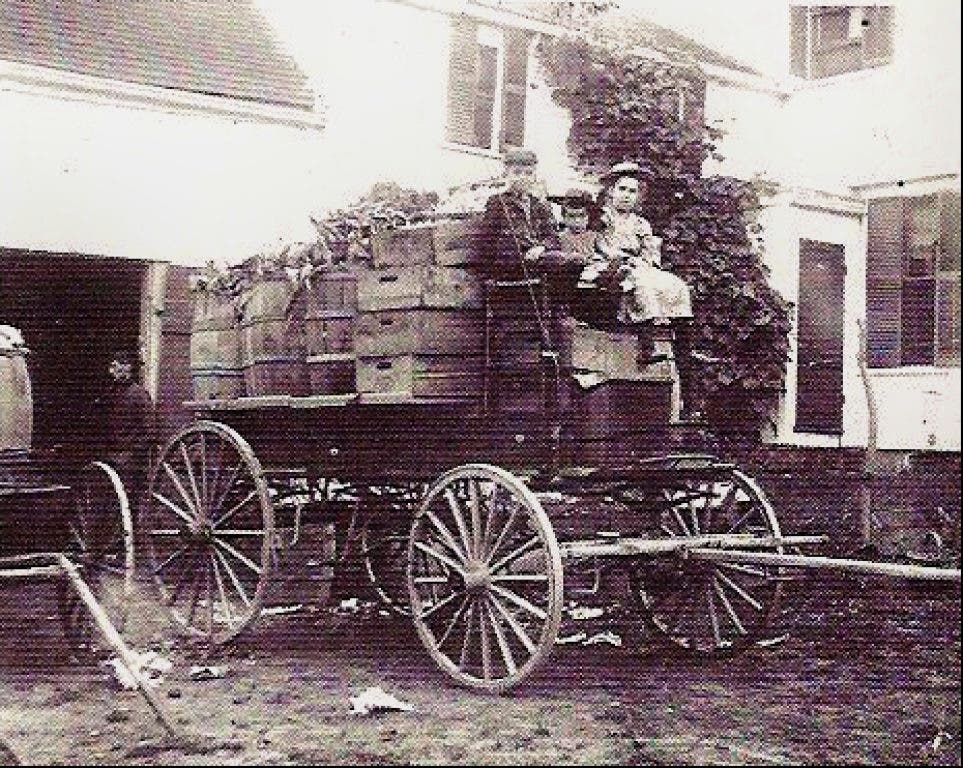
Tewksbury Historical Society offers amazing exhibit of early Tewksbury agriculture.


(Editor's note: The following information was submitted by the Tewksbury Historical Society.)
Tewksbury’s earliest business from 1734 to the 1900’s was agriculture.
Putting aside the “Wamesit” area (where the Concord and Merrimack River confluent) that grew to be the most populated part of Tewksbury and the industrial center of town at the beginning of the 1800’s, the rest of Tewksbury was dominated by farms.
Find out what's happening in Tewksburyfor free with the latest updates from Patch.
If you lived in Tewksbury during Colonial times, your family would need about 12-15 acres to live and support a family. It was a hardscrabble life. The Tewksbury Historical Society is planning to produce a play during the summer that centers around several of the farms located on Livingston Street. This play, “The Scot’s Heather Follies of 1861” represents the quiet farm life in this bucolic community and is characteristic of farming life in the early years of Tewksbury.
Tewksbury’s oldest farmers were the Native Americans who lived off the land. In the Local History Room is a display case of artifacts found at the Heath Brook Site, also called in recent history the Folsom Farm or the Heath Brook Farm.
Find out what's happening in Tewksburyfor free with the latest updates from Patch.
Edward L. Bell, Senior Archaeologist at the Massachusetts Historical Commission writes in an article on the publication Preservation Advocate (Winter 1992, Vol. 19, #1), "Beginning about 8,400 years ago (6450 B.C.), people began to camp at the Heath Brook Site, foraging out to the nearby lakes, rivers, and swamps to collect plants and to hunt. Evidence of prehistoric groups from this ancient period, called the Early Archaic, is a rare find." "Later around 5,130 ears ago (3180 B.C.) larger groups camped for longer times at the site. It was during this later period that the most intensive evidence of occupation occurred, and some intriguing information on the plant use was found. Seeds from a plant in the Goosefoot family, long known to be a source of food for prehistoric peoples, were found in a fire pit along with burned bone and charcoal and dated by special chemical techniques to circa 5,130 years ago--apparently on of the earliest dates for the use of this food in the Northeast." "This type of "low-tech" approach to plant growing is called "horticulture" (to distinguish it from "agriculture" where a more concerted effort is made to plant, tend, and gather cultigens on a larger scale), and is believed by some archaeologists to be an important milestone in the rise of agriculture some 1,000 years ago. " "Goosefoot has appeared at several early sites in the Midwest and the Southeastern United States, but such an early date for the Northeast is a significant discovery."
An exhibit of tools from the Heath Brook Site is displayed at the Local History Room in the Tewksbury Library.
The Society will feature an exhibit of tools used during various phases of farm life in Tewksbury. On Wednesday, April 13th the Society will use one of the display cases in the lobby and three display cases (one case being the Native American Artifacts) in the Local History Room on the second floor to put up a display showing farming tools, dairy farms, carnation industry tools, and photographs of various farms in Tewksbury. A PowerPoint show will also be featured to show how the Carter Farm morphed from a typical farm to carnations to cactuses and then into several businesses on what is today a bustling Route 38. If you cannot be at the 6:30pm opening, the exhibit will be left up in the Local History Room until summer.
The Society is in the Tewksbury Library’s Local History Room every Tuesday from 3:30 to 5:30pm to help people with historical research. The Historical Society acts as the official repository of Tewksbury artifacts. If you have an artifact or article that represents Tewksbury history, you may contact our Archivist Louise Hunt about donating these to the Society by email us at tewksburyhistoricalsociety@msn.com. We are a 501c3 non-profit corporation and any donation is tax deductible. Surf the Society’s website at www.tewksburyhistoricalsociety.org or check out our new Facebook page.
Join us as a member or business member and be a part of history.
Get more local news delivered straight to your inbox. Sign up for free Patch newsletters and alerts.