Community Corner
Wakefield Student Joe Cruz Uses Film to Identify and Challenge Repeating Patterns in the American Experience
His message is surprisingly mature: learn from the past, speak up early, and help others see the warning signs before history repeats itself


This story was contributed by Austin Prep, a Patch Community Partner. The views shared reflect the author’s perspective and feature real experiences from the Austin Prep community.
At Austin Prep, a history assignment isn’t always a paper. It’s often a film production. And for Wakefield sophomore Joe Cruz, that shift has changed the way he thinks about learning, history, and his ability to teach others.
Cruz, who entered Austin Prep in Reading as a freshman, said many of his experiences at the school have been brand new. “Football, the American Experience class… it’s all new to me,” he said. But taking on something unfamiliar has become a theme. Just as he learned football from scratch, he stepped into filmmaking, research, and public storytelling in a course that merges English, history, and media production.
Learning History by Teaching It
The American Experience is co-taught by Mr. Trevor Jones (Humanities Faculty) and Mr. Alfonse Femino (History Faculty). Students choose a historical topic, research it deeply, and create a documentary designed to teach others something meaningful about America, both past and present.
Jones said the class was built to give students a sense of ownership. “You end up working on a project, something to call your own, and something to potentially be proud of,” he said. Cruz agreed: “We’re taking what we know. We’re able to take our own mind, our own creativity and turn it into something mixed with our knowledge from the classroom.”
Cruz’s group explored mob mentality through the lens of the Salem Witch Trials. “When we were presented with a list of themes to choose from, my group and I thought that it was a good fit,” Cruz said.
The class encourages students to make connections between historic events and modern-day American life. Cruz explained that while witch trials no longer happen in name, similar events continue today. “Even though its name may not be a witch trial, there are tons of examples of witch trials going on today,” he said. He cited the Red Scare, the Tulsa Race Massacre, and the Holocaust as examples of fear-based accusations spreading quickly and causing long-lasting damage.
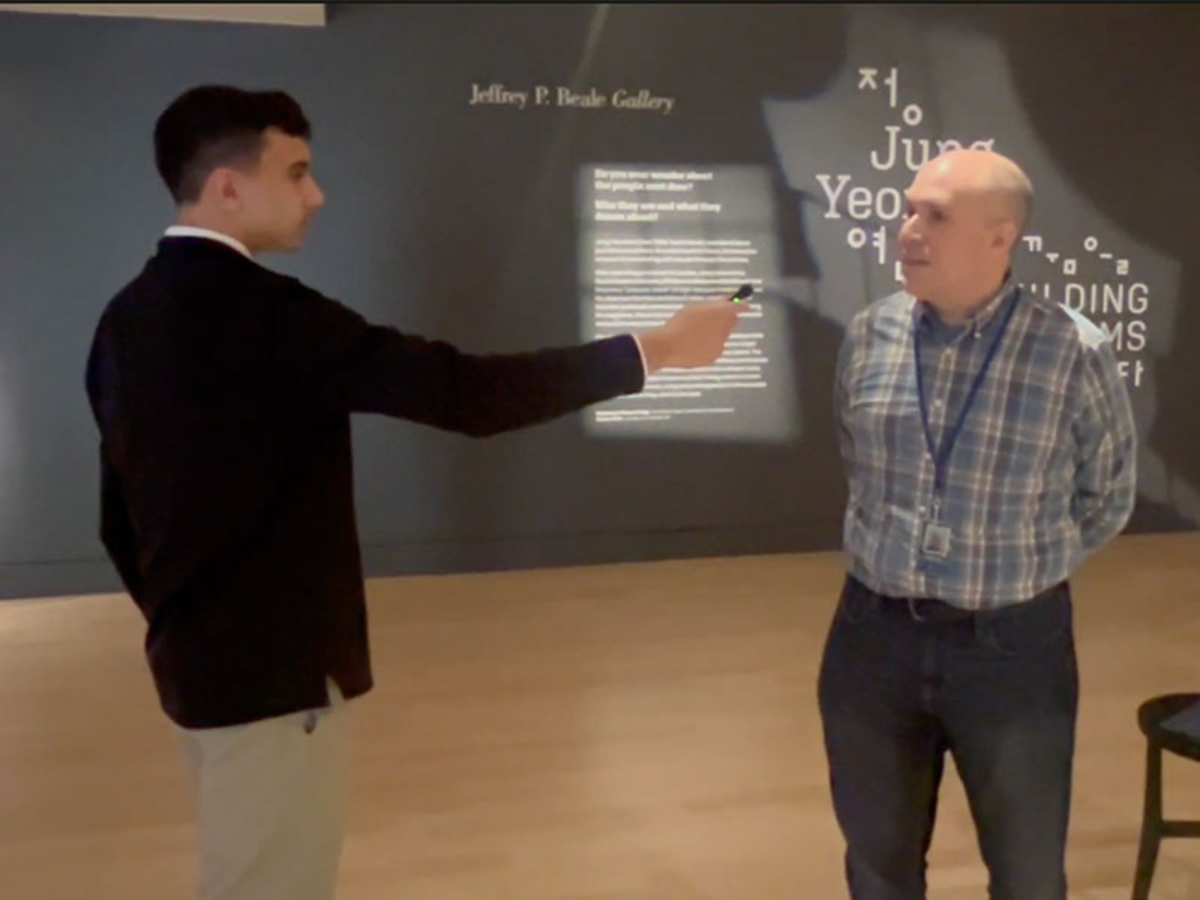
Seeing Witch Trials Before They Happen
One of Cruz’s goals was clarity. He didn’t want viewers to simply recall facts — he wanted them to understand patterns. “If people can see witch trials before they happen, they can learn how to avoid them, how to stop them before they even happen… stop the bomb before it explodes.”
Scriptwriting, Editing, and Real Production Work
The filmmaking portion of the class stretched Cruz in new ways. Students handled research, scriptwriting, filming, and editing — skills he hadn’t expected to learn in a history course.
In addition to guiding research and writing, teachers came into class to cover creative skills such as video shooting basics, interview techniques, script structure, editing, and sequencing. That support turned a traditional research project into something closer to real production work. The collaboration with other members of his film crew taught Cruz how to listen, ask questions, and share responsibility — skills that matter beyond the classroom.
Mr. Jones said seeing Cruz think through the deeper purpose of the project was rewarding as a teacher. “For you to be able to actually articulate those things is really, really heartening,” he told Cruz, noting how closely his reflections matched what he and Mr. Femino hoped the course would become when they built it over the summer. “It’s such a delight to listen to you say these things.”
A Thing to Take Pride In
For Cruz, the work became more than a grade. “We’re able to make something truly special, different, unique, only made by us, no one else,” he said. “It’s a thing to take pride in. Like, I’m honored to be able to have this opportunity.”
One idea stayed with him: “The teachers make you teachers,” Cruz said. His project, in turn, was designed to teach viewers — whether classmates, family, educators, or someone who finds the online film later — something that stays with them.
Cruz hoped audiences would walk away not only informed, but thoughtful. “With anything you learn, it’s always: how can I take this information and use it to better myself and the world around me?” he said.
From Research to Reflection
Now that the documentary has been submitted, Cruz and his teammates reflected on the work behind it — the challenges, the collaboration, and what they hoped it might do beyond a grade. The project was created by four students: Cruz of Wakefield, Gabe Juliano of Wilmington, Lucas Lilley of Woburn, and Nick Capone of Dracut, each taking on a distinct role.
Watch The Salem Witch Trials from Austin Prep’s American Experience Course
For Cruz, who helped shape the film’s direction and narrative, finishing the project brought both relief and pride. “First off, it’s a great relief,” he said. “It took a while. It took a lot of blood, sweat and tears, especially during the final stretch.” Looking back, his hopes remained simple and sincere. “We hope, number one, it gets a good grade. And then, number two, it might teach someone.”
Juliano, who was responsible for selecting historical quotations and recording voiceovers, focused on how the research came together. “My role was to find the quotes that we incorporated into our project and then do the voiceovers for that as well,” he said. One quotation stood out to him in particular. “We saw Goody Osborne with the devil — it was like mob mentality,” Juliano said, referencing testimony connected to Tituba that helped anchor the film’s theme.
Lilley, who developed the video portion of the documentary, emphasized the work behind the scenes. “I put in a lot of effort,” he said. “As I went on in the project, I developed more information and also learned a lot more about software to process video.”
Capone, who handled research and script development alongside Cruz, said the material itself left a lasting impact. “I was the person who basically took all the research parts and not only found them, but I also put them in the script,” he said. What surprised him most was discovering how close history’s patterns still feel. “I just thought that us as a nation… had moved past a lot of what’s going on,” Capone said. “But we haven’t.”
The experience has already shaped how Cruz thinks about what comes next — future history classes, future films, and other opportunities to create work that teaches others. He may be only a sophomore, but his message is surprisingly mature: learn from the past, speak up early, and help others see the warning signs before history repeats itself.
Discover Academic Excellence at Austin Prep
Interested in attending Austin Prep in Reading to explore programs like The American Experience? Learn more about the Austin Prep curriculum, or fill out our inquiry form to begin your journey.