Health & Fitness
How Driving Schools Help Young Drivers Avert Disaster
Teenagers generally have very good reflexes. What's important to understand about reflexes, however, is that fast reflexes aren't necessarily useful reflexes.
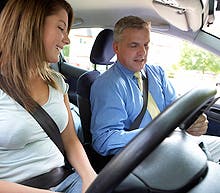
Teenagers generally have very good reflexes. What’s important to understand about reflexes, however, is that fast reflexes aren’t necessarily useful reflexes. When inexperienced, younger drivers are out on the roads, they’re likely to try to avoid disaster by relying on reflexive responses that aren’t going to help them or the other drivers involved in a potential crash.
An Example:
The classic fender bender provides a good example of how even very fast reflexes can betray us. Imagine a car tries to make a left turn in front of you across an intersection when you’re already so close that it’s certain you’re going to collide. Most people’s reaction to this situation is going to be a reflex that is as predictable as it is ineffective: stare directly at the car, slam on the brakes and try to go in front of the car to avoid hitting it.
Find out what's happening in Walpolefor free with the latest updates from Patch.
A properly trained driver would have had a much different reflex drilled into them and one that could potentially save their life and the life of the other driver involved in the situation. Rather than staring at the car, the trained driver would look toward—and thus head toward, you drive where you’re looking—an escape route to avoid the collision. Rather than slamming on the brakes and losing control of the vehicle, a trained driver would slow as much as they could without locking up the brakes and travel through their escape route.
Most importantly, a trained driver would not try to slide by the car by turning in front of it—right where it’s headed—but would seek an escape route that goes behind the car, avoiding driving into the path of travel of the problem vehicle.
Find out what's happening in Walpolefor free with the latest updates from Patch.
The right reflexes can save lives. While human reflexes are lightening quick, they’re not always useful unless they’re trained to be so.
Better Awareness & Education
Simply knowing the danger zones can help younger drivers to avoid collisions. A skilled driving instructor will take their real world experiences and the information from the class and communicate it to younger drivers in a way that allows them to learn without the potentially disastrous learning curve involved in trial and error learning on the roads. Knowing, for instance, that you have to be extra aware when approaching intersections at fast speeds can go a long way toward averting a disaster. In fact, this type of reflex— a reflex toward being cautious—can help teens to avoid ever having to use their reflexes to find escape routes, to avoid slamming on brakes and so forth.
One technique that we stress to all of our students, in both the classroom and in the driver training vehicle, is to shadow the brake when they are not sure of what the other driver or pedestrian is going to do. When a driver’s foot is shadowing the brake it saves on their reaction time which greatly saves on the vehicles stopping distance. A driver who has their foot shadowing the brake pedal at 40mph will stop at least 44 feet less
distance than a driver who’s foot is resting over the gas pedal. A HUGE difference in stopping distance and may be the difference whether you avoid a collision.
Retraining reflexes is difficult but teenagers are particularly good at learning new skills. Even though their lack of experience is certainly a liability on the road, their youth, fast learning power and quick bodies are real advantages. With the proper training, a teenager can become an excellent driver, equipped with the knowledge and reflexes that can keep them and other drivers alive, even in the most harrowing and quickly- unfolding situations.