The 1.5 Degree Smart challenge for Waltham
“You cannot get through a single day without having an impact on the world around you. What you do makes a difference, and you have to decide what kind of difference you want to make." — Jane Goodall
Climate Impact
Climate change has become an unquestionable environmental challenge in the last three decades in every continent and all sectors across the world. It is now more certain than ever that humans are changing the earth’s climate. Climate change creates new risks and exacerbates existing vulnerabilities in communities across the United States, presenting growing challenges to human health and safety, quality of life, and the rate of economic growth. The impacts of climate change are already being felt in communities across the country. More frequent and intense extreme weather and climate-related events, as well as changes in average climate conditions, are expected to continue to damage infrastructure, ecosystems, and social systems that provide essential benefits for all.
Climate Change is expected to further disrupt many areas of life, exacerbating existing challenges to prosperity posed by aging and deteriorating infrastructure, stressed ecosystems, and economic inequality. Global action to significantly cut greenhouse gas emissions can substantially reduce climate-related risks and increase opportunities for these populations in the longer term. Such large and complex problems certainly require transformational thinking. But tackling this problem will also require progress on a myriad of elements at all levels.
1.5 DEGREES temperature challenge
Find out what's happening in Walthamfor free with the latest updates from Patch.
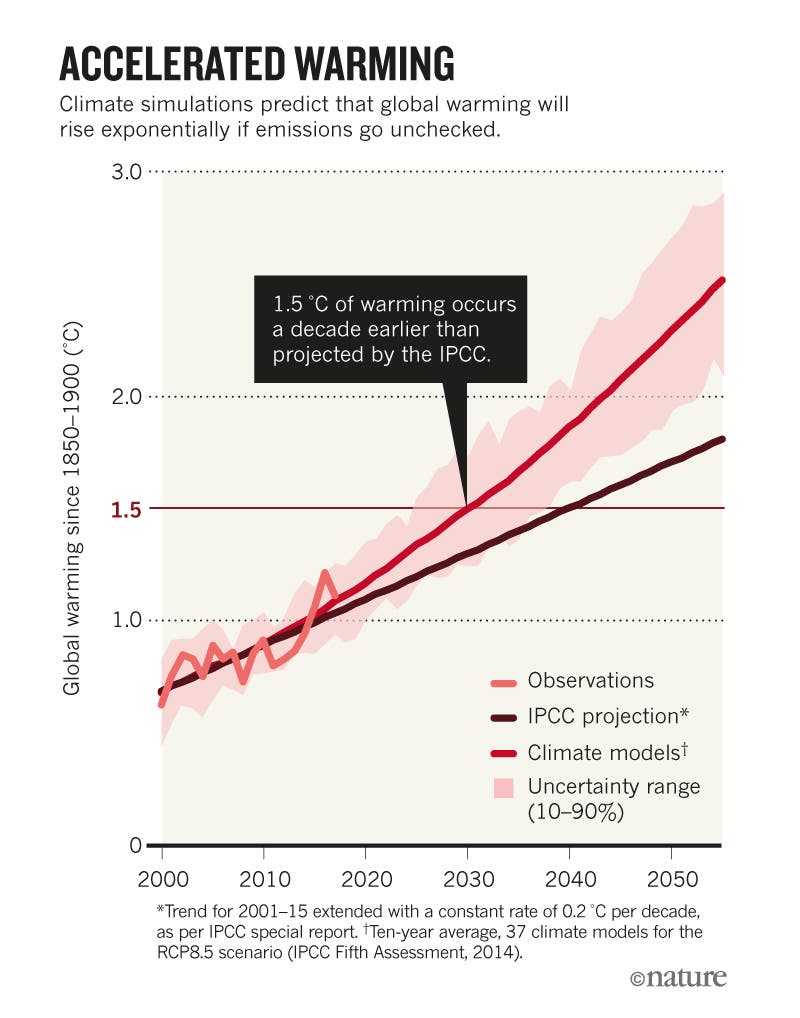
How much risk does a rise in temperature mean to the earth? As of early 2017, the Earth had warmed by roughly 1.8 degrees Fahrenheit above preindustrial levels globally. This number may sound low, but given it is an average over the entire planet, it is significantly high. Recent reports have highlighted the challenge of keeping global average temperatures below 2 °C and even more so 1.5 °C (IPCC) by 2030, but the temperature rise is coming faster than a speeding runaway train coming down the tracks with no engineer at the control. If we continue at the present rate of emissions unchecked scientists believe we could increase much higher than 2 °C by 2030. The impact of that increase will be like a bolt of lightning coming down from the heavens affecting every aspect of our survival on earth. When you add the increase in population it creates and even higher stress on the planet. The challenge is can society stop the train?
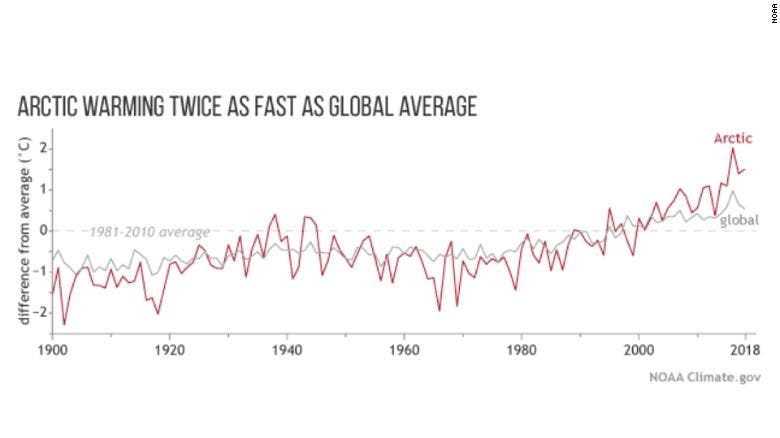
For example, The Arctic is warming more than twice as fast as the overall planet's average temperature, with temperatures this year in the highest latitudes coming in 1.7 degrees Celsius above the 1981-2010 average. These were the second warmest (behind 2016) air temperatures ever recorded during the Arctic year. Think about the impact of the ice melting and the impact of warmer water on sea life (warmer water reduces the oxygen level in the water which in turns stresses the marine life which then effects the food chain).
A look forward to Smart City Challenge
Find out what's happening in Walthamfor free with the latest updates from Patch.
Today there is an emerging effort to improve the living conditions in cities by introducing new technology in almost every aspect of it’s infrastructure, especially environmental improvements. Cities are powerful engines of economic growth, fueled by technology, high skilled labor, good infrastructure and a clean healthy environment. The “age of *smart cities” is upon us, and yet very few appear to know what a smart city entails and how such an undertaking will benefit the community. There is a growing movement to develop smart cities, which is a powerful systematic approach for managing all functions. Today Boston has a plan to make Boston a smart city and have developed a plan. Another city building a smart city is. **Somerville. As Waltham plans new construction (high school, police headquarters and fire headquarters) a smart city approach will improve the quality, efficiency and environmental footprint of the buildings. We have an excellent opportunity to take a step back to discuss construction / technology approaches with department heads, architects and city government about a smart building approach that will meet the needs of the future. A smart city approach for Waltham will go a long way in helping the city meet the 1.5 degree challenge.

We are now barraged with news on related disasters caused by climate change. A genuine wake up call is the number of reports on global warming. The 1.5 C. Challenge is cause to sit up and take notice at all levels. We now sit one degree Celsius above the pre industrial average and with no action we will hit two Celsius in the next ten to fifteen years. Deep cuts in greenhouse gas emissions are crucial if we want to avoid catastrophic impacts of climate change on society. However, the 1.5-degree Celsius target will not be reached based on emissions reduction alone. Climate Change is a holistic problem and cannot be addressed without a whole-system approach. It is imperative that we work on all levels to reduce the impact on the climate crisis. Michael Bloomberg in an interview with Vanity Fair. Said, “Cities are where people are, and they’re where the carbon emissions are. So if you get cities to do the right thing, you can make an awful lot of progress.” The question for Waltham is can we within the community come together to take on the 1.5 degree smart challenge?
A look back in Time
Our Common Future, also known as the Brundtland Report in recognition of former Norwegian Prime Minister Gro Harlem Brundtland, who Chaired the World Commission on Environment and Development (WCED), was published in 1987 by the United Nations. The report addressed the environmental issue that faced the world at that time. We now stand some thirty years from the Brundtland Report with the same issues that were sited, the only difference is that they have grown in complexity. Recently a report Fourth National Climate Assessment on the environment was issued. If you place both reports together they address the same problems and they both stress a call for action. We have gone thirty years into the future and we are still studying the same findings and the solutions now require greater technology and lifestyle changes. One of the most notable quotes to come out of the report was “Sustainable development is development that meets the needs of the present without compromising the ability of future generations to meet their own needs."
We are that future generation that the Brundtland Report stresses a call for action to protect future generations. If we continue at our present rate of emissions there may not be another thirty years if we don’t act now. As the city council debates the critical position of sustainability manager, the intellectual energy of the room needs to start setting the pathway for Waltham’s 1.5 degree smart challenge.
Bob Ferrone
*A smart sustainable city is an innovative city that uses information and communication technologies (ICTs) and other means to improve quality of life, efficiency of urban operation and services, and competitiveness, while ensuring that it meets the needs of present and future generations with respect to economic, social, environmental as well as cultural aspects.
**Somerville Climate Forward, Somerville’s first comprehensive climate change plan, is a set of implemented actions that will reduce Somerville’s contribution to climate change and prepare the City for the unavoidable impacts of climate change. (This is a step in building a smart city)
https://www.somervillema.gov/c...