Health & Fitness
Three Strikes and You're Out?
On prisons, prisoners, and the "Three Strikes" law currently being considered in the legislature.
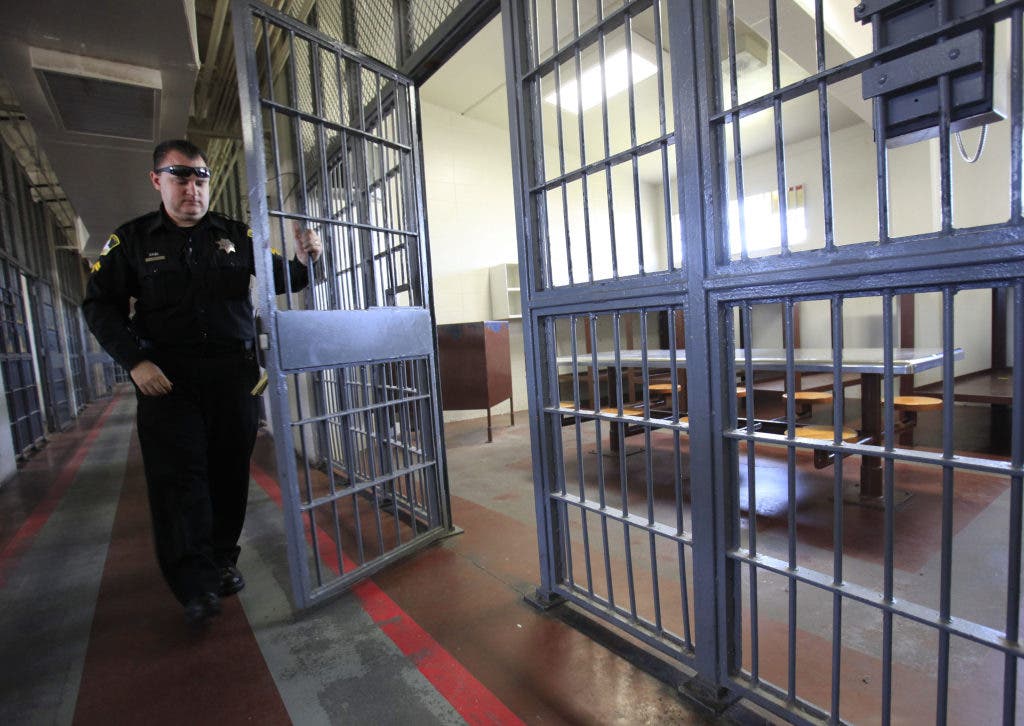
Three Strikes and You’re Out? I don’t think so.
Monday, Feb. 13 at Christ Church on Main Street, the Rev. George Walters-Sleyon, founder and director of the Center for Church and Prison will speak about why no one should be thrown out. A parishioner became acquainted with him through her work with the organization Children of Incarcerated Parents, a program that supplies backpacks and school items for children whose parents are in prison. Currently, the Massachusetts legislature is considering a “Three Strikes” law--it’s in committee now--with members of the House and Senate ironing out differences between their versions before going to both for the final vote. The proposed law came about in response to the murder of Woburn police officer John Maguire in 2010 in a shootout in the middle of a robbery. He was shot by Dominic Cinelli, paroled after serving 22 years of three concurrent life sentences. Cinelli had had a history of violent crime but was released on parole (though had the DA been notified as they should have been, his parole likely would not have gone through). He also died that day.
So how does a Christian respond? It’s hard to say on any issue that there is one Christian response. I oppose it, and Walters-Sleyon will speak about his opposition as well. But, it’s an issue in a wider context. This is not just a simple question of one law, or putting people in prison for longer. This issue is a knot of social issues; racism, poverty, and economics all come together in a particularly American stew. Prisons are big moneymakers, particularly those operated by private firms, a practice that is more and more common. The more we build the more prisoners are incarcerated, curiously despite the fact the crime is actually decreasing (no, it’s not because all the criminals are in jail). The Corrections Corporation of America, a builder of private prisons, chillingly cautioned investors in their 2005 annual report that profits would go down if drug or immigration laws were changed. Naturally, their lobbyists are busy making sure that doesn’t happen.
Find out what's happening in Walthamfor free with the latest updates from Patch.
There are six million people under “correctional control,” either in prison or on parole or probation, which would make it the second largest city in the country. Particularly in black communities, a conversation is taking place that we need to use the term “abolition.” More than half of all black men without a high school diploma find themselves in prison at some point. Despite relatively equal rates of drug use, black people in the US are significantly more likely to be incarcerated for drug crimes. Blacks are now incarcerated seven times as often as whites. In her book, The New Jim Crow: Mass Incarceration in the Era of Colorblindness, Michelle Alexander points out that there are more blacks in the US prison system than there were in slavery in 1850. Dominic Cinelli was white, but the bill that seeks to respond to his crime will disproportionately impact black people.
Sociologists and law enforcement are the experts; I don't necessarily know how best to determine in every situation the punishment that fits the crime, but I am pretty sure there is a lot wrong with how we do it now. As Christians, our job is to try to reconcile the state of our world with the judgment of Matthew 25:
Find out what's happening in Walthamfor free with the latest updates from Patch.
Then they also will answer, “Lord, when was it that we saw you hungry or thirsty or a stranger or naked or sick or in prison, and did not take care of you?” Then he will answer them, “Truly I tell you, just as you did not do it to one of the least of these, you did not do it to me.” And these will go away into eternal punishment, but the righteous into eternal life.’ (v.44-46)
To look at social issues with the eyes of Christ: that is, to look not at “social issues” at all. It is our job to look at human beings. The family that is left behind, the son or daughter whose mother is addicted, the felon who can’t even get a job at McDonald’s with a record. What does it do to a person to separate them from society and permanently disenfranchise him? However much prison time a convicted felon has served, s/he still loses the right to vote, permanently. What does it say about us as a society that our system deems certain persons beyond salvation? What does it say about our values that we spend $10,000 a year for a school aged child’s education but allocate $47,000 for one inmate? How do we respond to those who have lost hope? Worse, when desperation is a logical response to an impossible situation?
As always, I end with more questions than answers. But, I look forward to Monday evening to hear what I can do. Please join us!
Most of my statistics are from a recent New Yorker article.
The Boston Globe had a piece on the law last Sunday.