Health & Fitness
UMass Center for Urban Sustainability in Waltham
The University of Massachusetts is seeking to create a Center for Urban Sustainability at the site of the former UMass Suburban Experiment Station on Beaver Street in Waltham

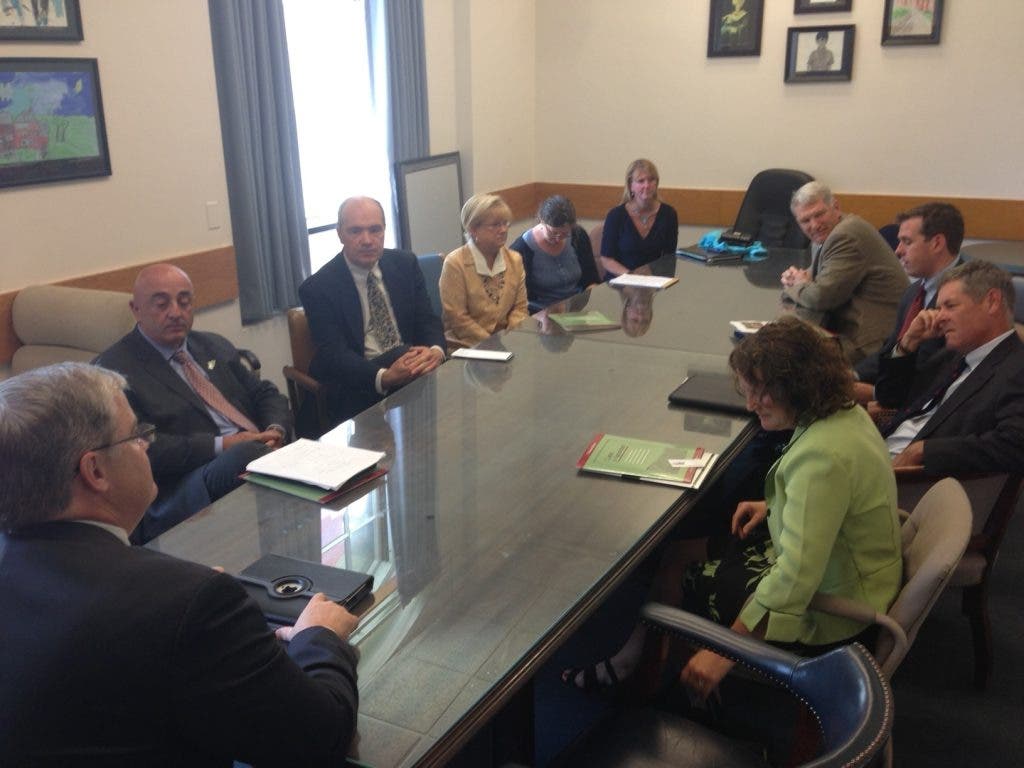
On Wednesday, June 5th, I had the opportunity to host a meeting with UMass officials and local farm owners, along with environmental and sustainability advocates, to discuss the University of Massachusetts’s plans of transforming the site of the former UMass Suburban Experiment Station on Beaver Street into a Center for Urban Sustainability.
One of the attendees of the meeting was Steve Goodwin, Dean of the UMass Amherst College of Natural Sciences. He had first informed me of the UMass plans over the phone before I met him at is his office in Amherst last year, where he formally pitched the idea of converting the old UMass Suburban Experiment Station into a portal of education and research for urban sustainability issues and a destination for citizens, businesses and municipalities to access resources for hands-on learning and classroom training focused on urban sustainability issues. Also at the meeting was Claire Kozower, Executive Director of Waltham Fields Community Farm, who expressed her excitement over how the proposed Center for Urban Sustainability could mutually interact with Waltham Fields Community Farm and other local farms and growers.
The goal for this new Center for Urban Sustainability is to create a financially self-sustaining entity in which UMass Amherst collaborates with private and public organizations and agencies on metropolitan Boston’s first “sustainability mall”. UMass envisions a 20,000 square foot building featuring organizational offices, conference and learning spaces, complemented by community-supported farming, agricultural incubator enterprises practicing urban farming of the future inside, as well as applied research and demonstration of best green landscape practices for urban and suburban residents on the surrounding land outside. The Center for Urban Sustainability will become a hub for programs related to food security and access, environmental stewardship, urban agriculture and workforce development in urban settings.
Find out what's happening in Walthamfor free with the latest updates from Patch.
New and innovative science-based and best management practices and research will be on display and taught to visitors for them to bring back to and share with their own communities. Solutions for managing urban natural resources such as water, soil, waste, energy, pollution, and wildlife will be available to learn. This includes being instructed how to install a working roof top garden, managing storm water practices, what to do with contaminated soils, and best practices for composting food waste. Methods and techniques for sustainable environments, urban agriculture and food systems will also be educational features of the center. Visitors will be able to find information about water and wetland remediation tools, low input plants, community gardens, nutrient crop production, and greenhouse management. Those seeking training for sustainability careers will be able to use the new UMass Green School, and agriculture and green industries for workforce development.
I am very excited for this 58-acre site to be revitalized and become a cultural and natural resource for residents of Waltham and visitors from around the state. Waltham is an ideal site for green and sustainable practices, for individuals, families, communities, municipalities, and businesses, to develop and spread across the Commonwealth. As health and environmental awareness become more and more important, the Center for Urban Sustainability will become a tremendous asset to Waltham and Massachusetts in helping visitors improve their quality of life.
Find out what's happening in Walthamfor free with the latest updates from Patch.
UMass is currently seeking private and public partners, committed to long-term responsibility to the environment, the economy and society to strengthen the current draft vision, assist with master site and business plan, and manage the effort. While UMass officials are exploring fundraising possibilities, there is a great opportunity for the project to receive funding through the 2013 Massachusetts Environmental Bond Bill. I will work hard with fellow State Representative John Lawn and State Senator Michael Barrett to have the Center for Urban Sustainability included in the Bond Bill. The benefits to the people of Waltham are limitless and I look forward to continue working with my legislative colleagues, UMass officials, local farmers and stakeholders on seeing this vision become a reality.