Politics & Government
Meet The Candidates: Bill Doyle Is Running For Waltham City Councilor At Large
Bill Doyle says he is a pro-active problem-solver. He says his engineering and wetlands background makes him a perfect candidate.


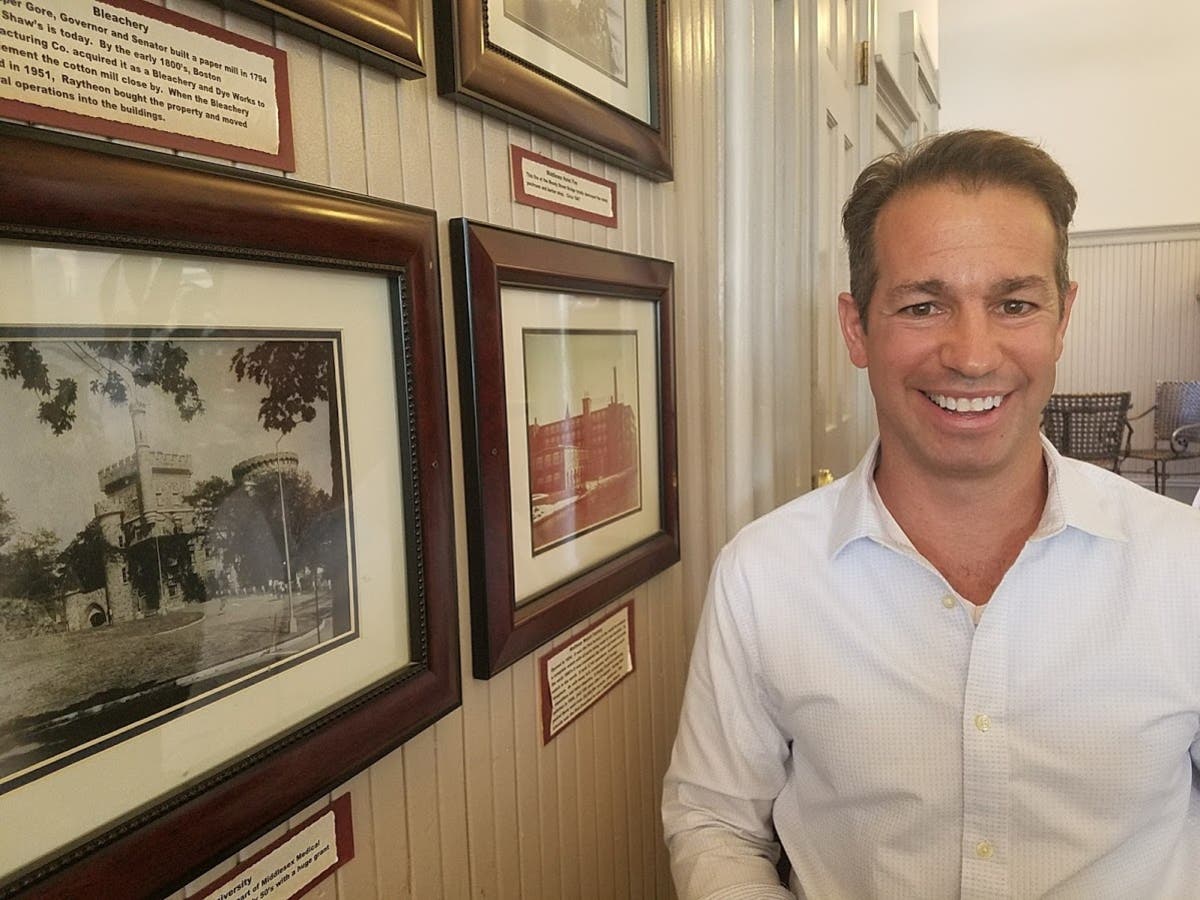
WALTHAM, MA — On Nov. 7, the names of eleven Waltham residents will be listed on the City Councilor At-Large ballot. The six with the most votes will take a seat to go to bat for the community. Bill Doyle, a civil engineer and president of the Conservation Commission wants to be one of those six.
"I'm an infrastructure guy. I'm a planning guy," he told Patch one recent morning at Cafe on the Common around the corner from his office. "I aim to be more proactive than reactive."
(For more information on this and other neighborhood stories, subscribe to Waltham Patch to receive daily newsletters and breaking news alerts.)
Find out what's happening in Walthamfor free with the latest updates from Patch.
This is the first time Doyle has run for office, but he's not new to the city or to the way things have been done around here. His roots run deep: It's a community where he was born and where his parents both grew up and met, and though he didn't grow up here himself, it's where he returned to with his own family. And that has pushed him to run for council. That and his problem-solving nature, he said.
"I think anyone who knows me knows that I'm passionate about the issues I know about," said the father of two.
Find out what's happening in Walthamfor free with the latest updates from Patch.
Doyle is civil engineer with a master planning background. Some two decades ago he landed a job with a firm that was contracted to do the engineering for eight schools that were just built in Waltham. He was the head engineer and the role entailed working with the city engineer and other entities in city hall. That's how he got involved with the Conservation Commission.
Why Run?
"I always knew that I would at some point," he said.
It was his experience two decades ago with the schools, and being exposed to how the process works that really hit home for him.
"Intrinsically engineers are by nature problem solvers," he said. Throughout his time working for the city on the school projects he said he remembers seeing a few problems that could use solving. "You say, 'oh they'll have to fix that. They have to fix that other thing, too. And then I realized: Wait a min the "they" is me. If I have the skill set and passion and I'm invested then I have to step up and do what I can do," he said.
He said he's enjoyed his time on the commission but said he sees the council as a place where he can do more good.
"I understand the issues as well as anyone can and I've got the background that will bring that problem solving to the council. I think I can bring something new and different," he said.
On the high school?
"I don't think anyone knows where the school will go," he said. But wetlands aren't necessarily an impediment to building a school on the property, he said.
Developers can adjust and often do adjust to environmental obstacles.
"To say one site is not doable or an option because there are wetlands there? Unless the whole property is covered in wetlands, great designs can be done honoring the jurisdiction and wetlands act," he said.
In his profession he's been on teams that help engineer everything from the Olympics to colleges around the world, he said. But he when it comes to building a new high school?
He said he would want to honor the process that the School Committee and the superintendent and the design team have already begun.
"If they say Stigmatine's is the best option, we should do what we can to make a deal with the Stigmatines, but if that deal can't happen before we lose funding, we need to be ready to accept the next option that everybody puts forward, and if that's Fernald, then that's where we are," he said.
He admits that's a soft answer, but he also admits he would have to understand more of the moving parts involved. As for the Stigmatine property, he said it was a mistake to be talking about how much the property was worth out in the open so much if anyone seriously wanted to negotiate for the property.
"We shouldn't be hearing that right now, it should be in executive session," he said. "When we start talking about money and how much the property is worth we start affecting the value of the property. Fair market value is tricky. We have to be cautious about how much we show the world we want that property."
Top issues facing Waltham
And if he had to name three of the biggest issues facing Waltham he points to the need for a larger planning effort, a need for a new high school and the money for that and then improved infrastructure such as sewer and water pipes.
But really, he says, all three could find solutions under the umbrella of better, concerted planning and communication.
"If we had planned where we wanted the high school and what we wanted to do with Fernald and other pieces of property with the idea that we are going to need 20 to 30 acres we could have had a plan before and more leverage," he said. If Waltham had a plan in place, a planning board, city planner or both that set out a vision for the city several years ago, when it put the last capstone on the last school it would have been pretty helpful, he said.
"Whether it's a fully functioning planning board and /or a fully functioning city planner that are allowed to work to create a master plan and then have the leadership to implement that over a long time, we'd function better and make decisions better from everything from the high school to how the bike lane should go on Lexington Street.
On Rats
Though his neighborhood hasn't had a problem with them that he knows of, he notes the city has to be careful about baiting rats with poison. "Maybe the influx of birds of prey, who eat rodents, is because of the rats. We have to be cautious about how we deal with it. And get rodent control contractors on board at the beginning to deal with them at the source.
On the proposed 311 App:
He thinks it's a great idea, but worries about funding and what would happen with the data. "Would the city hire a number cruncher?And how exactly will it be used to make the city better?" he asks. Implementing the technology is 10 percent of the solution, he says. The other 90 percent is how you use the data how you make the decisions once the data is crunched.
"The risk you run is you put it in there and nothing happens. Then that sets you back to before you had it," he said.
When Are Waltham Elections? And Who Is Running
http://williamdoyle.org/index....
Get more local news delivered straight to your inbox. Sign up for free Patch newsletters and alerts.