Neighbor News
Plantar Fasciitis
Could that pain in your foot be plantar fasciitis? Learn the causes, treatment options, and ways to avoid getting it.
By Scott Gilbert, PA-C
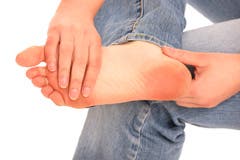
When the first few steps out of bed in the morning cause severe pain in the heel of your foot, you may have plantar fasciitis (fashee-EYE-tiss). Plantar fasciitis is the most common cause of heel pain and is an overuse injury affecting the sole (plantar) of the foot. A diagnosis of plantar fasciitis means you have inflamed the tough, fibrous band of tissue (fascia) that connects your heel bone (calcaneus) to the base of your toes.
For most people, the pain you feel first thing in the morning will subside as the day goes on because the act of walking stretches the fascia. In severe cases, and for those who stand all day, the pain may become worse as the day goes on.
Find out what's happening in Walthamfor free with the latest updates from Patch.
What are the causes?
Those who are more susceptible to suffer from plantar fasciitis are people who stand, walk or run for long periods of time (especially on hard surfaces), people who have flat feet or high arches, women, and those who are middle aged or overweight. People who take up a new type of impact sport or have a sudden increase in intensity of their exercise program are more prone to developing plantar fasciitis. Also, people who have tight Achilles tendons or calf muscles are at increased risk for developing plantar fasciitis.
Find out what's happening in Walthamfor free with the latest updates from Patch.
What are the treatment options?
- Rest is the first recommended treatment for plantar fasciitis. Try to keep weight off your foot and cut back on weight-bearing activities until the symptoms of pain and swelling resolve
- Apply ice to the sore area for 20 minutes, three or four times a day to relieve the inflammation
- Your care provider may prescribe a non-steroidal anti-inflammatory medication to help with the swelling
- Once the swelling subsides, stretching is the key to lengthening the fascia and reducing the pain
- Some people find relief with doing plantar fascia self-massage by rolling the bottom of their foot on a tennis ball, golf ball, tube-shaped object, or a frozen bottle of water which also helps to stretch out the fascia
- If your symptoms are severe and not responding to treatment in 1 to 2 weeks, your medical provider may refer you to physical therapy and/or may prescribe a cam walker, night splint, or a cortisone injection
- Most people with plantar fasciitis improve significantly or have their symptoms resolve within 6 to 8 weeks
- If you have tight calf muscles/Achilles tendons, you may wish to consider massage therapy
How can I avoid getting plantar fasciitis?
- Wearing good supportive shoes, especially if you’re on your feet for many hours during the day, can help. Over the counter orthotics may also help give arch support and alleviate the symptoms. I suggest going to an athletic store that caters to runners or a store where staff have knowledge of the foot, as orthotics’ quality can vary, and you want to purchase a good quality option.
- Over the counter heel cushions may also help those who are on their feet all day.
- If you stand in one place for long periods of time, especially on a hard surface like concrete, a good foam mat can help provide some support.
- Your medical provider may recommend the use of a night splint, plastic cast, or a sock brace that locks your ankle at 90 degrees and keeps your foot stretched overnight.
- It is important to know the symptoms of plantar and be ready to take action as soon as the symptoms begin, including reducing activities that trigger the symptoms.
If you have symptoms that last for more than a few weeks, you should see your medical provider to get a professional diagnosis of your heel and/or foot pain as other problems can mimic plantar fasciitis. Other conditions with similar symptoms can be a stress fracture, arthritis, tarsal tunnel syndrome, tendinitis, sciatica, and circulatory problems. You want to seek medical help sooner rather than later because, generally, the longer you have plantar fasciitis symptoms, the longer it takes for the symptoms to resolve once your problem is diagnosed.
Plantar fasciitis can happen once and never again, or it can come and go over time. I have had plantar fasciitis off and on for many years, but I have been able to minimize the symptoms by stretching regularly and using orthotics. Both of these home remedies have greatly decreased the number of episodes I experience. If you have a history of plantar fasciitis, I encourage you to learn to recognize when symptoms are returning and begin stretching exercises and using ice to prevent it from getting worse.
_________________________________________________________________________________________________________________________
About Scott Gilbert, PA-C
Scott Gilbert, PA-C, joined the Orthopedics and Sports Medicine Department of Harvard Vanguard in 2001 and currently sees patients in our Somerville and Watertown practices. Scott sees patients, provides orthopedic consultation, and does post-surgery follow-up care in the office for a broad array of concerns and injuries. He can empathize well with his patients: as an avid sports enthusiast, he has participated in many sporting activities, from a wide variety of more traditional competitive team and individual sports (soccer, cross-country running, basketball, swimming, triathlons) to outdoor pursuits including high altitude mountaineering, rock and ice climbing, kayaking, cross-country skiing, and long distance cycling. He now loves spending time with his wife and 2 children in the out-of-doors and coaching.