Health & Fitness
Overuse vs. Misuse: Understanding Overuse Injuries
Overuse is one of the most ambiguous terms used in the medical field; there is simply no way to measure it. If overuse was really the problem, then rest would heal the injury.


Conditions such as tendonitis, bursitis, shin splints, plantar fasciitis, joint pain, disc problems, and Carpal Tunnel Syndrome are very often attributed to overuse. Clients come to me with these conditions all the time having been told by their doctor to take time off from their sport or favorite activity to allow their injury to heal. Usually by the time they walk into my office, they have been resting for anywhere from several weeks to several months and have seen little to no reduction in their pain. If their pain was in fact a result of overuse, then rest should have solved the problem. So clearly, there is something else going on.
Overuse is one of the most ambiguous terms used in the medical field; there is simply no way to measure it. Why do certain people develop Carpal Tunnel Syndrome from working at a computer all day, while the majority of us can do the same type of work with no pain? Why can some people run marathons completely pain-free, while others run four miles a few times per week and develop tendonitis and plantar fasciitis? We can’t attribute their pain simply to “overuse” when so many others are able to do the same level of activity and more without injury.
The missing element in the equation that is often ignored is misuse. We all develop different movement patterns and habits during our lifetime, and some of us develop patterns that eventually lead to injury. The human body is capable of performing incredible physical feats when it is moving in a natural, efficient way, but when it is moving in a less than ideal way it can quickly become broken.
Find out what's happening in Watertownfor free with the latest updates from Patch.
Occasional misuse will usually not cause injury. You might feel mild pain or simply the sensation that how you are moving is wrong, and then you will likely correct your movement pattern, either instinctively or consciously. Likewise, overuse alone will generally not cause injury. It will result in fatigue or soreness, which will clear up with a few days of rest.
The real problem is overmisuse. First the bad habit or misuse begins. It happens once or twice, then it starts to become a habit, and over time it becomes a learned movement pattern that you are doing subconsciously. When that movement pattern is put to the test by doing lots of repetitions (such as running or computer work) or lifting heavy weight, your body begins to break down. By the time you are feeling pain as a result of that bad habit, the habit is so deeply learned that it can be very difficult to correct.
Find out what's happening in Watertownfor free with the latest updates from Patch.
To unlearn a bad movement pattern, you have to relearn a good movement pattern. Just like learning anything, you have to start at the beginning, move very slowly, and repeat what you are trying to learn over and over. Over time, the good movement pattern will start to become habitual, and you won’t have to consciously remind yourself to do it.
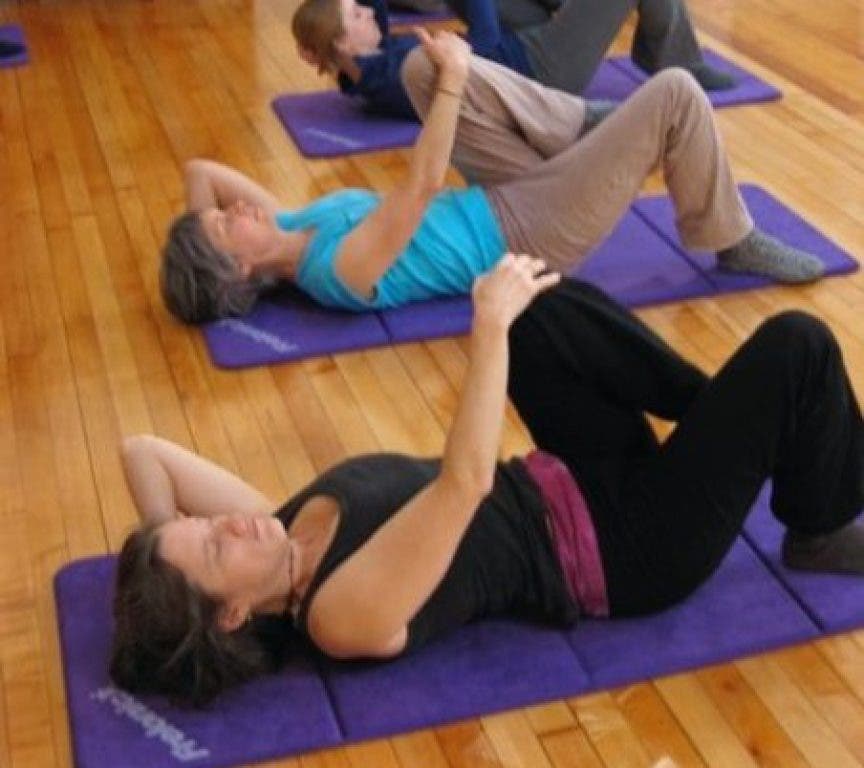
Clinical Somatic Education provides a way for you to relearn natural, efficient movement patterns. Sometimes chronically tight muscles will prevent you from moving in a natural way, and Somatics uses advanced movement techniques to reset muscle length at the brain level. By releasing chronically contracted muscles and then learning integrative movements, you can relearn good movement habits and prevent and recover from overmisuse injuries.