Community Corner
Chief Psychiatrist Recognizes Teen Mentors
Building grit and resilience to prevent anxiety and depression starts by replacing stigma with self-awareness
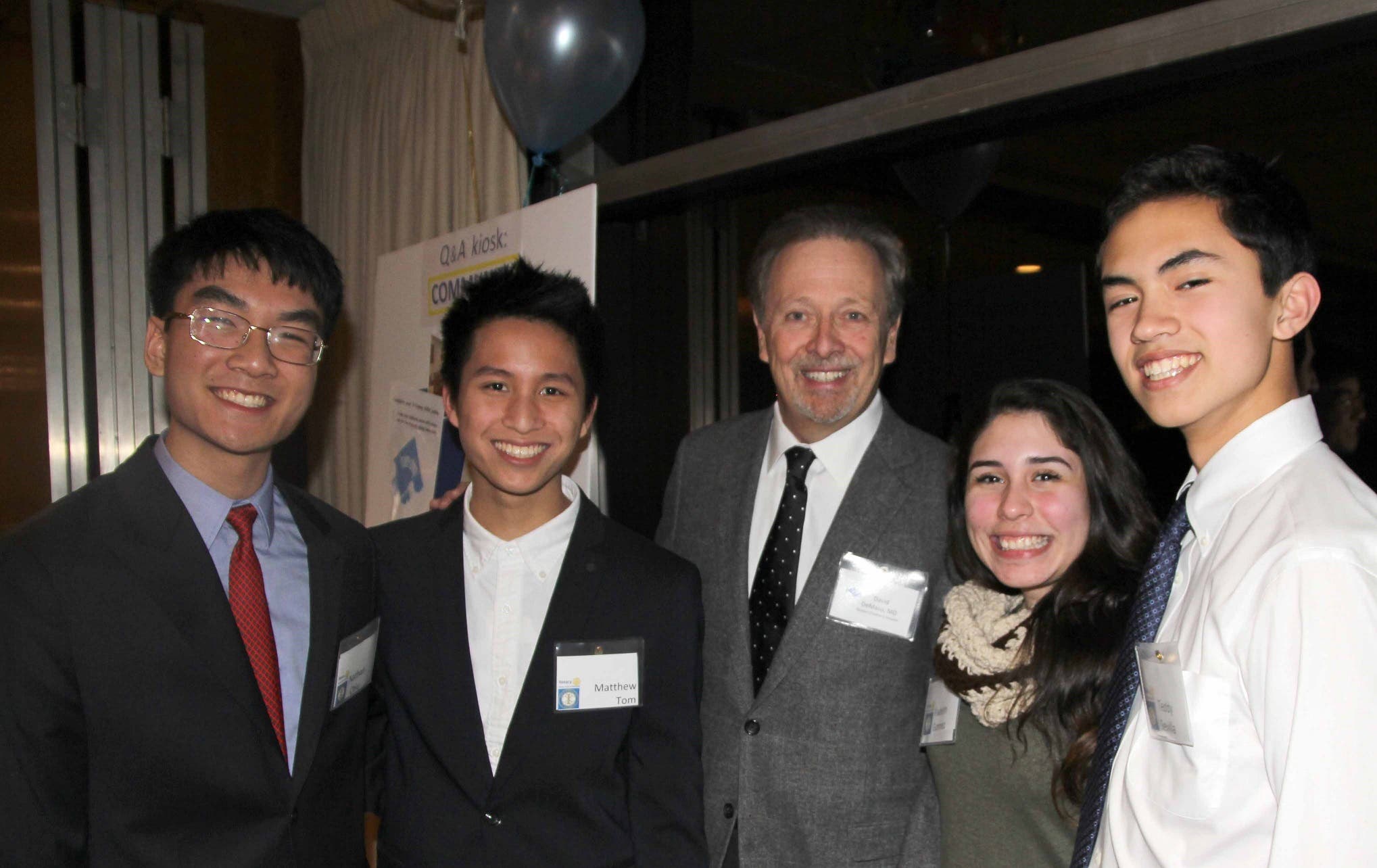

Dr. David DeMaso was the keynote speaker at the Winter Blues celebration hosted by Adolescent Wellness, Inc. (AWI); the January 22 event theme was Symbols of Wellness. Dr. DeMaso presented resources not only for treating anxiety and depression but also for their prevention. He explained that all are based on optimism and problem solving, and that improving self-awareness is the first challenge. This starts by overcoming stigma to normalize the conversation on mental health, wellness, and illness. The hospital’s Break Free From Depression curriculum has been implemented with over 12,000 students to date.
Dr. DeMaso recognized the work by the twenty Rotary Interact teen mentors, several of whom staffed a Community Q & A Kiosk at the event. At the podium and in the kiosk, the teen mentors discussed the work for which they were recognized. The teens are volunteers, co-facilitating the curriculum activities with middle school age youth and peers. Most recently, the teens began coaching other teen mentors as distant as Puerto Rico. Faculty and staff at four schools there completed training with the curriculum; the travel and trainer costs were funded by AWI. Teachers at the schools then nominated students for participation in the program as peer leaders. The majority of the students accepted this nomination, saying they were interested:
- in helping people
- in learning the material and teaching it to others
- because they would like to eliminate the stigma associated with mental illness.
The first teen teleconference was with the Robinson School in San Juan, where eleven teens and the school psychologist participated. Questions the Robinson School peer leaders discussed with peer leaders from the Interact club in Wellesley included:
Find out what's happening in Wellesleyfor free with the latest updates from Patch.
- What was students’ initial reaction to the material? Did they respond well or were they uncomfortable with it?
- How did you break the stigma of mental illness with issues of embarrassment as a concern?
- How do you raise awareness of kids to talking to adults to ask for help?
- What was your initial plan when the Interact group started?
- Have you seen the impact [of your work] in your school community?
- What is your school like? What are the demographics?
- As the peer leaders, what can we do to help the students when they approach us with information about their mental health?
On the last topic, it was emphasized that peer leaders are not meant to act as therapists. They can respond to students who share their mental health concerns by saying “thank you for trusting me with this information. Let me help you find someone who can help us with the next steps.” The local peer leaders are also starting additional projects. They explained the purpose and status of each project to guests visiting their kiosk at the Winter Blues event:
- A public art display to dispel stigma by allowing people to post anonymous notes about their experiences (a glimpse of green leaves from the final art design may be seen in the background of the Q & A kiosk photo). Currently, the teens are looking for a site to host the art installation.
- A video documentary will explain mental illness from the student perspective. With the assistance of Dr. Nadja Reilly, the group will develop content that is both informative and relevant to teens. The purpose of the film is to generate conversation on mental wellness. Currently, the teens are working on the script for the documentary.
- A blog to promote understanding of stress and depression by relating the Break Free From Depression curriculum to the everyday lives of students. Topics on the blog vary from coping methods to the meaning of mental wellness and include the personal experiences of Interact members. Currently, the teens are producing content to post on the blog.
- A t-shirt social awareness campaign is working towards both raising awareness for stress and depression and raising funds for a mental wellness related organization. The Interact teens have created designs with messages about stress and depression to print on t-shirts to be sold. Currently, the teens taking advance orders for the shirts.
The Winter Blues presentations were recorded by Wellesley TV and may be viewed online at http://www.adolescentwellness.org/announcements/