




A lecture by Hillary Chute, Neubauer Family Assistant Professor of English, University of Chicago on comics and memoir including analysis of Lynda Barry’s and Alison Bechdel’s work.
Graphic Women: Comics, Autobiography, and Mapping Memory:
Lynda Barry and Alison Bechdel have created two of the most significant autobiographies of the 21st-century—in comics form. Graphic Women will focus on how two of the most important living cartoonists have presented aspects of their lives in both words and images, for comics autobiographies have changed the field of contemporary narrative. How are lives mapped out in words and images? How does drawing, in addition to writing, capture memory? How do images express the past? Bechdel has said, “I always felt like there was something inherently autobiographical about cartooning,” while Barry has remarked, “I always think of images as lowering the drawbridge where stuff can cross over—memory.” What does this innovative form of comics bring to the presentation of private and public histories?
Lynda Barry:
Find out what's happening in Wellesleyfor free with the latest updates from Patch.
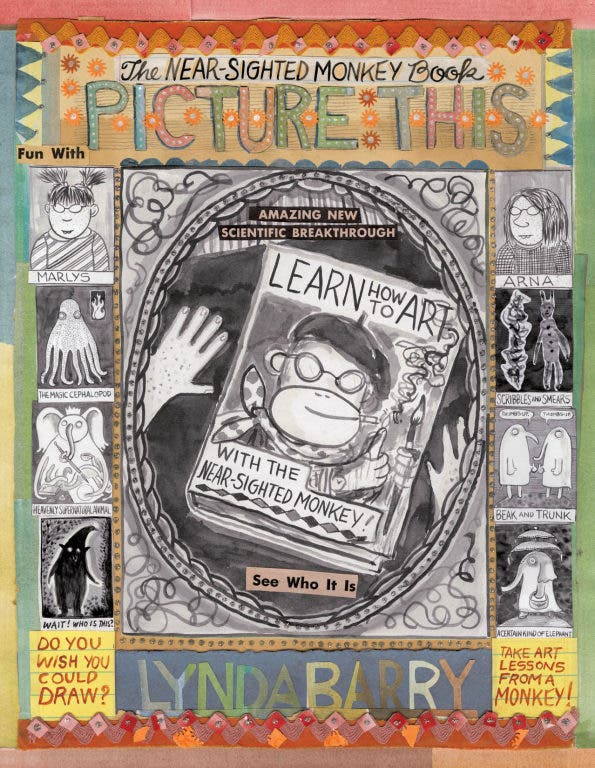
Lynda has worked as a painter, cartoonist, writer, illustrator, playwright, editor, commentator and teacher and found they are very much alike. She is the inimitable creator behind Ernie Pook's Comeek, featuring the incomparable Marlys and Freddy, as well as the books One! Hundred! Demons!, The! Greatest! of! Marlys!, Cruddy: An Illustrated Novel, Naked Ladies! Naked Ladies! Naked Ladies!, The Good Times are Killing Me, which was adapted as an off-Broadway musical and won the Washington State Governor's Award. Her bestselling and acclaimed book, What It Is, won the Eisner Award for Best Reality Based Graphic Novel and R.R. Donnelly Award for highest literary achievement by a Wisconsin author. Its sequel, Picture This: The Near-Sighted Monkey Book was published last fall.